Análisis en fábrica de la delaminación de las alfombrillas de ratón
Introducción: Un problema común para los compradores
Mucha gente da por sentado que las alfombrillas de ratón son productos sencillos. En realidad, una moderna alfombrilla de ratón de tela es un producto compuesto multicapa que combina tejido textil, espuma de caucho, adhesivos y laminación por termoimpresión.
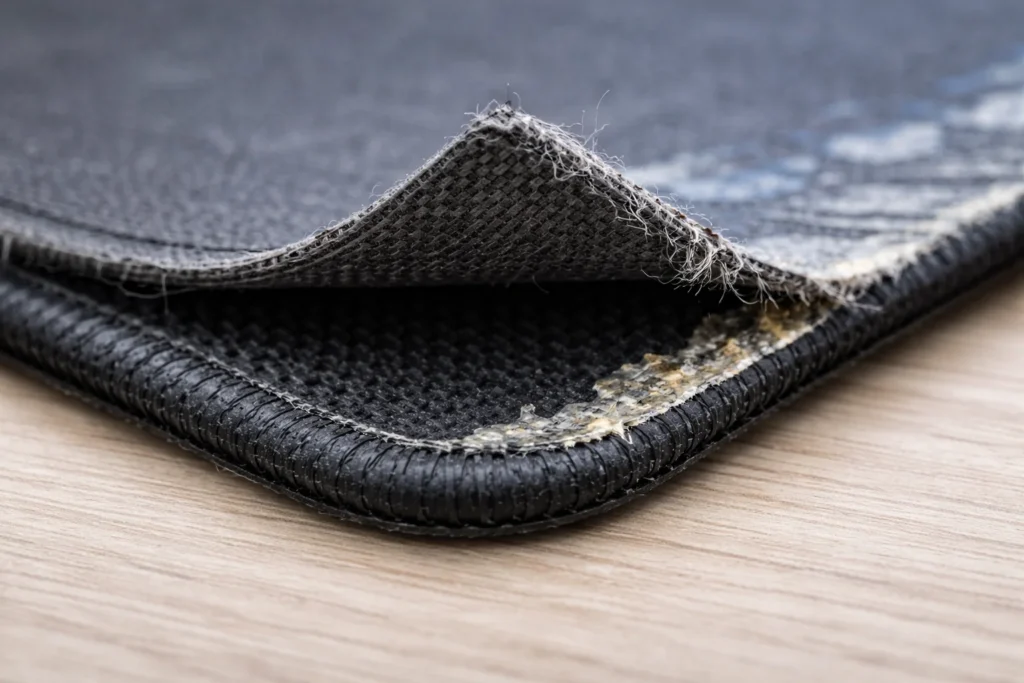
Sin embargo, una queja habitual de los usuarios y compradores al por mayor es que algunas alfombrillas de ratón personalizadas empiezan a despegarse tras pocos meses de uso. La superficie del tejido empieza a separarse de la base de goma, a menudo empezando por los bordes o formando burbujas en el centro.
Desde el punto de vista de la fabricación, este problema se denomina delaminación.
Los datos de producción industrial de productos compuestos de caucho y textil muestran que más del 70% de los fallos tempranos de las alfombrillas de ratón están relacionados con problemas de adhesión o laminación. Comprender las causas profundas ayuda a los compradores a identificar proveedores fiables y evitar problemas de calidad de los productos.
Comprender la estructura de una alfombrilla de ratón
Una alfombrilla de ratón de tela estándar suele tener tres capas principales.
| Capa | Función |
|---|---|
| Superficie del tejido | Movimiento y seguimiento suaves del ratón |
| Capa de unión adhesiva | Adhiere permanentemente tejido y caucho |
| Base de gomaespuma | Proporciona agarre, amortiguación y estabilidad |
Cuando estas capas se fabrican adecuadamente, una alfombrilla de ratón puede durar fácilmente 3-5 años en condiciones normales de uso. Sin embargo, si la fuerza de adhesión es débil o los materiales son deficientes, puede producirse la separación en cuestión de meses.
La causa más común: Laminación débil
La causa más frecuente de la descamación de la alfombrilla del ratón es resistencia insuficiente de la laminación entre la superficie del tejido y la base de goma.
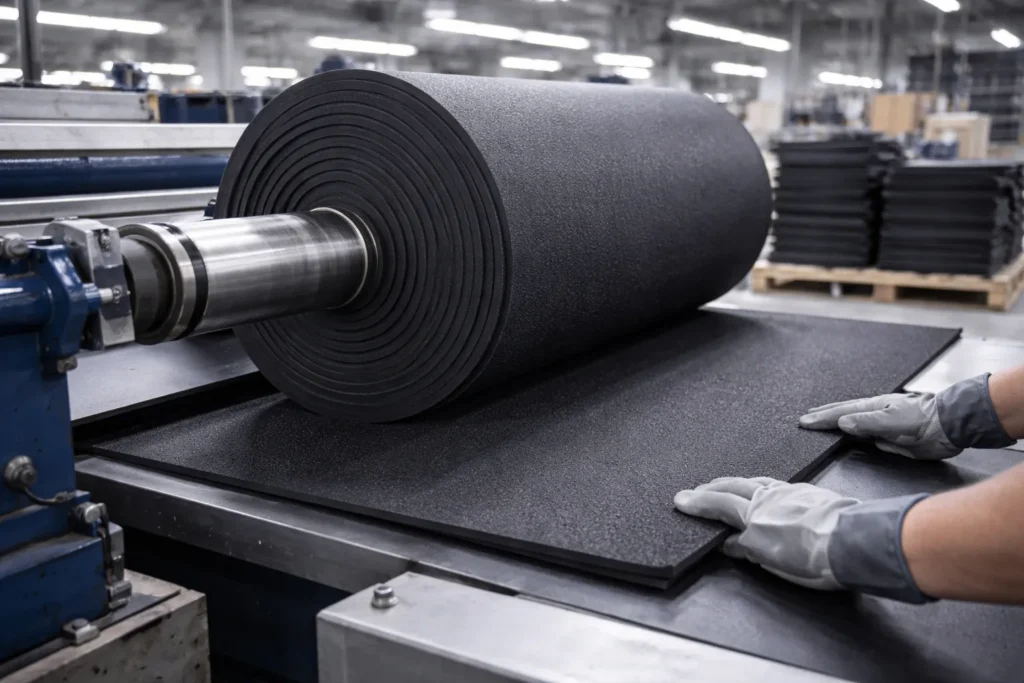
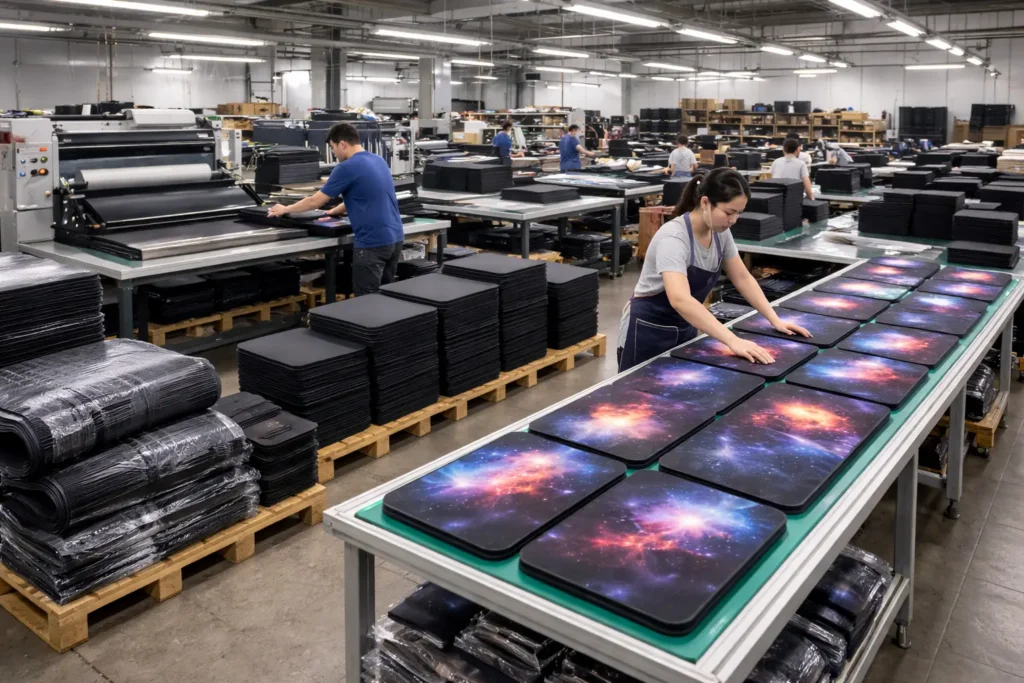
Durante la producción, los dos materiales se unen mediante laminadoras industriales de prensado térmico. Las fábricas profesionales controlan cuidadosamente varios parámetros.
Las condiciones típicas de laminación incluyen:
| Parámetro | Gama industrial |
|---|---|
| Temperatura | 160-190°C |
| Presión | 3-5 MPa |
| Tiempo de prensado | 25-45 segundos |
Si estos parámetros no se controlan adecuadamente, pueden producirse varios problemas:
- unión incompleta entre capas
- débil activación adhesiva
- bolsas de aire internas en la almohadilla
Con el tiempo, la fricción diaria del movimiento del ratón debilita gradualmente la unión hasta que la capa de tejido empieza a separarse.
Las fábricas con equipos anticuados o procesos incoherentes suelen producir un pegado desigual en toda la superficie.
Calidad del material: El factor oculto tras la delaminación
Otra causa importante de la descamación precoz es la calidad de la base de goma.
Las alfombrillas de ratón de alta calidad suelen utilizar espuma de caucho natural, que ofrece varias ventajas:
- mayor adherencia con superficies textiles
- mayor elasticidad
- mayor durabilidad en el tiempo
Los productos más baratos suelen utilizar caucho sintético o espuma de caucho reciclado, que puede tener un aspecto similar, pero se comporta de forma diferente durante un uso prolongado.
Las pruebas de laboratorio con compuestos de caucho demuestran que el caucho sintético de baja calidad puede perder hasta 30-40% de su estabilidad de adherencia en seis meses sometido a un esfuerzo continuo.
Una vez que la estructura del caucho se debilita, la capa adhesiva también se vuelve inestable, lo que provoca la separación de la superficie.
Errores de fabricación que provocan el pelado prematuro
Durante las inspecciones en fábrica, varios errores de producción suelen asociarse a problemas de delaminación.
| Problema de producción | Resultado |
|---|---|
| distribución desigual del calor | zonas de adhesión parcial |
| capa adhesiva insuficiente | escasa fuerza de adherencia |
| mal curado del caucho | estructura de goma inestable |
| tratamiento incorrecto del tejido | mala adherencia a la superficie |
Las fábricas profesionales implantan procedimientos de control de calidad que incluyen pruebas de resistencia a la adherencia antes del envío para garantizar la durabilidad a largo plazo.
Por qué el cosido de bordes prolonga significativamente la vida útil
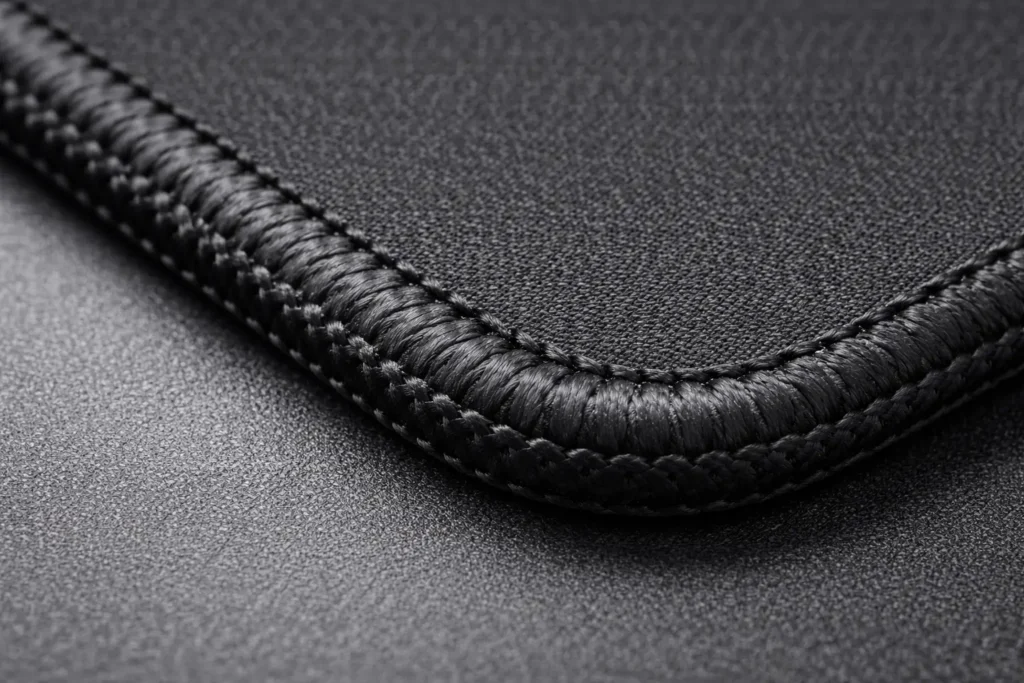
La costura de los bordes suele considerarse un elemento decorativo, pero desempeña un papel importante en la durabilidad.
Los bordes cosidos ayudan a:
- fijar la capa de tejido
- evitan el deshilachado de los bordes
- reducir el riesgo de levantamiento del tejido
Las pruebas de durabilidad de los productos demuestran que las alfombrillas de ratón con costuras reforzadas pueden aumentan la vida útil en un 30-50% en comparación con las almohadillas no cosidas.
Por eso, la mayoría de las alfombrillas de ratón premium para juegos incluyen bordes cosidos.
Condiciones ambientales que aceleran la descamación
Incluso las alfombrillas de ratón bien fabricadas pueden degradarse más rápidamente en determinadas condiciones ambientales.
Los factores comunes incluyen:
- niveles de humedad superiores a 70%
- exposición constante a fuentes de calor
- lavados frecuentes o productos químicos de limpieza agresivos
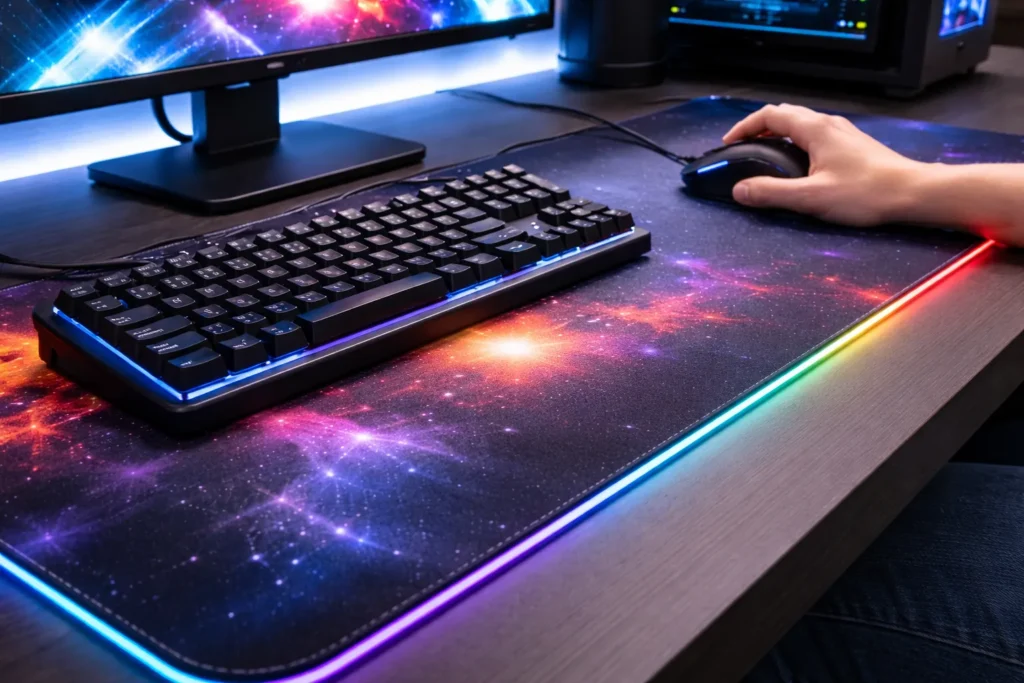
- fuerte presión en la muñeca durante largas sesiones de juego
Estas condiciones aceleran la fatiga adhesiva y pueden acortar la vida útil de los productos mal fabricados.
Cómo evitan las fábricas profesionales que se despegue la alfombrilla de ratón
Los fabricantes fiables aplican varias estrategias para evitar la delaminación.
Materiales de caucho de alta calidad
La espuma de caucho natural proporciona una elasticidad estable y una gran capacidad de adherencia.
Equipos de laminación de precisión
Los sistemas hidráulicos de prensado térmico garantizan una temperatura y una presión constantes en toda la superficie.
Capas adhesivas optimizadas
Los adhesivos industriales están diseñados específicamente para productos compuestos de caucho y textil.
Pruebas de durabilidad
Las fábricas simulan el uso a largo plazo realizando pruebas de adherencia y abrasión.
Estas medidas garantizan que las alfombrillas de ratón fabricadas correctamente mantengan su integridad estructural durante años.
Conclusión
Aunque las alfombrillas de ratón parecen productos sencillos, su durabilidad depende en gran medida de calidad del material y precisión de fabricación.
La mayoría de los casos de descamación precoz se producen por:
- procesos de laminación débiles
- materiales de caucho de baja calidad
- control incoherente de la producción en fábrica
Al conocer estos factores, los compradores pueden tomar mejores decisiones a la hora de seleccionar fabricantes y evitar fallos prematuros del producto.
Trabajar con fabricantes experimentados que dan prioridad a la calidad del material y a procesos de producción controlados garantiza que alfombrillas de ratón personalizadas mantener el rendimiento y la durabilidad durante años.