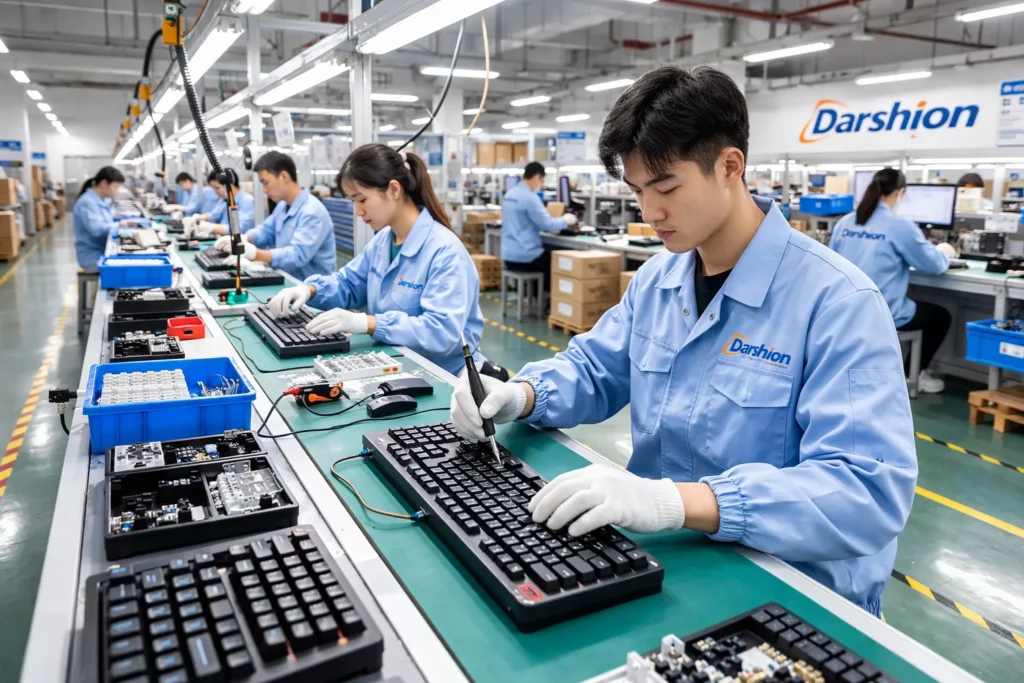
Sourcing professionals and OEM/ODM buyers often encounter puzzling price gaps when comparing keyboard manufacturers. One supplier might quote a unit price 20–30% lower than others for a similar keyboard. Does a lower quote mean you’ve found a great deal, or are there hidden trade-offs? In the competitive world of keyboard supply, a rock-bottom price usually comes with compromises in materials, quality, specs, or services. This article draws on industry experience to explain the real reasons behind those low quotes. We’ll define the typical price disparity in the keyboard market and unpack whether lower quotes truly equal value or simply hide costs elsewhere. By the end, you’ll know exactly what to watch for when the lowest bidder comes in – and how to balance cost with quality and trust.
Cheaper Materials and Components Lower the Upfront Cost
One of the most common reasons a keyboard supplier can quote a very low price is the use of cheaper materials and components. The materials that go into a keyboard – from the plastic in the casing and keycaps to the switches and circuit board – have a huge impact on cost and quality. Low-priced suppliers often opt for the least expensive options:
- Keycaps: Budget keyboards usually use ABS plastic keycaps, which are inexpensive but wear out faster and can develop a shiny slick surface with use. Higher-end keyboards use PBT keycaps that resist wear and stay textured, but PBT costs more to produce. The cheaper quote likely reflects ABS keycaps instead of durable PBT or double-shot legends.
- Switches: Mechanical switch quality varies widely. Reputable brands like Cherry MX or Gateron switches cost more per piece, whereas clone switches (e.g., generic Cherry MX “equivalents” from lesser-known brands) are much cheaper. A supplier quoting significantly lower may be using off-brand switches that aim to mimic premium ones. While these clones can function, they often lack the lifespan and consistency of genuine switches. For instance, a genuine Cherry MX switch might cost several times more than a clone – multiply that across 104 keys, and the savings (and performance difference) become obvious.
- Frame and Build Materials: Low-cost quotes often correspond to cheaper chassis materials. A high-grade gaming keyboard might have an aluminum or thick ABS frame for rigidity, whereas a bargain option uses thin generic plastic. Metal backplates, braided USB cables, or extra sound-dampening foam are usually absent in ultra-budget builds. All those premium touches add manufacturing cost, so their absence can lower the price.
In short, material selection is a major factor. Suppliers that always quote below-market prices are likely substituting cheaper, lower-grade components at every turn – from keycaps and switches to the PCB and case. This can be acceptable for basic office use, but for buyers who need longevity or specific performance specs, it’s a red flag. Cheaper materials often mean a shorter product lifespan and a higher chance of issues down the road.
Lower Labor Costs and Production Shortcuts
Another reason some manufacturers can undercut others is by operating with lower labor costs or by taking shortcuts in production. Labor is a significant portion of manufacturing expenses, especially for electronics assembly and quality assurance. Here’s how certain suppliers trim these costs:
- Region and Wages: Many keyboard suppliers are based in low-cost manufacturing hubs (such as Shenzhen, China). While all benefit from lower wages compared to Western factories, some push labor costs even lower by using temporary or less-skilled workers, or by not adhering to robust labor standards. They might not provide the training or fair wages that a more reputable factory would, reducing expenses at the cost of worker welfare and potentially consistency. In contrast, certified factories invest in proper training and compliance (e.g., social responsibility audits like BSCI), which adds to overhead. If a quote seems improbably low, it could be that the supplier is cutting corners on labor or working conditions (an ethical and quality risk).
- Lean Staffing & Overhead: A lower-priced supplier may have a very lean operation – minimal engineering staff, quality inspectors, or customer support. They save money by not employing experienced R&D teams or by skipping design verification stages. Top-tier OEM manufacturers, on the other hand, put funds into engineering expertise and project management (which benefits the buyer through better design and smoother communication). Those costs reflect in the price. A consistently low quote might imply you won’t be getting much engineering support or customization help from their side.
- Simplified or Rushed Assembly: To save time (and labor hours), budget suppliers might streamline the assembly process to a fault. For example, using more manual assembly instead of costly automation can be cheaper initially – provided labor is cheap – but often yields more variability. Some factories might skip non-essential assembly steps, use older equipment, or forgo nice-to-have processes (like lubricating stabilizers or cleaning components) to shave off a few cents per unit. These shortcuts can increase the risk of assembly errors or cosmetic defects, but they reduce the immediate labor cost per keyboard.
- Less Quality Oversight: Labor cost savings also come from reducing the headcount or hours in quality control (which we discuss more in the next section). For instance, not paying senior technicians to oversee each production run, or not having bilingual project managers to interface with international clients, means a lower overhead – and sometimes miscommunications or mistakes that get passed on.
The net effect of these labor and production shortcuts is a lower quotation. However, buyers should consider the hidden price: inconsistent quality, potential delays if rework is needed, and lack of support. If problems arise, a supplier that skimps on skilled staff may struggle to fix issues quickly. It’s important for OEM/ODM buyers to gauge a supplier’s professionalism beyond the quote – ask about their workforce, certifications, and whether they invest in training and robust processes. A truly low-cost supplier might not have much of a safety net if things go wrong.
Reduced Quality Control and Testing Standards
Perhaps the biggest hidden trade-off behind a rock-bottom quote is the level of quality control (QC) and testing performed. Rigorous QC is expensive – it requires time, skilled personnel, and sometimes specialized equipment – and some suppliers minimize these efforts to keep costs low. Understanding a supplier’s QC approach is critical, because poor QC can lead to high defect rates and costly surprises later:
- Minimal Testing: Comprehensive testing of each keyboard (or at least each batch) adds labor and time. Reputable manufacturers will perform multiple inspection stages – for example, checking that every key on every unit works properly, with no soldering issues or LED failures. They may do burn-in tests, keystroke lifespan tests, and visual inspections on all units. In contrast, a low-quote supplier might only do a very cursory check (or rely solely on the final functionality test of a few sample units per batch). By reducing the time spent on testing, they cut costs, but defective units can slip through.
- Lower Quality Standards (AQL): Many factories follow an AQL (Acceptable Quality Limit) sampling for large orders – e.g., test 5-10% of the batch. A supplier quoting less may be using a higher AQL tolerance (allowing more defects) or even skipping random batch tests to save time. In some cases, they might not have a formal Quality Management System at all. A lack of ISO 9001 or similar quality certifications could hint that their processes aren’t rigorously controlled. Skimping on these processes is one way to reduce cost – at the risk of an 80/20 rule where 20% of units might cause 80% of your headaches later.
- Limited QC Staff or Equipment: Performing in-depth QC (like x-raying solder joints or using automated key testing rigs) requires investment. Budget suppliers might have a very small quality team with basic tools, whereas a higher-end OEM partner uses state-of-the-art inspection systems and has multiple checkpoints. One industry article notes that manufacturers need to ensure each keyboard meets stringent standards, which adds cost for labor and production line time. If those costs aren’t evident in the quote, quality likely isn’t being thoroughly checked.
- Consequences of Poor QC: This is where buyers really need to exercise caution. A keyboard shipment with high defect rates can erode any initial savings from a cheap quote. Imagine receiving a bulk order only to find 5% of the units dead on arrival or with non-functional keys – you now have to arrange replacements or refunds, possibly upsetting your customers and incurring additional handling costs. Worse, if the supplier doesn’t have a strong warranty or rework policy, you might eat those costs entirely. Quality issues also damage your brand’s reputation if you’re shipping product to end-users. In essence, quality control shortcuts transfer cost from the supplier to the buyer in the form of higher failure risk.
For these reasons, it’s wise to directly ask potential suppliers about their QA/QC procedures. An experienced, trustworthy manufacturer will be proud to detail their testing (e.g. “100% of our keyboards are tested for functionality, LED, and appearance before packing”). If a supplier’s answer is vague or their quote is dramatically below competitors, it could signal that they simply “ship and pray.” In procurement, an ounce of prevention (QC) is worth a pound of cure – and it does cost ounces of money, which honest suppliers factor into their pricing.
Stripped-Down Specifications or Missing Features in the Quote
When comparing quotes, it’s critical to ensure you’re comparing apples to apples. A common reason one supplier’s quote appears significantly lower is that they are actually offering less – in terms of product specifications, included features, or scope of work. In other words, the cheaper quote may be missing something that the higher quotes include. This can be intentional (a tactic to win business with a bare-bones offer) or unintentional (miscommunication or assumptions about specs). Key areas where specs and deliverables can differ:
- Different Product Versions: Is the low-quoted supplier offering the exact same keyboard model and configuration? For example, if you requested a gaming keyboard with per-key RGB lighting and a metal chassis, a supplier might quote a similar-looking model that uses single-color backlighting or a plastic frame to reduce cost. It’s easy to be lured by a low price only to realize later the product isn’t fully what you wanted. Always double-check that the bill of materials and design (switch type, key rollover, cable type, etc.) match your requirements across all quotes.
- Excluded Accessories or Services: Pay attention to what’s not mentioned. Does the quote include the USB cable, or is that extra? What about packaging (retail boxes, custom branding) – is that included or a separate charge? A supplier quoting lower may have omitted things like a user manual, spare keycaps, or customization of keycap legends. Similarly, after-sales services like a warranty or technical support could be absent. One industry procurement example outside electronics noted that a cheaper bid can become a “financial black hole” once you factor in all the extras that were excluded. The same holds here: a quote might exclude, say, an extended warranty or any allowance for DOA (dead on arrival) units. Once you add those missing pieces back, the cost advantage evaporates.
- Quality of Components: This ties back to materials, but within spec sheets there can be subtleties. For instance, a spec might call for gold-plated USB connectors for durability – a low-cost quote might quietly swap that for a standard nickel connector. Or the PCB thickness and quality might differ (a thinner PCB is cheaper but more prone to warping). If one supplier’s spec sheet is less detailed or uses more generic terms, clarify them. Sometimes everybody says “mechanical switch keyboard with XYZ layout,” but only further questioning reveals one is using a well-known switch brand versus a no-name clone, as discussed earlier. These spec differences can hide behind an attractive price if you’re not careful.
- Certifications & Compliance (or Lack Thereof): We will discuss compliance in the next section, but it bears mentioning here: if your target markets require certain certifications (e.g., FCC for wireless keyboards, CE marking for EU, RoHS for hazardous substances), an offer that doesn’t include tested compliance is effectively a different (inferior) product. It might be cheaper because the supplier isn’t spending on compliance testing or using certified components. Always consider the cost of bringing a non-certified product up to code – if a quote is low because it ignores certification, you might end up paying a lab later or facing import issues.
The takeaway is that buyers must meticulously align each quote’s specifications. Create a checklist of features and services that you need, and verify each quote covers them. If one quote is missing line items or has vaguer language, get clarification. It’s not uncommon in B2B sourcing to find that a vendor offering a much lower price simply left out some costly requirements (sometimes hoping you won’t notice until later). Ensuring a level comparison might reveal that the “cheapest” supplier isn’t actually delivering the same value or scope as others.
Skipping Certifications and Compliance to Save Money
Product certifications and regulatory compliance are non-negligible costs in hardware manufacturing. If a supplier’s prices are significantly lower, investigate whether they have all the required certifications and follow international standards. Some factories cut costs by skipping compliance testing or using non-compliant materials, which can be risky for the buyer. Here’s how this factor plays in:
- Safety and EMC Certifications: Keyboards, especially if wireless or if they contain certain electronics (e.g. backlighting circuits), may need certifications like FCC (for radio emissions in the US) or CE marking for the EU market. Obtaining these certifications involves testing and fees. For instance, CE testing for electronics can run from a few hundred up to many thousands of dollars depending on the product complexity. A low-cost supplier might not bother with formal certification processes. They may either ignore the requirement (leaving compliance up to the buyer/importer) or provide self-issued certificates of dubious validity. By not spending on proper testing and certification, they save money – but the buyer then assumes the risk. If your imported keyboards don’t have required certificates, they could be held up in customs or lead to legal penalties.
- Quality Management Systems: Reputable OEM manufacturers invest in management certifications like ISO 9001 (quality management) to ensure consistent processes, and often adhere to standards like RoHS (Restriction of Hazardous Substances) to ensure products are safe and environmentally friendly. These compliance steps incur costs – for example, using RoHS-compliant solder and components can raise material costs slightly, and maintaining compliance processes can consume ~5% of a company’s annual revenue. A “cowboy” supplier quoting cheap might ignore such standards (e.g., using leaded solder or lower-grade PCBs with restricted substances). This not only saves money upfront but could also mean the keyboards fail to meet import regulations in some countries.
- RoHS and Environmental Compliance: Using non-RoHS parts (containing lead, mercury, etc.) can cut cost because those legacy materials or processes might be cheaper. However, selling non-RoHS compliant electronics in regions like the EU is illegal. The hidden cost here is massive if you get it wrong – fines, product recalls, or scrapping unsellable inventory. One analysis noted that neglecting compliance risks can expose a company to revenue loss, fines, and product rework/recall costs. Thus, a supplier who quotes low by ignoring RoHS or other directives is essentially passing a ticking time bomb to the buyer.
- Factory Audits and Ethical Standards: Social and ethical compliance (like BSCI or SA8000 for labor standards) and security protocols (like C-TPAT for supply chain security) might also be foregone by low bidders. These certifications aren’t always legally required, but they indicate a trustworthy partner. For example, Darshion (a known keyboard OEM) highlights that it has passed CE, FCC, and RoHS certifications and follows ISO 9001 and BSCI standards – all of which add overhead but build trust. If a competitor does none of this, they can indeed run on a lower budget. However, you as the buyer might face surprises like inconsistent quality, potential legal liabilities, or PR issues if something goes wrong (imagine discovering a batch of keyboards has excessive lead in the solder or fails electromagnetic interference tests after you import them).
In summary, compliance is one area where “cheaper” suppliers save money behind the scenes. While not immediately visible in the product itself, lack of proper certifications and standards adherence is a significant hidden trade-off. Always verify what certifications a manufacturer holds. If they can’t readily supply proof of CE/FCC marks, or if they advise against certain tests to save money, consider it a red flag. Cutting regulatory corners can bite buyers later, turning a good deal into a costly fiasco.
Volume Tactics and “Too Good to Be True” Pricing Strategies
Sometimes a supplier quotes a very low unit price not because of inferior quality, but due to business strategy or volume tactics. It’s important to identify these scenarios, as they often come with strings attached:
- High Minimum Order Quantities (MOQs): A classic tactic is offering an extremely low price per unit but only if you order a massive quantity. The supplier leverages economies of scale – they might break even or take a tiny margin on a large order, which they couldn’t do on a small one. For example, a supplier might advertise keyboards at $5.00 each, but require an MOQ of 5,000 units to get that price. If you only need 500 units, the price could jump much higher. A real-world example: Darshion’s own product listings show a combo keyboard+mouse set at $2–$3.50 per piece with a minimum order of 2,000 pieces, whereas smaller orders of 10–100 pieces have unit prices in the $5–$12 range. The lowest quotes you see online often assume very large volumes. Be sure to clarify the pricing tiers; otherwise you might be comparing a quote for 10k units from one supplier against a quote for 1k units from another, which isn’t a fair match.
- Loss Leaders or Penetration Pricing: In some cases, a supplier (especially a new or eager one) may intentionally quote at or below their actual cost for the first order to win your business. This is a form of loss leader strategy. The initial quote looks fantastic – they might be willing to take a loss hoping to lock you in as a long-term client or to get a large follow-up order where they can raise the price. While this can benefit the buyer initially, be wary: if a price seems too good to be true, confirm if it’s a special promo or limited to a first order. Also consider the supplier’s sustainability; consistently selling at a loss is not tenable, so either their quality will suffer or they will increase prices later (sometimes unexpectedly once you’re committed).
- Capacity and Factory Utilization: A lesser-known factor is factory utilization. If a manufacturer has idle production lines, they might offer unusually low quotes to keep the lines running and workers busy. This can happen during off-peak seasons or if they overbuilt capacity. The deal can be real in this case – you might snag a bargain if you time it right – but ensure that quality isn’t compromised due to the rush to fill capacity. Also, if their low quote is because they’re desperate for orders, ensure they’re financially stable enough to deliver (a severely underutilized factory might be cutting corners to survive).
- Incremental Costs Later: A strategic low quote might exclude certain costs that will appear later as change orders or add-ons. For instance, a supplier might quote a super low assembly cost, but later charge extra for any slight customization, packaging, or engineering change. This is somewhat related to the “missing specs” discussion – but from a pricing strategy angle, it’s about the supplier underquoting initially and hoping to make profit on adjustments. Seasoned buyers have seen scenarios where after accepting the lowest quote, the supplier comes back with, “Actually, the plastic you wanted is more expensive, we need an extra $0.50/unit,” or “The current component prices went up, we have to adjust the quote.” By then, you might have lost leverage or time to switch suppliers.
- Payment Terms and Financial Trade-offs: Another hidden aspect is how a low-price supplier handles payment. Some will demand larger upfront deposits (to help their cash flow given the thin margins). If one quote is cheap but requires 50% or even 100% advance payment, while another slightly higher quote offers net-30 or net-60 terms on delivery, that difference in cash flow management can be significant for your business. Always factor in payment terms as part of the total cost consideration. A low quote isn’t as attractive if you must pay in full months before receiving goods, versus a partner who gives you breathing room.
The key point is to understand the context behind a low quote. Is it volume-driven? A promotional one-off? Are there conditional terms? Knowing this will help you assess if the low price truly suits your needs. If your demand doesn’t meet the volume required, the low quote is a moot point. If it’s a teaser rate, be prepared for possible hikes. There’s nothing wrong with leveraging volume discounts – in fact, it’s good business to consolidate orders to get better pricing – but ensure the quality and service remain consistent at that low price. A quote that seems magically low may indeed be magical thinking unless you fulfill very specific conditions.
Hidden Costs and Total Cost of Ownership: Look Beyond Unit Price
In procurement, professionals often talk about evaluating the total cost of ownership (TCO) rather than just the unit price. This concept is crucial when analyzing why one supplier is cheap – because often the true cost of doing business with them only becomes apparent later. Let’s explore the hidden costs that can accompany a low quote and how they affect your bottom line:
- Shipping and Incoterms: One supplier might quote
$8.00per keyboard EXW (Ex Works), and another quotes$9.50per keyboard FOB or even DDP. At first glance, $8.00 is cheaper, but EXW means once the keyboards leave the factory, all logistics costs (freight, insurance, customs, duty) are on you. That could add $1–3 per unit easily for international shipping. FOB includes loading on the ship/plane in their country, and DDP means the price includes delivery to your door with duties paid. If a quote doesn’t specify, always clarify the Incoterms. A low quote might be low simply because it shifts the transport burden to the buyer. As one sourcing expert noted, whether a quote is EXW vs. FOB vs. DDP completely changes who pays for what – and can make a cheap quote end up more expensive once you tally freight and import fees. - Lead Time and Delays: Time is money. A supplier offering a low price might have a longer lead time (perhaps they batch your production when convenient, or they use slower shipping). If a cheaper product ships late, it can cost you in lost sales or missed market windows. For example, if you needed the keyboards for the back-to-school season and a delay means they arrive after the peak, the opportunity loss can outweigh the savings. Conversely, a slightly pricier supplier might deliver faster or more reliably. Always factor in the value of timely delivery. Sometimes low-cost vendors also operate on thinner margins that give them less buffer if something goes wrong (material shortages, etc.), meaning they might delay your order whereas a robust supplier could pay a bit more to stay on schedule.
- Quality Issues and Rework: We touched on quality in depth, but from a cost perspective: What is your plan (and whose financial responsibility is it) if 5% of units are defective? Some suppliers have clear warranty or replacement policies. Others – often the cheap ones – might only offer to repair faulty units if you ship them back at your expense, or they might simply credit you a small amount and move on. If you have to do field replacements for your customers, that’s a cost. If you need to hire extra QC on arrival to screen out duds (because you don’t trust the supplier’s QA), that’s a cost. These “hidden” quality costs can add up fast. Industry veterans will tell you that the cheapest quote can become the most expensive choice once you account for things going wrong. It’s essentially a risk premium – you might save a dollar per unit now, but if there’s a higher risk of failure, you must budget for that risk.
- Warranty and Support: Similar to quality, consider after-sales service. Does the supplier offer any support if issues arise? A more expensive supplier might include, say, a 1-year warranty where they’ll send replacements for any factory defects discovered in that period. A bargain-basement supplier likely has a “zero warranty” beyond shipping – once it’s in your hands, it’s your problem. If you as the buyer have to provide warranties to your customers, a lack of upstream support means you shoulder all that cost. Additionally, think of technical support: if you encounter a firmware bug or need engineering help, will the cheap supplier assist? If not, you might spend your own R&D time troubleshooting, which again is an indirect cost.
- Payment, Financing, and Terms: As mentioned, if a low-cost supplier demands hefty upfront payment, there’s a financing cost to that. Paying 50% upfront months in advance ties up capital. If the other supplier is slightly pricier but asks for 30% down and 70% on delivery or net payment terms, you effectively get a financing benefit that might be worth the price difference. Also, consider currency risk (if you’re dealing in foreign currency) – a small supplier might insist on USD or even their local currency without hedging, and any shifts in exchange rates could affect you more than with a larger supplier who might offer more stable pricing terms.
A smart approach for buyers is to create a total cost spreadsheet for each supplier quote. Include: unit price, shipping cost (to your destination), import duty, packaging differences, expected defect rate and cost of returns, warranty coverage (or cost to self-insure), payment term advantages/disadvantages, and any extras like certification costs, etc. When you tally this up, you may find the supplier that initially had a higher quote actually ends up cheaper in the long run due to lower hidden costs. This is essentially applying the principle of total cost of ownership (TCO) – looking beyond the sticker price to all the factors that impact cost over the product’s life cycle.
In many cases, the lowest quote always comes with one or more of the above hidden costs attached. That’s why veteran procurement officers often say the lowest quote isn’t always the best deal. By analyzing TCO, you protect your project’s margin and ensure you’re not blindsided by “add-on” costs later. It’s about value, not just price.
Summary: Balancing Price and Value in Keyboard Sourcing
When you see a keyboard supplier consistently undercutting others on price, it’s wise to pause and look deeper. We’ve outlined the main reasons why some suppliers always quote lower prices – from cheaper materials and labor shortcuts to omitted features, lack of certifications, volume tricks, and hidden costs. In essence, there is no magic – a lower price usually means the supplier is saving money in one or more areas that could matter a great deal to you as the buyer.
A low quote might signal lower-grade components (affecting durability), minimal quality control (risking defects), missing services (like compliance or warranty), or stringent conditions (huge order quantities or bare-bones terms). As an OEM/ODM buyer or sourcing professional, you should analyze the total value offered, not just the unit cost. Sometimes paying a bit more to a supplier who uses high-quality materials, has rigorous QC, includes all needed specs, and provides certifications and support will save you money and headaches over time. Always compare quotes on an equal footing and consider the total cost of ownership – including all the “what ifs.”
Ultimately, the goal is to find a supplier who offers a competitive price and solid value. The cheapest option could work for ultra-budget needs, but if you have brand reputation and long-term reliability at stake, it pays to invest in a partner who won’t cut critical corners.
At Darshion, we understand these trade-offs deeply. Our approach is to provide factory-direct pricing that remains competitive while not compromising on quality or compliance. As a leading OEM keyboard manufacturer, we’ve gained experience by focusing on durable materials, thorough QC (with dedicated quality departments), and full certifications (CE, FCC, RoHS – all in place). We believe in transparency and helping our clients see the full picture behind a quote. If you’re looking for a keyboard supplier that can strike the right balance between cost and reliability, our team is ready to assist. Don’t hesitate to reach out to Darshion for guidance on your next keyboard project – we’re here to ensure you get great value without the hidden trade-offs. Let’s build something great together.