In de competitieve wereld van technische accessoires kan een eenvoudige muismat een krachtig brandingtool of prestatieverbeteraar worden wanneer deze is afgestemd op jouw behoeften. Darshion, biedt als gespecialiseerde fabrikant van muismatten volledige OEM/ODM-aanpassing - van afmetingen en materialen tot logo's en verpakking - voor bulkbestellingen door merken, distributeurs en zakelijke klanten. Deze uitgebreide gids geeft een overzicht van 10 belangrijke aanpassingsopties om rekening mee te houden bij het ontwerpen van je perfecte muismat. Elk deel behandelt wat er mogelijk is, voorbeeldspecificaties en gebruikssituaties, allemaal in een praktische B2B-toon voor wie op schaal aangepaste muismatten wil maken.
1. Maat aanpassen
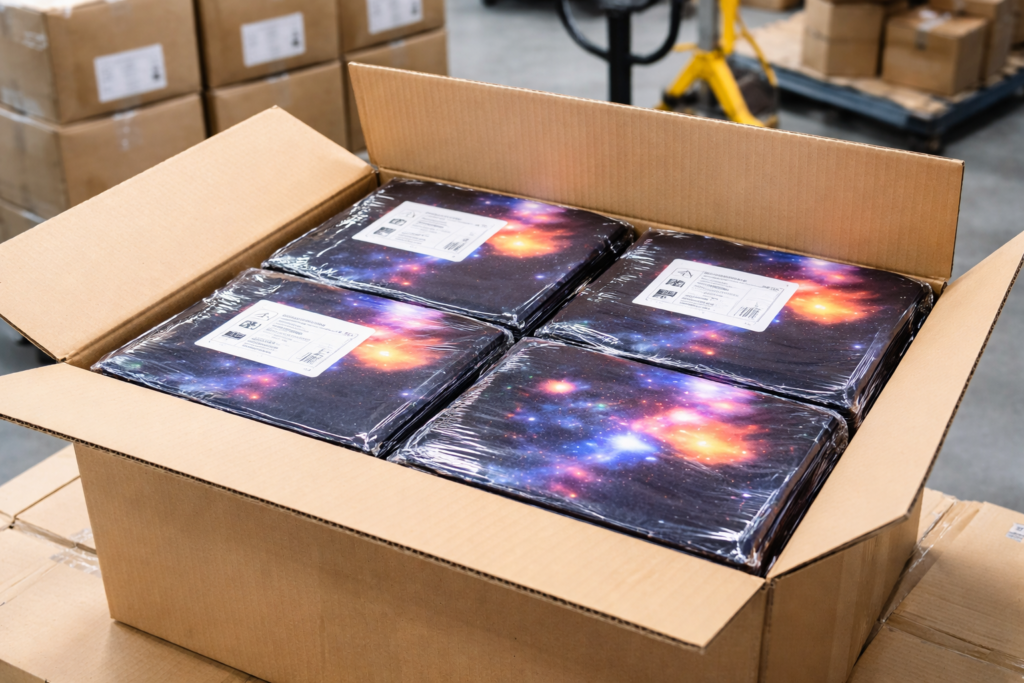
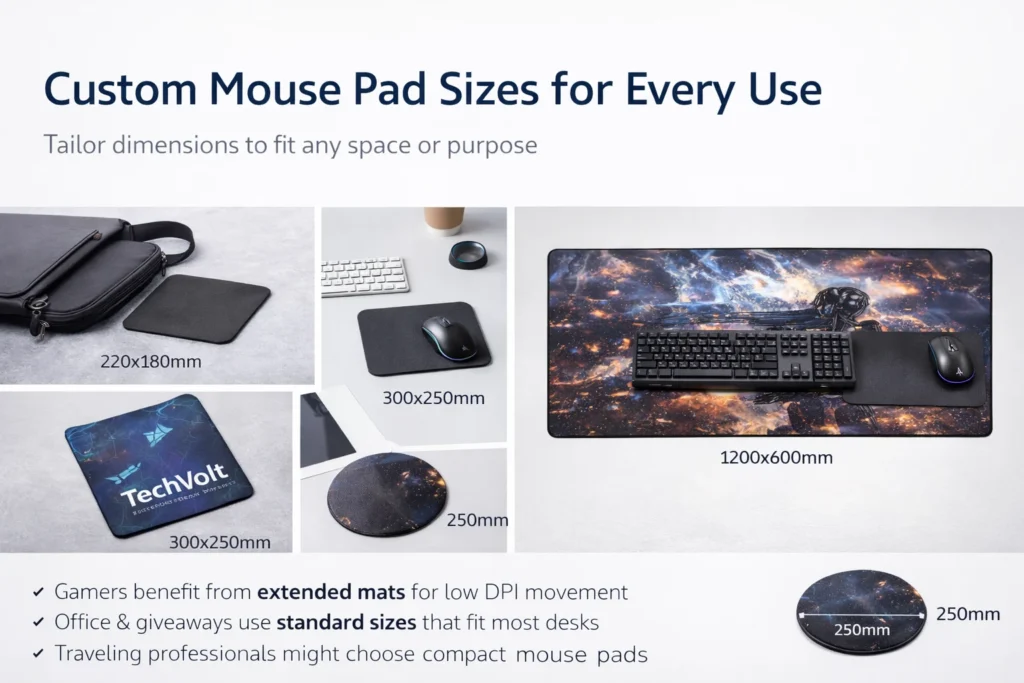
Niet alle bureaus en gebruiksmogelijkheden zijn hetzelfde. maataanpassing is fundamenteel. Je kunt de afmetingen van een muismat aanpassen aan elke ruimte of elk doel. Standaard muismatten zijn ongeveer 250×210 mm, maar op maat gemaakte bestellingen kunnen veel groter zijn, zelfs tot uitgebreide bureaumatten die een heel toetsenbord- en muisgebied beslaan (bijv. 900×400 mm of groter). Darshion kan compacte muismatten produceren voor krappe ruimtes of oversized matten voor maximale dekking, zodat ze perfect passen bij uw productvisie.
Voorbeeldspecificaties: Kleine draagbare onderleggers (~220×180 mm) voor op reis, standaard kantooronderleggers (~300×250 mm), grote gaming onderleggers (~450×400 mm) en XXL bureaumatten tot 1200×600 mm voor een volledig bureau. Aangepaste vormen (zoals ronde stroken met een diameter van 250 mm of extra lange stroken) zijn ook mogelijk.
Gebruikscases: Gamers profiteren van verlengde matten die brede muisbewegingen mogelijk maken bij lage DPI-instellingen. Kantoormedewerkers en bedrijfsgeschenken gebruiken vaak standaardmaten die op de meeste bureaus passen. Reizende professionals kiezen misschien voor kleinere pads die in een laptoptas passen. Wat het scenario ook is, het juiste formaat verhoogt het comfort voor de gebruiker en de zichtbaarheid van het merk.
2. Dikte
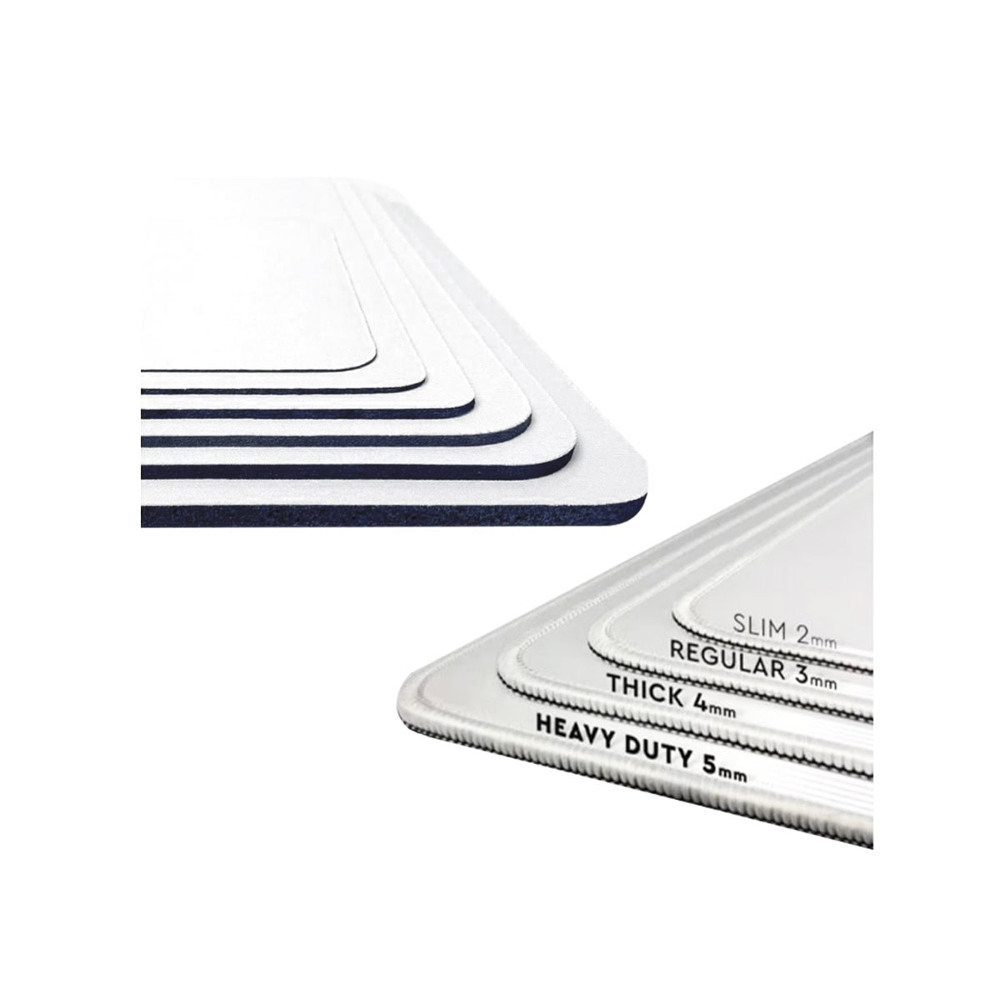
Dikte speelt een grote rol in het gevoel en de functionaliteit van een muismat. Gangbare diktes variëren van slanke 2 mm pads tot pluchen 5 mm matten. Dunnere pads zijn licht van gewicht en hebben een laag profiel op het bureau, terwijl dikkere pads meer demping bieden voor de pols en kunnen helpen bij het compenseren van oneffen oppervlakken. Darshion ondersteunt aangepaste diktekeuzes om te voldoen aan de doelgroep van uw product - of ze nu draagbaarheid of comfort belangrijk vinden.
Voorbeeldspecificaties: Ultradunne kussentjes van ~2 mm (voor een gestroomlijnde look en gemakkelijk transport), medium kussentjes van ~3 mm (de populairste balans tussen comfort en stevigheid) of extra dikke kussentjes van 4-5 mm (voor maximale demping en een eersteklas gevoel). Je kunt de exacte dikte in millimeters opgeven om het gewenste ergonomische effect te bereiken.
Gebruikscases: Promotionele en bulk weggeefblokken gebruiken vaak 2 mm dikte als een kosteneffectieve optie die gemakkelijk te verzenden is. Gaming pads of ergonomische bureauonderleggers kunnen gebruiken 3-4 mm dikte voor betere ondersteuning van de pols tijdens lange sessies, waardoor vermoeidheid wordt verminderd. Hoogwaardige retailproducten kunnen kiezen voor een luxe 5 mm pad om kwaliteit en comfort uit te stralen, zodat gebruikers een zacht, stevig platform voor hun muis hebben.
3. Materiaal oppervlak
De oppervlaktemateriaal van een muismat bepaalt de textuur, trackingeigenschappen en esthetiek. Dit is de toplaag waarop de muis beweegt. Fabrikanten zoals Darshion bieden een verscheidenheid aan oppervlaktematerialen om verschillende prestaties en looks te bereiken. De klassieke keuze is een stoffen stof (vaak microgeweven polyester) die bekend staat om zijn balans tussen snelheid en controle. Andere materialen zoals hard plastic, metaal of leer zijn echter ook opties voor speciale behoeften.
Voorbeeldspecificaties: Polyester (microtextuurdoek) voor soepele en nauwkeurige tracking - ideaal voor gaming en dagelijks gebruik. Hard polymeer of aluminium oppervlakken voor glijden met hoge snelheid en weinig wrijving (vaak favoriet in design of FPS-gaming voor snelle bewegingen). PU-leder oppervlakken voor een slanke, waterbestendige bureauonderlegger met een professionele uitstraling (geweldig voor kantoren). Zelfs unieke materialen zoals gehard glas of kurk kunnen worden gebruikt voor nichetoepassingen - bijvoorbeeld glas voor ultrasnelle beweging of kurk voor milieuvriendelijke aantrekkingskracht.
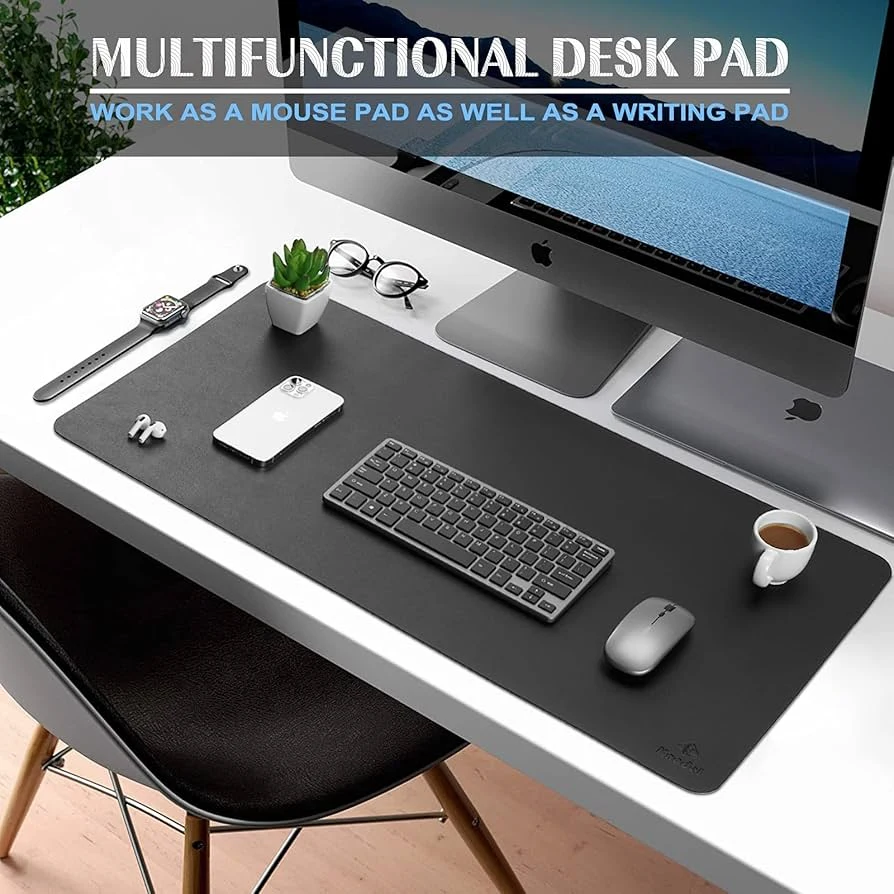
Gebruikscases: Gaming merken kiezen meestal voor doekoppervlakken omdat ze een goede mix van comfort en controle bieden, plus ze kunnen bedrukt worden in hoge resolutie. Stoffen pads hebben ook een natuurlijke antisliplaag (rubberen onderkant) en glijden stiller. Professionele kantooromgevingen misschien liever PU-leder of harde oppervlakken, die gemakkelijk schoon te maken zijn en een eersteklas uitstraling hebben (denk maar aan een bureaumat). Pads met een hard oppervlak (plastic/metaal) bieden snelheid en duurzaamheid, en zijn geschikt voor gebruikers die snel met de muis moeten klikken of in stoffige omgevingen werken waar een doek vaak schoongemaakt moet worden. Uiteindelijk kan het materiaal worden afgestemd op het gebruiksscenario - Darshion kan advies geven over materialen om de prestaties of het uiterlijk te bereiken dat u nodig hebt.
4. Basismateriaal
Net zo belangrijk als de bovenkant is de basismateriaal - de onderkant van de muismat die grip heeft op het bureau. Een goede basis voorkomt wegglijden en kan de flexibiliteit en milieuvriendelijkheid van de pad beïnvloeden. Natuurlijk rubber is de gouden standaard voor premium muismatten en biedt uitstekende grip en een zachte, geurvrije ervaring. Er zijn ook alternatieven zoals synthetisch rubber (bijv. neopreen of EVA-schuim), PU-basismaterialen of zelfs kurk/rubbermengsels voor duurzaamheid. De productie van Darshion is geschikt voor verschillende basismaterialen om te voldoen aan kosten-, prestatie- of milieuvereisten.
Voorbeeldspecificaties: 100% natuurrubber basis (antislip, zwaar en duurzaam - zorgt ervoor dat de mat plat ligt en niet wegglijdt). Gerecycled rubber of EVA-schuim basis (lichter gewicht, voordeliger voor massapromoties). PU of siliconen bodem (extreem stevig en kan heel dun gemaakt worden - geweldig voor speciale kussentjes of voor wie een waterdicht broekje nodig heeft). Kurkrug (een hernieuwbaar materiaal met een goede grip, gebruikt in milieuvriendelijke productlijnen).
Gebruikscases: High-end gaming- of kantoorpads gebruik natuurrubber voor zijn superieure grip en kwaliteitsgevoel - plus het wordt verkocht als een eersteklas, geurloos materiaal. Budget of wegwerp promotionele pads zou kunnen kiezen voor schuim of gerecycled rubber, prestaties in evenwicht brengen met kostenefficiëntie. Als een bedrijf de nadruk legt op duurzaamheid, is een basis van kurk of gerecycled materiaal kunnen hun milieuvriendelijke merkbekendheid versterken. Voor ongebruikelijke contexten, zoals een onderlegger voor een glazen tafel of mobiel gebruik, kan een siliconen basis kan zorgen voor extra kleefkracht zodat de pad stevig op zijn plaats blijft zitten.
5. Randverwerking
De randverwerking Verwijst naar hoe de omtrek van de muismat is afgewerkt. Randen kunnen een punt van slijtage zijn, dus het aanpassen van dit aspect verbetert de duurzaamheid en het comfort en voegt tegelijkertijd een visueel tintje toe. De populairste optie is gestikte randenDe rand van de onderlegger is genaaid met een overlocksteek, die rafelen van het oppervlaktemateriaal voorkomt. Darshion kan randstiksels in verschillende kleuren aanbrengen om uw ontwerp aan te vullen of om het subtiel te houden. Als alternatief kunnen pads geseald of gesneden voor een naadloze rand zonder stiksels, die er netter uitziet (maar mogelijk minder duurzaam is op de lange termijn).
Voorbeeldspecificaties: Gestikte randen (standaard zwarte draad of aangepaste draadkleur die past bij het ontwerp van de mat). Het stiksel kan low-profile zijn om comfortabel te blijven tijdens het gebruik. Geen stikranden (schoon gestanste randen waarbij het bedrukte oppervlak tot aan de rand reikt - gebruikelijk bij goedkopere matten of wanneer een volledige afbeelding zonder rand gewenst is). Sommige fabrikanten bieden ook reliëf of gerolde randen op bepaalde harde matten, maar voor zachte kussentjes is stikken de beste methode.
Gebruikscases: Eersteklas gaming muismatten en duurzame kantooronderleggers hebben bijna altijd gestikte randen voor langere duurzaamheid - de stiksels voorkomen dat de bovenstof loslaat, zelfs bij intensief gebruik. Gestikte randen zorgen ook voor een uiterlijk van hogere kwaliteit, wat belangrijk is voor winkelproducten. In tegenstelling, goedkope promotionele pads kunnen gebruiken ruwe snijranden (geen stiksels) om kosten te besparen; deze zijn prima voor kortstondig gebruik of grote eenmalige evenementen waarbij de levensduur van de mat niet kritisch is. Als je een full-bleed illustraties Als je van rand tot rand wilt gaan, kun je ervoor kiezen om geen zichtbare rand te gebruiken (of na het afdrukken een randstiksel te gebruiken zodat het ontwerp de rand bedekt, wat Darshion ook kan doen met kleurstiktechnieken).
6. RGB-verlichting
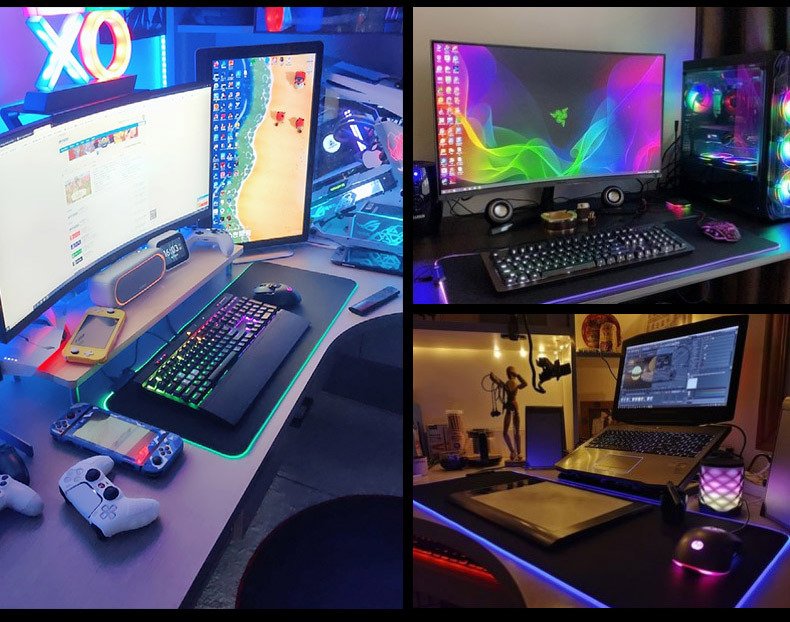
Een van de hipste trends op het gebied van muismatten is het toevoegen van RGB-verlichting. Een RGB muismat heeft een geïntegreerde LED-strip rond de randen, waardoor een oplichtende rand ontstaat die vaak door kleuren kan lopen of op een statische gloed kan worden ingesteld. Dit maatwerk verandert een gewone muismat in een opvallend technisch accessoire - perfect voor gamingopstellingen of hoogwaardige promotieartikelen. Darshion, dat voorop loopt, kan muismatten produceren met ingebouwde verlichtingselementen, inclusief de nodige USB-aansluitingen en controllers.
Voorbeeldspecificaties: Meerkleurige LED-verlichting met tot een dozijn modi (bv. statische kleuren zoals rood, blauw, groen; dynamische patronen zoals regenboogfade of ademhalingseffecten). De meeste RGB-pads zijn met USB-voeding via een aangesloten kabel; sommige geavanceerde modellen kunnen synchroniseren met pc-software voor kleurregeling. Een pad kan bijvoorbeeld het volgende bieden 11 verlichtingsmodi en een éénknopsbediening op de hoek om van modus te veranderen (een veelgebruikt ontwerp op de markt). De verlichting wordt meestal verspreid door een transparante rand voor een gelijkmatige gloed. Opties zijn onder andere eenkleurige LED (als er maar één merkkleur nodig is) of zelfs geluidreactieve verlichting die pulseert met muziek (meer gespecialiseerd).
Gebruikscases: Productlijnen voor games en eSports-evenementen houden van RGB-muismatten - de verlichte randen dragen bij aan de meeslepende spelomgeving en benadrukken het technisch-bewuste imago van een merk. Met een RGB-pad in een hardwarepakket (bijvoorbeeld met een toetsenbord of muis) kan een hogere prijs rechtvaardigen en liefhebbers aantrekken. Zakelijke klanten In de technische sector zou een RGB-verlichte pad kunnen worden gebruikt als VIP-geschenk of weggevertje, waardoor hun merk meteen wordt geassocieerd met innovatie. Deze pads vallen op op elk bureau, vooral in omgevingen met weinig licht, dus ze zijn ideaal voor iedereen die een visueel statement wil maken. Met de productieondersteuning van Darshion kunnen zelfs complexe RGB-pads in bulk worden geproduceerd om uw klanten versteld te doen staan.
7. Functionele functies
Naast de basis kan een muismat worden uitgebreid met extra functionele kenmerken. Deze innovaties transformeren de muismat van een eenvoudig oppervlak in een veelzijdig bureauaccessoire. Darshion's R&D en OEM mogelijkheden maken integratie van verschillende technologieën of ergonomische verbeteringen direct in het ontwerp van de muismat mogelijk. Dit betekent dat u echt iets unieks kunt bieden aan uw klanten of eindgebruikers door de mat te combineren met andere gadgets of voordelen.
Voorbeeldspecificaties: Integratie draadloos opladen - bijvoorbeeld het inbouwen van een draadloze Qi-oplader van 10 of 15 W in de hoek van een bureaumat, zodat gebruikers hun telefoon of draadloze muis kunnen opladen door deze gewoon op de mat te leggen. Ingebouwde USB-hubs - het toevoegen van een USB passthrough poort of twee op de pad (meestal via een aangesloten kabel) om andere randapparatuur aan te sluiten. Verwarmde muismat - met veilige verwarmingselementen om de muishand warm te houden (handig in koude kantoren of voor comfort). Geïntegreerde polssteun - het ontwerp van de pad met een bijgevoegde of afneembare gel/schuim polssteun voor ergonomie. Waterdichte coatings - waardoor het oppervlak hydrofoob wordt zodat gemorste vloeistoffen eraf rollen, wat de levensduur van de mat verlengt. Zelfs concepten zoals een muismat met numeriek toetsenbord of OLED-scherm zijn onderzocht, waaruit blijkt dat de mogelijkheden onbeperkt zijn.
Gebruikscases: Technologie-georiënteerde merken kunnen zich onderscheiden door een muismat met draadloos opladen, combineert effectief twee bureaubenodigdheden in één - geweldig voor moderne kantoren of gaming stations die waarde hechten aan kabelbeheer en gemak. Een onderlegger met een ingebouwde USB-hub of andere gadgets is een uitstekend relatiegeschenk dat de innovatieve geest van een bedrijf onderstreept. Verwarmde pads of die met polssteunen inspelen op ergonomie en gezondheid, aantrekkelijk voor werknemers die lange uren achter de computer doorbrengen (een doordacht bedrijfswelzijnsartikel). Door functionele functies toe te voegen verander je een muismat in een apparaat met toegevoegde waarde. Darshion kan deze aangepaste functies op schaal implementeren en ervoor zorgen dat ze voldoen aan veiligheids- en kwaliteitsnormen.
8. Logo aanpassen
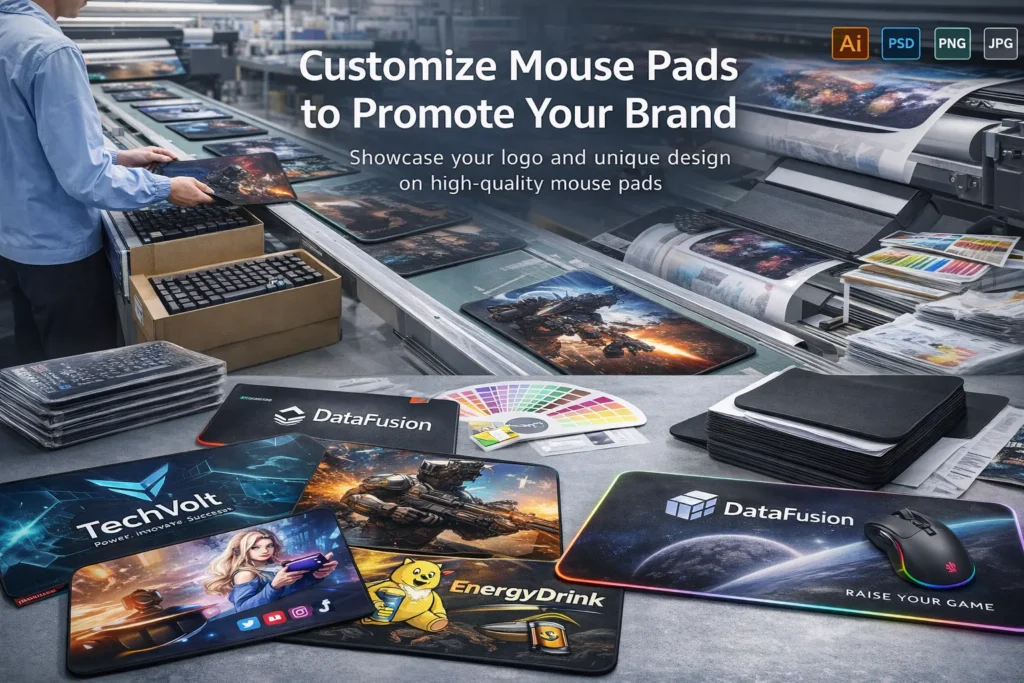
Voor merkeigenaren en marketeers is de mogelijkheid om het logo en ontwerp aanpassen is vaak de belangrijkste reden om een muismat op maat te laten maken. Dit is waar Darshion echt in uitblinkt - door gebruik te maken van geavanceerde druktechnieken om artwork of branding met precisie op de muismat. Een goed uitgevoerd logo op een muismat houdt uw merk elke dag onder de aandacht van de gebruikers en versterkt uw identiteit met elke blik.
Voorbeeldspecificaties: Afdrukken van rand tot rand in full-color via dye-sublimatie (deze techniek drukt je ontwerp in de stof voor levendige, langdurige kleuren die het hele oppervlak bedekken). Darshion gebruikt digitale printers met hoge definitie om te zorgen voor onberispelijke detailreproductie op stoffen onderleggers, zodat zelfs complexe afbeeldingen of foto's er scherp uitzien. Zeefdrukken of transferdruk voor eenvoudige logo's (handig als u slechts een klein logo op één plek wilt, bijvoorbeeld in de bovenhoek, en misschien voordeliger voor ontwerpen in één kleur). Op lederen of harde onderleggers zijn de volgende opties mogelijk debossing/embossing het logo (druk het in het materiaal voor een subtiel 3D-effect) of UV-printen voor een glanzende afwerking. Je kunt ook vragen om aangepaste kleurenschema's die overeenkomen met de Pantone-kleuren van je merk in het hele ontwerp van de onderlegger.
Gebruikscases: Promotionele koopwaar - bedrijven drukken vaak hun logo's en slogans op muismatten om weg te geven op evenementen of om op te nemen in productverpakkingen, omdat een muismat een groot, zichtbaar oppervlak heeft (waardoor het merk dagelijks wordt opgemerkt). Esports teams en gaming merken full-bleed illustraties op onderleggers gebruiken (bijv. teamlogo's, spelillustraties) om te verkopen als merchandise of te gebruiken in toernooien. Kantoren maken misschien muismatten met een merknaam voor werknemers, zowel voor de uniformiteit als voor het moreel - het bedrijfslogo op iemands bureau zien kan trots opwekken. Wat het scenario ook is, de flexibiliteit om logo's of artwork van hoge kwaliteit op de muismat te plaatsen is cruciaal en met de afdrukmogelijkheden van Darshion kun je scherpe resultaten in hoge resolutie bereiken die opvallen.
9. Aanpassing verpakking
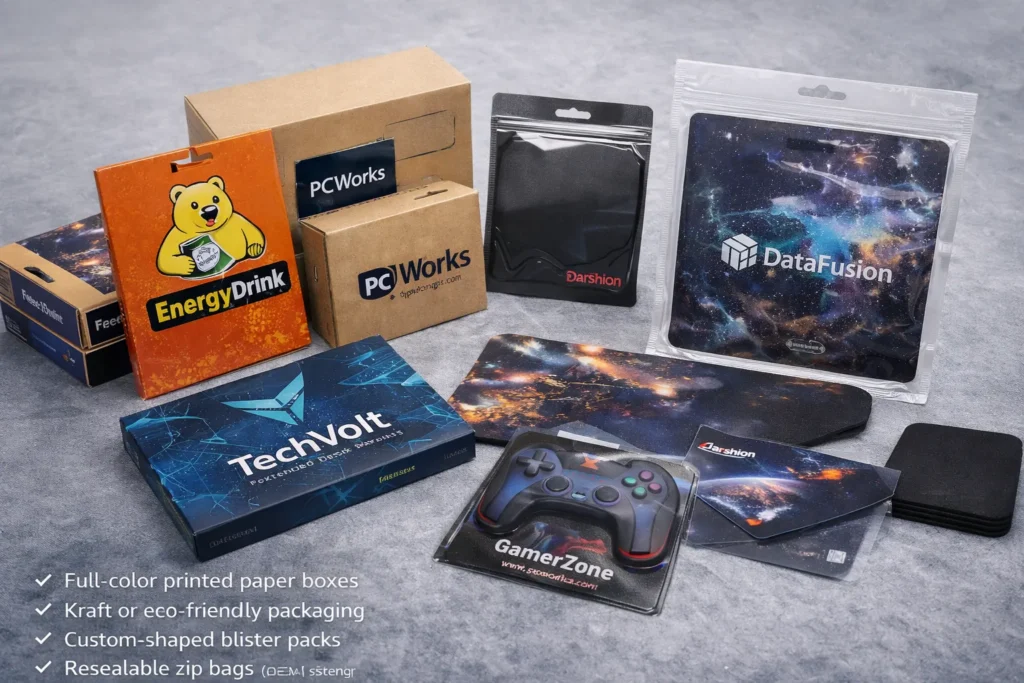
Aanpassingen zijn niet beperkt tot het product zelf. verpakking op maat kunt u de presentatie van de muismatten aanpassen. Dit is vooral belangrijk voor detailhandeldistributie of hoogwaardige relatiegeschenken. Een goed ontworpen verpakking kan branding, instructies en een kwaliteitspresentatie bevatten die de gepercipieerde waarde van de muismat verhoogt. Darshion ondersteunt huismerk- en winkelklare verpakkingen voor bulkbestellingen, wat betekent dat je muismatten kunnen aankomen in aangepaste dozen of hoezen die klaar zijn voor de schappen of geschikt zijn voor directe distributie naar klanten.
Voorbeeldspecificaties: Op maat bedrukte dozen - stevige kartonnen dozen op maat van de onderlegger, bedrukt met de afbeeldingen en productinformatie van uw merk (gebruikelijk voor gaming pads die in winkels worden verkocht). Verpakking voor buizen - Voor grote bureaumatten is een cilindrische koker (vaak van karton of plastic) met aangepaste labels een populaire keuze om de mat opgerold en beschermd te houden. Polyzak met inzetstuk - een voordelige optie waarbij elke onderlegger in een doorzichtige zak zit met een papieren inlegvel met merknaam of een headerkaart (vaak gebruikt voor massapromoties). Milieuvriendelijke verpakking - Gebruik gerecycled of minimaal verpakkingsmateriaal met eenvoudige logo's in één kleur voor een duurzame indruk. Je kunt ook extra's toevoegen zoals een bedankbriefje, een instructiefolder of zelfs aangepast inpakpapier als het een luxeproduct is.
Gebruikscases: Winkelmerken die hun eigen lijn muismatten lanceren, zullen willen merkverpakking zodat het product opvalt in de schappen en professionaliteit uitstraalt (denk aan een glanzende doos met holografisch logo voor een gamingmat). Zakelijke bestellingen voor evenementen of relatiegeschenken zou kunnen gebruiken eenvoudige elegante verpakking - Bijvoorbeeld een matzwarte doos met een zilveren folielogo - om de ontvanger een speciaal gevoel te geven bij het uitpakken. Voor promotionele giveaways, kosten zijn belangrijk, dus een verzegelde plastic zak met een bedrijfssticker of inlegvel kan volstaan, zodat de onderlegger schoon blijft en toch de merkboodschap uitdraagt. Door de verpakking op maat te maken, krijgt u ook ruimte voor bijkomende boodschappen (slogans, QR-codes naar uw website, productspecificaties, enz. Darshion kan helpen bij het ontwerpen en produceren van dergelijke verpakkingen om ze af te stemmen op uw algemene merkstrategie.
10. Structurele innovatie
De laatste categorie is breed en spannend: structurele innovatie. Dit omvat alle onconventionele of geavanceerde ontwerpkenmerken in de fysieke structuur of vorm van de muismat. Als je een muismat kunt bedenken die de normale vorm doorbreekt, dan kan die waarschijnlijk worden gemaakt. Darshions flexibele OEM-mogelijkheden moedigen klanten aan om creatieve ideeën voor te stellen - de fabriek kan vaak een manier vinden om ze tot leven te brengen. Structurele innovaties kunnen uw product onderscheidend maken in een overvolle markt door vormfactoren of multifunctionele ontwerpen aan te bieden die niemand anders heeft.
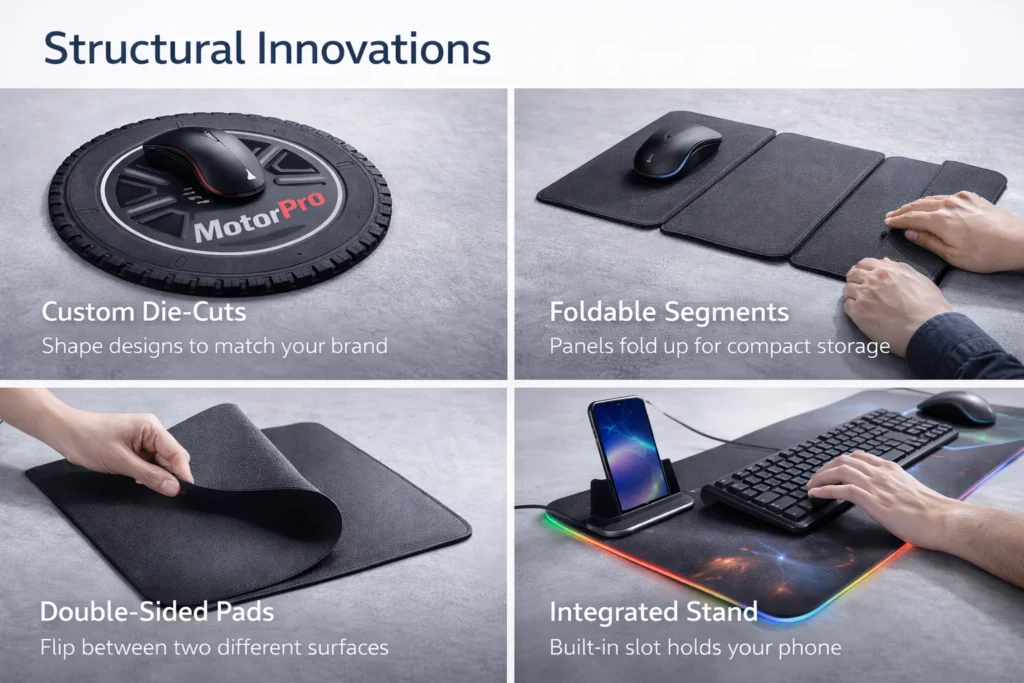
Voorbeeldspecificaties: Niet-rechthoekige vormen - aangepaste stansvormen, zodat je muismat rond, ovaal of zelfs in de vorm van een mascotte of logo kan zijn. (Een autobedrijf kan bijvoorbeeld pads maken in de vorm van een band of een stuurwiel). Opvouwbare ontwerpen - muismatten die compacter kunnen worden opgevouwen of opgerold, soms met gebruik van gesegmenteerde panelen of speciale materialen; één concept maakt gebruik van magnetische secties voor eenvoudig opvouwen en bevestigen aan oppervlakken. Dubbelzijdige pads - Omkeerbare muismatten met verschillende materialen aan elke kant (bijvoorbeeld glad leer aan de ene kant en kurk of rubber met textuur aan de andere), waardoor gebruikers kunnen kiezen uit twee functionaliteiten in één product. Geïntegreerde extra's - misschien een pad met een ingebouwde apparaatstandaard (om een telefoon of tablet op te zetten), of een die over de voorrand van een bureau valt, of kabelmanagementkanalen bevat voor muis-/toetsenbordkabels. Zelfs combiproducten zoals een verlengde bureaumat met een geïntegreerd toetsenbordvak of vakken voor andere voorwerpen vallen onder deze categorie.
Gebruikscases: Innovatieve giveaways of producten in beperkte oplage kunnen unieke vormen gebruiken - een technisch evenement kan bijvoorbeeld ronde, gloeiende muismatten uitdelen, gewoon om gedenkwaardig te zijn. Reizende professionals en gamers onderweg zouden een opvouwbare muismat, die gemakkelijk in een tas past zonder het oppervlak te beschadigen (sommige opvouwbare pads zijn zelfs voorzien van draadloos opladen voor ultiem gemak). A omkeerbaar kussen Geschikt voor gebruikers die twee functies (zacht vs. hard oppervlak) in één willen, zodat ze minder pads nodig hebben. Gespecialiseerde omgevingen (zoals een industriële werkplaats of ontwerpstudio) hebben misschien structurele aanpassingen nodig, zoals een bepaalde uitsnedevorm voor hun console of apparatuur. Door buiten de gebaande paden te denken op het gebied van structuur, kun je inspelen op nichebehoeften of een opvallend product creëren - en met de ondersteuning van Darshion kunnen zelfs onconventionele ontwerpen betrouwbaar worden geproduceerd.
Conclusie: Onbeperkte mogelijkheden met Darshion
Deze 10 aanpassingscategorieën laten de meest voorkomende (en impactvolle) manieren zien waarop je een muismat kunt aanpassen aan de behoeften van je merk. Van praktische aanpassingen zoals grootte en materiaal, tot high-tech toevoegingen zoals RGB-lampjes en draadloos opladen, met elke optie kun je iets unieks creëren voor je klanten of werknemers. Deze lijst is echter niet volledig - de mogelijkheden zijn vrijwel eindeloos. Heb je nog een ander idee dan deze 10? We horen het graag. Darshion gedijt op innovatie en flexibiliteit; als full-service OEM-fabrikant zijn we in staat creatieve concepten om te zetten in realiteit, zelfs bij bulkorders.
Bereik ons of laat een reactie achter met jouw visie op een muismat. Of het nu gaat om een ongewoon materiaal, een nieuwe vorm of een nieuwe technische integratie, Darshion ondersteunt volledige OEM, bulkproductie en flexibele maatwerkoplossingen om het te realiseren. Door uw muismatten op deze manieren aan te passen, bestelt u niet zomaar een accessoire - u creëert een merkervaring en een product dat er echt uitspringt. Laten we samenwerken om uw ideale muismat tot leven te brengen en uw merk of project naar een hoger niveau te tillen.