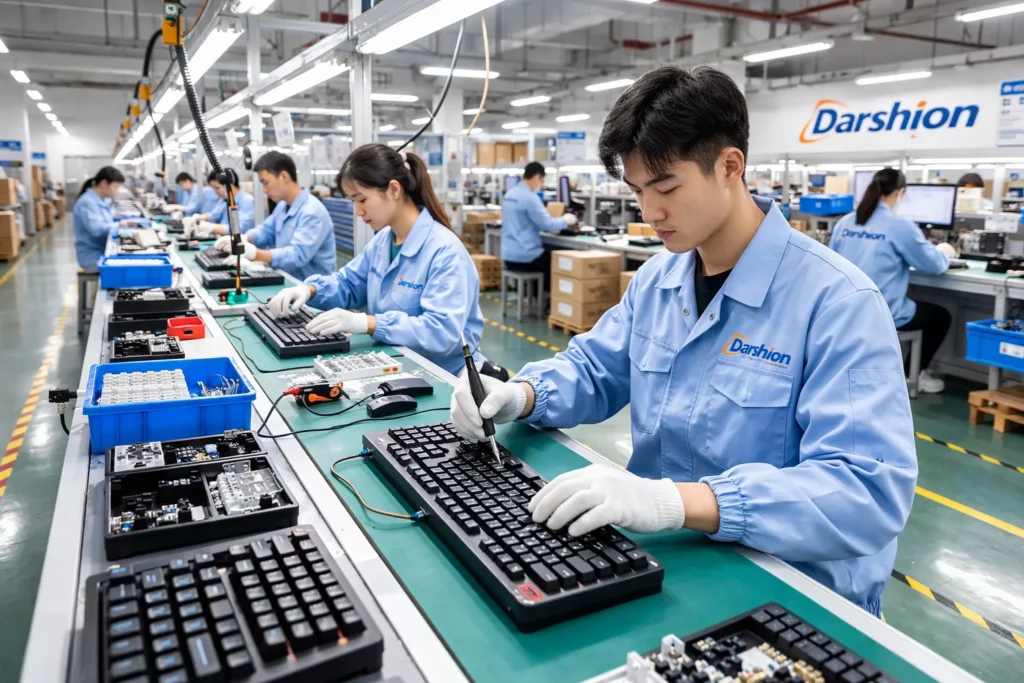
Sourcing-professionals en OEM/ODM inkopers stuiten vaak op raadselachtige prijsverschillen bij het vergelijken van toetsenbordfabrikanten. De ene leverancier kan een eenheidsprijs noemen die 20-30% lager is dan die van anderen voor een vergelijkbaar toetsenbord. toetsenbord. Betekent een lagere prijs dat je een geweldige deal hebt gevonden, of zijn er verborgen nadelen? In de competitieve wereld van de levering van toetsenborden gaat een bodemprijs meestal gepaard met compromissen op het gebied van materialen, kwaliteit, specificaties of diensten. Dit artikel is gebaseerd op ervaringen uit de branche om de echte redenen achter die lage prijzen uit te leggen. We definiëren het typische prijsverschil in de toetsenbordmarkt en gaan na of lagere offertes echt gelijk staan aan waarde of gewoon elders kosten verbergen. Aan het eind weet u precies waar u op moet letten als de laagste bieder en hoe je een evenwicht kunt vinden tussen kosten, kwaliteit en vertrouwen.
Goedkopere materialen en onderdelen verlagen de initiële kosten
Een van de meest voorkomende redenen waarom een leverancier van toetsenborden een zeer lage prijs kan opgeven, is het gebruik van goedkopere materialen en onderdelen. De materialen die in een toetsenbord worden verwerkt, van het plastic in de behuizing en de toetsen tot de schakelaars en printplaat, hebben een enorme invloed op de kosten. en kwaliteit. Goedkope leveranciers kiezen vaak voor de goedkoopste opties:
- Sleutelhangers: Budgettoetsenborden gebruiken meestal ABS-kunststof keycaps, die goedkoop zijn maar sneller slijten en een glanzend glad oppervlak kunnen krijgen bij gebruik. Hogere toetsenborden gebruiken PBT keycaps die bestand zijn tegen slijtage en hun textuur behouden, maar PBT kost meer om te produceren. De goedkopere prijsopgave weerspiegelt waarschijnlijk ABS toetsen in plaats van duurzame PBT of double-shot legends.
- Schakelaars: De kwaliteit van mechanische schakelaars varieert sterk. Gerenommeerde merken zoals Cherry MX of Gateron schakelaars kosten meer per stuk, terwijl kloonschakelaars (bijvoorbeeld generieke Cherry MX “equivalenten” van minder bekende merken) veel goedkoper zijn. Een leverancier die aanzienlijk goedkoper is, gebruikt mogelijk schakelaars van een ander merk die bedoeld zijn om eersteklas schakelaars na te bootsen. Hoewel deze klonen kunnen functioneren, hebben ze vaak niet de levensduur en consistentie van echte schakelaars. Een echte Cherry MX-switch kan bijvoorbeeld een paar keer meer kosten dan een kloon - vermenigvuldig dat met 104 toetsen en de besparingen (en het verschil in prestaties) worden duidelijk.
- Frame en bouwmaterialen: Lage prijzen komen vaak overeen met goedkopere materialen voor het chassis. Een hoogwaardig gaming-toetsenbord kan een aluminium of dik ABS-frame hebben voor meer stevigheid, terwijl een voordelige optie gebruik maakt van dun generiek plastic. Metalen backplates, gevlochten USB-kabels of extra geluiddempend schuim ontbreken meestal in ultra-budget uitvoeringen. Al deze hoogwaardige details brengen extra productiekosten met zich mee, dus hun afwezigheid kan de prijs verlagen.
Kortom, materiaalkeuze is een belangrijke factor. Leveranciers die altijd onder de marktprijs bieden, gebruiken waarschijnlijk goedkopere onderdelen van een lagere kwaliteit, van de toetsen en schakelaars tot de printplaat en behuizing. Dit kan acceptabel zijn voor standaard kantoorgebruik, maar voor kopers die een lange levensduur of specifieke prestatie-eisen hebben, is dit een rode vlag. Goedkopere materialen betekenen vaak een kortere levensduur van het product en een grotere kans op problemen in de toekomst.
Lagere arbeidskosten en kortere productietijden
Een andere reden waarom sommige fabrikanten anderen kunnen onderbieden, is door te werken met lagere arbeidskosten of door kortere productietijden. Arbeid maakt een aanzienlijk deel uit van de productiekosten, vooral voor elektronica-assemblage en kwaliteitsborging. Hier lees je hoe bepaalde leveranciers deze kosten verlagen:
- Regio en lonen: Veel leveranciers van toetsenborden zijn gevestigd in goedkope productiecentra (zoals Shenzhen, China). Hoewel ze allemaal profiteren van lagere lonen in vergelijking met westerse fabrieken, drukken sommige de arbeidskosten nog verder door gebruik te maken van tijdelijke of minder geschoolde werknemers of door zich niet te houden aan strenge arbeidsnormen. Ze bieden mogelijk niet de training of eerlijke lonen die een fabriek met een betere reputatie zou bieden, waardoor de kosten worden gedrukt ten koste van het welzijn van de werknemers en mogelijk de consistentie. Gecertificeerde fabrieken daarentegen investeren in goede training en naleving (bijv. audits op het gebied van sociale verantwoordelijkheid zoals BSCI), wat de overhead verhoogt. Als een offerte onwaarschijnlijk laag lijkt, kan het zijn dat de leverancier de kantjes eraf loopt op het gebied van arbeid of arbeidsomstandigheden (een ethisch en kwaliteitsrisico).
- Lean Personeel & Overhead: Een lager geprijsde leverancier kan zeer slank werken - met een minimum aan technisch personeel, kwaliteitsinspecteurs of klantenondersteuning. Ze besparen geld door geen ervaren R&D-teams in dienst te nemen of door ontwerpverificatiestadia over te slaan. Eersteklas OEM-fabrikanten steken daarentegen geld in technische expertise en projectmanagement (wat de koper ten goede komt door een beter ontwerp en vlottere communicatie). Deze kosten weerspiegelen zich in de prijs. Een constant lage offerte kan betekenen dat u niet veel technische ondersteuning of hulp bij aanpassingen van hun kant krijgt.
- Vereenvoudigde of versnelde montage: Om tijd (en arbeidsuren) te besparen, kunnen budgetleveranciers het assemblageproces tot op het bot stroomlijnen. Meer handmatige assemblage in plaats van dure automatisering kan in eerste instantie goedkoper zijn - mits arbeid goedkoop is - maar levert vaak meer variabiliteit op. Sommige fabrieken slaan misschien niet-essentiële assemblagestappen over, gebruiken oudere apparatuur of zien af van leuke processen (zoals het smeren van stabilisatoren of het reinigen van onderdelen) om een paar cent per eenheid te besparen. Deze kortere wegen kunnen het risico op assemblagefouten of cosmetische defecten vergroten, maar ze verlagen de directe arbeidskosten per toetsenbord.
- Minder kwaliteitstoezicht: Besparingen op arbeidskosten komen ook van het verminderen van het aantal personeelsleden of uren in de kwaliteitscontrole (waarover meer in de volgende sectie). Het niet betalen van senior technici om toezicht te houden op elke productierun, of het niet hebben van tweetalige projectmanagers die samenwerken met internationale klanten, betekent bijvoorbeeld een lagere overhead - en soms miscommunicatie of fouten die worden doorgegeven.
Het netto-effect van deze arbeids- en productiesnelkoppelingen is een lagere offerte. Inkopers moeten echter rekening houden met de verborgen prijs: inconsistente kwaliteit, mogelijke vertragingen als herbewerking nodig is en gebrek aan ondersteuning. Als er problemen ontstaan, kan een leverancier die beknibbelt op geschoold personeel moeite hebben om problemen snel op te lossen. Het is belangrijk voor OEM/ODM-inkopers om de professionaliteit van een leverancier te beoordelen naast de offerte - vraag naar hun personeel, certificeringen en of ze investeren in training en robuuste processen. Een echt goedkope leverancier heeft misschien niet veel vangnet als er iets misgaat.
Minder normen voor kwaliteitscontrole en testen
Misschien wel de grootste verborgen afweging achter een bodemprijs is het niveau van kwaliteitscontrole (QC) en testen uitgevoerd. Strenge QC is duur - het vereist tijd, deskundig personeel en soms gespecialiseerde apparatuur - en sommige leveranciers minimaliseren deze inspanningen om de kosten laag te houden. Inzicht in de QC-aanpak van een toeleverancier is cruciaal, want een slechte QC kan leiden tot hoge defectpercentages en dure verrassingen achteraf:
- Minimaal testen: Het uitgebreid testen van elk toetsenbord (of in ieder geval elke batch) kost meer tijd en werk. Gerenommeerde fabrikanten zullen meerdere inspectiefasen uitvoeren, bijvoorbeeld controleren of elke toets op elk apparaat goed werkt, zonder soldeerproblemen of LED-storingen. Ze kunnen burn-in-tests uitvoeren, de levensduur van toetsen testen en visuele inspecties uitvoeren op alle apparaten. Een leverancier met een lage prijs doet daarentegen misschien maar een heel oppervlakkige controle (of vertrouwt alleen op de laatste functionaliteitstest van een paar exemplaren per batch). Door minder tijd te besteden aan testen, besparen ze kosten, maar er kunnen defecte apparaten doorheen glippen.
- Lagere kwaliteitsnormen (AQL): Veel fabrieken volgen een AQL (Acceptable Quality Limit) steekproef voor grote orders - bijvoorbeeld, test 5-10% van de batch. Een leverancier die minder biedt, gebruikt misschien een hogere AQL-tolerantie (waardoor meer defecten mogelijk zijn) of slaat zelfs willekeurige batchtests over om tijd te besparen. In sommige gevallen hebben ze helemaal geen formeel kwaliteitsmanagementsysteem. Een gebrek aan ISO 9001 of vergelijkbare kwaliteitscertificaten kan erop wijzen dat hun processen niet streng worden gecontroleerd. Beknibbelen op deze processen is een manier om kosten te besparen - met het risico van een 80/20 regel waarbij 20% aan eenheden later 80% aan hoofdpijn kan veroorzaken.
- Beperkt QC-personeel of beperkte apparatuur: Het uitvoeren van diepgaande QC (zoals het röntgenologisch inspecteren van soldeerverbindingen of het gebruik van geautomatiseerde testopstellingen) vereist een investering. Budgetleveranciers hebben misschien een heel klein kwaliteitsteam met basistools, terwijl een duurdere OEM-partner state-of-the-art inspectiesystemen gebruikt en meerdere controlepunten heeft. In een artikel in de branche wordt opgemerkt dat fabrikanten ervoor moeten zorgen dat elk toetsenbord aan strenge normen voldoet. voegt kosten toe voor arbeid en productielijntijd. Als deze kosten niet duidelijk in de offerte naar voren komen, wordt de kwaliteit waarschijnlijk niet grondig gecontroleerd.
- Gevolgen van slechte QC: Hier moeten kopers echt voorzichtig zijn. Een zending toetsenborden met veel defecten kan alle aanvankelijke besparingen van een goedkope offerte tenietdoen. Stelt u zich eens voor dat u een bulkorder ontvangt en 5% van de eenheden dood aantreft bij aankomst of met niet-functionele toetsen - u moet nu vervangingen of terugbetalingen regelen, mogelijk uw klanten boos maken en extra verwerkingskosten maken. Erger nog, als de leverancier geen sterk garantie- of herwerkbeleid heeft, kan het zijn dat je deze kosten volledig moet betalen. Kwaliteitsproblemen schaden ook de reputatie van uw merk als u producten naar eindgebruikers verzendt. In wezen verschuiven tekortkomingen op het gebied van kwaliteitscontrole kosten van de leverancier naar de koper in de vorm van een hoger risico op defecten.
Om deze redenen is het verstandig om potentiële leveranciers rechtstreeks te vragen naar hun QA/QC-procedures. Een ervaren, betrouwbare fabrikant zal met trots uitleg geven over zijn testprocedures (bijvoorbeeld: “100% van onze toetsenborden worden vóór het verpakken getest op functionaliteit, LED’s en uiterlijk”). Als het antwoord van een leverancier vaag is of als zijn offerte drastisch Als ze achterblijven bij de concurrentie, zou dat erop kunnen wijzen dat ze gewoon “leveren en hopen op het beste”. Bij inkoop geldt: een ounce preventie (kwaliteitscontrole) is een pond genezing waard – en dat kost wel degelijk een aantal ounces geld, iets waar eerlijke leveranciers rekening mee houden bij het vaststellen van hun prijzen.
Beperkte specificaties of ontbrekende functies in de offerte
Bij het vergelijken van offertes is het van cruciaal belang dat je ervoor zorgt dat je appels met appels vergelijken. Een veelvoorkomende reden waarom de offerte van een leverancier aanzienlijk lager lijkt, is dat deze in feite minder – wat betreft productspecificaties, inbegrepen functies of de omvang van de werkzaamheden. Met andere woorden: in de goedkopere offerte kan iets ontbreken dat wel in de duurdere offertes is opgenomen. Dit kan opzettelijk zijn (een tactiek om opdrachten binnen te halen met een minimaal aanbod) of onopzettelijk (miscommunicatie of aannames over de specificaties). Belangrijke punten waarop specificaties en te leveren prestaties kunnen verschillen:
- Verschillende productversies: Biedt de leverancier met de laagste offerte precies hetzelfde toetsenbordmodel en dezelfde configuratie aan? Als je bijvoorbeeld een gamingtoetsenbord hebt aangevraagd met RGB-verlichting per toets en een metalen behuizing, kan een leverancier een model aanbieden dat er op het eerste gezicht hetzelfde uitziet, maar dat gebruikmaakt van eenkleurige achtergrondverlichting of een kunststof frame om de kosten te drukken. Het is gemakkelijk om je te laten verleiden door een lage prijs, om er later achter te komen dat het product niet helemaal is wat je wilde. Controleer altijd nogmaals of de stuklijst en het ontwerp (type schakelaars, key rollover, kabeltype, enz.) in alle offertes aan je eisen voldoen.
- Uitgesloten accessoires of diensten: Let goed op wat er niet vermeld. Is de USB-kabel bij de offerte inbegrepen, of is die extra? Hoe zit het met de verpakking (verkoopdozen, aangepaste huisstijl) – is die inbegrepen of worden daar aparte kosten voor in rekening gebracht? Een leverancier die een lagere offerte indient, heeft mogelijk zaken zoals een gebruikershandleiding, reservetoetskapjes of het aanpassen van de opschriften op de toetskapjes weggelaten. Ook kunnen aftersalesdiensten zoals garantie of technische ondersteuning ontbreken. Een voorbeeld uit de inkoopwereld buiten de elektronicasector liet zien dat een goedkoper bod een “financieel zwart gat” kan worden zodra je alle extra’s meerekent die niet waren inbegrepen. Hetzelfde geldt hier: een offerte kan bijvoorbeeld een uitgebreide garantie of een vergoeding voor DOA-eenheden (dead on arrival) uitsluiten. Zodra je die ontbrekende onderdelen weer toevoegt, verdwijnt het kostenvoordeel.
- Kwaliteit van de onderdelen: Dit hangt weer samen met de materialen, maar in technische specificaties kunnen er nuances zitten. Zo kan er in een specificatie bijvoorbeeld worden gevraagd om vergulde USB-aansluitingen wat betreft duurzaamheid – bij een goedkope offerte wordt dit misschien stilletjes vervangen door een standaard nikkelconnector. Of de dikte en kwaliteit van de printplaat kunnen verschillen (een dunnere printplaat is goedkoper, maar heeft meer kans op kromtrekken). Als het specificatieblad van een leverancier minder gedetailleerd is of meer algemene termen gebruikt, vraag dan om verduidelijking. Soms iedereen Er staat weliswaar “toetsenbord met mechanische schakelaars en XYZ-indeling”, maar pas als je verder doorvraagt, blijkt of er sprake is van een bekend merk schakelaars of juist van een merkloze kloon, zoals eerder besproken. Deze verschillen in specificaties kunnen, als je niet oppast, verborgen blijven achter een aantrekkelijke prijs.
- Certificeringen en naleving (of het ontbreken daarvan): In het volgende hoofdstuk gaan we dieper in op naleving, maar het is de moeite waard om hier alvast te vermelden: als uw doelmarkten bepaalde certificeringen vereisen (bijvoorbeeld FCC voor draadloze toetsenborden, CE-markering voor de EU, RoHS voor gevaarlijke stoffen), dan is een aanbod zonder geteste naleving in feite een ander (inferieur) product. Het is misschien goedkoper omdat de leverancier geen kosten maakt voor conformiteitstests of geen gecertificeerde onderdelen gebruikt. Houd altijd rekening met de kosten om een niet-gecertificeerd product aan de voorschriften te laten voldoen – als een offerte laag is omdat er geen rekening wordt gehouden met certificering, kunt u later te maken krijgen met laboratoriumkosten of importproblemen.
De conclusie is dat kopers de specificaties van elke offerte nauwkeurig op elkaar moeten afstemmen. Stel een checklist op met de functies en diensten die u nodig hebt, en controleer of elke offerte deze dekt. Als er in een offerte posten ontbreken of als de formulering vaag is, vraag dan om opheldering. In B2B-inkoop komt het regelmatig voor dat een leverancier die een veel lagere prijs aanbiedt, simpelweg enkele kostbare vereisten heeft weggelaten (soms in de hoop dat u dit pas later opmerkt). Door te zorgen voor een eerlijke vergelijking kan blijken dat de “goedkoopste” leverancier in feite niet dezelfde waarde of omvang levert als anderen.
Certificeringen en naleving negeren om geld te besparen
Productcertificeringen en naleving van regelgeving vormen niet te verwaarlozen kosten bij de productie van hardware. Als de prijzen van een leverancier aanzienlijk lager liggen, ga dan na of deze over alle vereiste certificeringen beschikt en zich aan internationale normen houdt. Sommige fabrieken besparen op de kosten door nalevingstests over te slaan of door materialen te gebruiken die niet aan de normen voldoen, wat risico’s kan opleveren voor de koper. Dit is hoe deze factor een rol speelt:
- Veiligheids- en EMC-certificeringen: Toetsenborden, vooral als ze draadloos zijn of bepaalde elektronische onderdelen bevatten (bijvoorbeeld circuits voor achtergrondverlichting), moeten mogelijk voldoen aan certificeringen zoals FCC (voor radio-emissies in de VS) of de CE-markering voor de EU-markt. Het verkrijgen van deze certificeringen brengt tests en kosten met zich mee. Zo kunnen CE-tests voor elektronica, afhankelijk van de complexiteit van het product, variëren van een paar honderd tot vele duizenden dollars. Een goedkope leverancier neemt wellicht niet de moeite om formele certificeringsprocessen te doorlopen. Hij kan de vereiste negeren (waarbij de naleving aan de koper/importeur wordt overgelaten) of zelf uitgegeven certificaten van twijfelachtige geldigheid verstrekken. Door niet te investeren in de juiste tests en certificering besparen ze geld – maar de koper draagt dan het risico. Als uw geïmporteerde toetsenborden niet over de vereiste certificaten beschikken, kunnen ze bij de douane worden tegengehouden of leiden tot juridische sancties.
- Kwaliteitsbeheersystemen: Gerenommeerde OEM-fabrikanten investeren in managementcertificeringen zoals ISO 9001 (kwaliteitsmanagement) om consistente processen te waarborgen, en houden zich vaak aan normen zoals RoHS (Beperking van gevaarlijke stoffen) om ervoor te zorgen dat producten veilig en milieuvriendelijk zijn. Deze maatregelen om aan de voorschriften te voldoen brengen kosten met zich mee – zo kan het gebruik van RoHS-conform soldeer en componenten de materiaalkosten licht doen stijgen, en kan het handhaven van nalevingsprocessen ongeveer 5% van de jaarlijkse omzet van een bedrijf opslokken. Een “cowboy”-leverancier die goedkope offertes uitbrengt, negeert dergelijke normen mogelijk (bijvoorbeeld door loodhoudend soldeer of printplaten van mindere kwaliteit met verboden stoffen te gebruiken). Dit levert niet alleen op korte termijn een kostenbesparing op, maar kan er ook toe leiden dat de toetsenborden in sommige landen niet voldoen aan de invoervoorschriften.
- RoHS en naleving van milieuwetgeving: Het gebruik van niet-RoHS-conforme onderdelen (die lood, kwik enz. bevatten) kan kosten besparen, omdat die verouderde materialen of processen wellicht goedkoper zijn. Het is echter illegaal om elektronica die niet aan de RoHS-richtlijn voldoet te verkopen in regio’s zoals de EU. De verborgen kosten zijn hier enorm als je hier een fout maakt – boetes, productterugroepingen of het afschrijven van onverkoopbare voorraad. Uit een analyse bleek dat het negeren van nalevingsrisico’s een bedrijf kan blootstellen aan omzetverlies, boetes en kosten voor het herwerken of terugroepen van producten. Een leverancier die een lage offerte uitbrengt door RoHS of andere richtlijnen te negeren, geeft in feite een tikkende tijdbom door aan de koper.
- Fabrieksinspecties en ethische normen: Ook sociale en ethische normen (zoals BSCI of SA8000 voor arbeidsnormen) en beveiligingsprotocollen (zoals C-TPAT voor de beveiliging van de toeleveringsketen) worden door lage bieders mogelijk achterwege gelaten. Deze certificeringen zijn niet altijd wettelijk verplicht, maar ze duiden wel op een betrouwbare partner. Bijvoorbeeld, Darshion (een bekende OEM-fabrikant van toetsenborden) benadrukt dat het bedrijf de CE-, FCC- en RoHS-certificeringen heeft behaald en voldoet aan de ISO 9001- en BSCI-normen – wat weliswaar extra kosten met zich meebrengt, maar wel vertrouwen wekt. Als een concurrent dit allemaal niet doet, kan hij inderdaad met een lager budget werken. U als koper kunt echter voor verrassingen komen te staan, zoals wisselende kwaliteit, mogelijke juridische aansprakelijkheid of PR-problemen als er iets misgaat (stel u voor dat u ontdekt dat een partij toetsenborden te veel lood in het soldeersel bevat of niet voldoet aan de tests voor elektromagnetische interferentie nadat u ze hebt geïmporteerd).
Kortom, naleving is een gebied waarop “goedkopere” leveranciers geld besparen achter de schermen. Hoewel dit niet direct zichtbaar is in het product zelf, vormt het ontbreken van de juiste certificeringen en het niet naleven van normen een belangrijke verborgen nadelige afweging. Controleer altijd welke certificeringen een fabrikant bezit. Als zij niet direct bewijs van CE- of FCC-markeringen kunnen overleggen, of als zij adviseren tegen Als er bepaalde controles worden overgeslagen om geld te besparen, beschouw dat dan als een waarschuwing. Het omzeilen van regelgeving kan kopers later duur komen te staan, waardoor een goede deal verandert in een kostbaar fiasco.
Volumestrategieën en prijsstrategieën die “te mooi zijn om waar te zijn”
Soms hanteert een leverancier een zeer lage eenheidsprijs, niet vanwege een mindere kwaliteit, maar vanwege bedrijfsstrategie of volumetactieken. Het is belangrijk om deze scenario’s te herkennen, aangezien er vaak voorwaarden aan verbonden zijn:
- Hoge minimale bestelhoeveelheden (MOQ’s): Een veelgebruikte tactiek is het aanbieden van een extreem lage prijs per stuk, maar alleen als je een enorme hoeveelheid bestelt. De leverancier profiteert van schaalvoordelen – bij een grote bestelling kan hij net break-even draaien of een kleine marge behalen, wat bij een kleine bestelling niet mogelijk zou zijn. Een leverancier kan bijvoorbeeld toetsenborden adverteren voor $5,00 per stuk, maar een minimale afname van 5.000 stuks vereisen om die prijs te krijgen. Als je slechts 500 stuks nodig hebt, kan de prijs aanzienlijk hoger uitvallen. Een voorbeeld uit de praktijk: in de productvermeldingen van Darshion zelf wordt een combo-set van toetsenbord en muis aangeboden voor $2–$3,50 per stuk bij een minimale afname van 2.000 stuks, terwijl kleinere bestellingen van 10–100 stuks stukprijzen hebben die variëren tussen $5 en $12. De laagste offertes die je online ziet, gaan vaak uit van zeer grote volumes. Zorg ervoor dat u de prijsniveaus duidelijk afstemt; anders vergelijkt u misschien een offerte voor 10.000 stuks van de ene leverancier met een offerte voor 1.000 stuks van een andere, wat geen eerlijke vergelijking is.
- Loss leaders of penetratieprijzen: In sommige gevallen kan een leverancier (vooral een nieuwe of enthousiaste leverancier) bij de eerste bestelling opzettelijk een prijs opgeven die gelijk is aan of lager ligt dan zijn werkelijke kosten, om zo de opdracht binnen te halen. Dit is een vorm van lokkertje strategie. De eerste offerte ziet er fantastisch uit – ze zijn misschien bereid om verlies te nemen in de hoop je als langetermijnklant binnen te halen of een grote vervolgorder binnen te halen waarbij ze de prijs kunnen verhogen. Hoewel dit in eerste instantie voordelig kan zijn voor de koper, is voorzichtigheid geboden: als een prijs te mooi lijkt om waar te zijn, ga dan na of het om een speciale aanbieding gaat of dat deze beperkt is tot een eerste bestelling. Houd ook rekening met de duurzaamheid van de leverancier; consequent met verlies verkopen is niet houdbaar, dus ofwel zal de kwaliteit eronder lijden, ofwel zullen ze de prijzen later verhogen (soms onverwacht, zodra je je hebt vastgelegd).
- Capaciteit en fabrieksbezetting: Een minder bekende factor is de bezettingsgraad van de fabriek. Als een fabrikant stilstaande productielijnen heeft, kan het zijn dat hij ongewoon lage offertes aanbiedt om de lijnen draaiende te houden en de werknemers aan het werk te houden. Dit kan gebeuren tijdens het laagseizoen of als er te veel capaciteit is opgebouwd. In dit geval kan de deal echt zijn – je kunt een koopje scoren als je het juiste moment kiest – maar zorg ervoor dat de kwaliteit niet in het gedrang komt door de haast om de capaciteit te vullen. Als de lage offerte bovendien voortkomt uit een wanhopige zoektocht naar opdrachten, controleer dan of de fabrikant financieel stabiel genoeg is om te leveren (een fabriek die ernstig onderbezet is, zou wel eens op kosten te besparen om het hoofd boven water te houden).
- Extra kosten op een later tijdstip: Een strategisch lage offerte kan bepaalde kosten buiten beschouwing laten die later als wijzigingsopdrachten of extra’s in rekening worden gebracht. Een leverancier kan bijvoorbeeld zeer lage assemblagekosten opgeven, maar later extra kosten in rekening brengen voor elke kleine aanpassing, verpakking of technische wijziging. Dit hangt enigszins samen met de discussie over “ontbrekende specificaties” – maar vanuit het oogpunt van prijsstrategie gaat het erom dat de leverancier in eerste instantie te laag offerteert in de hoop winst te maken op aanpassingen. Ervaren inkopers hebben situaties meegemaakt waarin, na het accepteren van de laagste offerte, de leverancier terugkomt met: “Eigenlijk is het door u gewenste kunststof duurder; we hebben $0,50 extra per stuk nodig”, of: “De huidige prijzen van de onderdelen zijn gestegen; we moeten de offerte aanpassen.” Tegen die tijd bent u wellicht uw onderhandelingspositie kwijtgeraakt of is er geen tijd meer om van leverancier te wisselen.
- Betalingsvoorwaarden en financiële afwegingen: Een ander verborgen aspect is de manier waarop een goedkope leverancier met betalingen omgaat. Sommigen zullen hogere aanbetalingen eisen (om hun cashflow op peil te houden, gezien de krappe marges). Als de ene offerte goedkoop is maar een vooruitbetaling van 50% of zelfs 100% vereist, terwijl een andere, iets duurdere offerte betalingsvoorwaarden van netto-30 of netto-60 bij levering biedt, kan dat verschil in cashflowbeheer aanzienlijk zijn voor uw bedrijf. Houd altijd rekening met de betalingsvoorwaarden als onderdeel van de totale kostenoverweging. Een lage offerte is niet zo aantrekkelijk als je het volledige bedrag al maanden voordat je de goederen ontvangt moet betalen, in tegenstelling tot een partner die je wat ademruimte geeft.
Het belangrijkste is om de context achter een lage offerte te begrijpen. Is deze gebaseerd op het volume? Gaat het om een eenmalige promotie? Zijn er voorwaarden aan verbonden? Als u dit weet, kunt u beter beoordelen of de lage prijs echt aansluit bij uw behoeften. Als uw vraag niet voldoet aan het vereiste volume, is de lage offerte zinloos. Als het een loktarief is, wees dan voorbereid op mogelijke prijsstijgingen. Er is niets mis met het benutten van volumekortingen – sterker nog, het is zakelijk gezien slim om bestellingen te bundelen om een betere prijs te krijgen – maar zorg ervoor dat de kwaliteit en service consistent blijven bij die lage prijs. Een offerte die magisch laag lijkt, kan inderdaad magisch denken tenzij je aan zeer specifieke voorwaarden voldoet.
Verborgen kosten en totale eigendomskosten: kijk verder dan de prijs per eenheid
In de inkoopwereld hebben professionals het vaak over het beoordelen van de totale eigendomskosten (TCO) in plaats van alleen de eenheidsprijs. Dit concept is van cruciaal belang bij het analyseren van de reden waarom een bepaalde leverancier goedkoop is – want vaak is de waar De kosten die gepaard gaan met het zakendoen met hen, worden pas later duidelijk. Laten we eens kijken naar de verborgen kosten die bij een lage offerte kunnen horen en hoe deze uw nettowinst beïnvloeden:
- Verzending en Incoterms: Een leverancier zou een offerte kunnen uitbrengen
$8.00per toetsenbord EXW (Ex Works), en een andere offerte$9.50per toetsenbord FOB of zelfs DDP. Op het eerste gezicht is $8,00 goedkoper, maar EXW houdt in dat zodra de toetsenborden de fabriek verlaten, alle logistieke kosten (vracht, verzekering, douane, invoerrechten) voor jouw rekening komen. Dat kan bij internationale verzending al snel $1–3 per stuk extra kosten. FOB omvat het laden op het schip of vliegtuig in het land van herkomst, en DDP betekent dat de prijs levering aan huis inclusief betaalde invoerrechten omvat. Als dit niet specifiek in een offerte wordt vermeld, vraag dan altijd om verduidelijking van de Incoterms. Een lage offerte kan juist laag zijn omdat de transportlast naar de koper wordt verschoven. Zoals een inkoopexpert opmerkte: of een offerte nu EXW, FOB of DDP is, verandert volledig wie waarvoor betaalt – en kan ervoor zorgen dat een goedkope offerte uiteindelijk duurder uitvalt zodra je de vracht- en invoerkosten meerekent. - Levertijd en vertragingen: Tijd is geld. Een leverancier die een lage prijs aanbiedt, kan een langere levertijd hebben (misschien voegen ze je bestelling pas toe aan een batch wanneer het hen uitkomt, of maken ze gebruik van een tragere verzendmethode). Als een goedkoper product te laat wordt geleverd, kan dat u omzetverlies of gemiste marktkansen opleveren. Als u bijvoorbeeld de toetsenborden nodig had voor het terug-naar-schoolseizoen en een vertraging ervoor zorgt dat ze pas na de piekperiode aankomen, kan het verlies aan kansen zwaarder wegen dan de besparing. Omgekeerd kan een iets duurdere leverancier sneller of betrouwbaarder leveren. Houd altijd rekening met de waarde van tijdige levering. Soms werken goedkope leveranciers ook met kleinere marges, waardoor ze minder ruimte hebben als er iets misgaat (materiaaltekorten, enz.). Dit betekent dat ze uw bestelling mogelijk vertragen, terwijl een solide leverancier misschien iets meer betaalt om de planning te halen.
- Kwaliteitsproblemen en herstelwerkzaamheden: We hebben uitgebreid gesproken over kwaliteit, maar nu vanuit kostenoogpunt: wat is uw plan (en wie draagt de financiële verantwoordelijkheid) als 5% eenheden defect zijn? Sommige leveranciers hebben een duidelijk garantie- of vervangingsbeleid. Anderen – vaak de goedkope – bieden misschien alleen aan om defecte eenheden te repareren als u ze op eigen kosten terugstuurt, of ze geven u misschien gewoon een klein bedrag terug en laten het daarbij. Als u ter plaatse vervangingen voor uw klanten moet uitvoeren, zijn dat kosten. Als u bij ontvangst extra kwaliteitscontroleurs moet inhuren om defecte exemplaren eruit te filteren (omdat u de kwaliteitscontrole van de leverancier niet vertrouwt), zijn dat kosten. Deze “verborgen” kwaliteitskosten kunnen snel oplopen. Ervaren mensen uit de branche zullen u vertellen dat de De goedkoopste offerte kan uiteindelijk de duurste keuze blijken te zijn als je er rekening mee houdt dat er dingen mis kunnen gaan. Het komt in feite neer op een risicopremie: je bespaart nu misschien een dollar per eenheid, maar als het risico op mislukking groter is, moet je in je begroting rekening houden met dat risico.
- Garantie en ondersteuning: Net als bij de kwaliteit is het belangrijk om rekening te houden met de service na verkoop. Biedt de leverancier ondersteuning als er problemen ontstaan? Een duurdere leverancier biedt bijvoorbeeld vaak een garantie van één jaar, waarbij hij vervangende producten stuurt als er in die periode fabrieksfouten worden ontdekt. Een spotgoedkope leverancier biedt waarschijnlijk geen enkele garantie buiten de verzending om – zodra het product bij u is, is het uw probleem. Als u als koper zelf garanties moet bieden aan je klanten: als er geen ondersteuning vanuit de toeleveringsketen is, draagt u al die kosten zelf. Denk daarnaast ook eens aan technische ondersteuning: als u een firmwarefout tegenkomt of technische hulp nodig hebt, zal de goedkope leverancier u dan helpen? Zo niet, dan moet u wellicht uw eigen R&D-tijd besteden aan het oplossen van het probleem, wat weer indirecte kosten met zich meebrengt.
- Betaling, financiering en voorwaarden: Zoals gezegd: als een goedkope leverancier een forse vooruitbetaling eist, brengt dat financieringskosten met zich mee. Als u 50% maanden van tevoren betaalt, legt u kapitaal vast. Als de andere leverancier iets duurder is, maar 30% aanbetaling vraagt en 70% bij levering of op nettobetalingsvoorwaarden, profiteert u in feite van een financieringsvoordeel dat het prijsverschil wellicht waard is. Houd ook rekening met het valutarisico (als u in vreemde valuta handelt) – een kleine leverancier kan aandringen op betaling in USD of zelfs in zijn eigen lokale valuta zonder afdekking, en eventuele schommelingen in de wisselkoersen kunnen voor u grotere gevolgen hebben dan bij een grotere leverancier die wellicht stabielere prijsvoorwaarden biedt.
Een slimme aanpak voor kopers is om voor elke offerte van een leverancier een spreadsheet met de totale kosten op te stellen. Neem hierin het volgende op: eenheidsprijs, verzendkosten (naar uw bestemming), invoerrechten, verschillen in verpakking, het verwachte percentage defecte artikelen en de kosten van retourzendingen, garantiedekking (of de kosten om zelf te verzekeren), voor- en nadelen van de betalingsvoorwaarden, en eventuele extra's zoals certificeringskosten, enz. Als u dit allemaal bij elkaar optelt, zult u wellicht ontdekken dat de leverancier die aanvankelijk een hogere offerte had, uiteindelijk toch goedkoper uitvalt op de lange termijn vanwege lagere verborgen kosten. Dit komt in feite neer op het toepassen van het principe van de totale eigendomskosten (TCO) – waarbij verder wordt gekeken dan de catalogusprijs en rekening wordt gehouden met alle factoren die van invloed zijn op de kosten gedurende de levenscyclus van het product.
In veel gevallen is de laagste offerte altijd gaat gepaard met een of meer van de bovengenoemde verborgen kosten. Daarom zeggen ervaren inkoopmedewerkers vaak dat de laagste offerte niet altijd de beste deal is. Door de TCO te analyseren, bescherm je de marge van je project en zorg je ervoor dat je later niet voor verrassingen komt te staan door “extra” kosten. Het gaat om waarde, niet alleen de prijs.
Samenvatting: Een evenwicht vinden tussen prijs en waarde bij de inkoop van toetsenborden
Als je merkt dat een leverancier van toetsenborden anderen consequent op prijs onderbiedt, is het verstandig om even stil te staan en de zaak nader te bekijken. We hebben de belangrijkste redenen op een rijtje gezet waarom sommige leveranciers altijd lagere prijzen aanbieden – van goedkopere materialen en bezuinigingen op de arbeid tot weggelaten functies, het ontbreken van certificeringen, trucs met verkoopvolumes en verborgen kosten. Kortom, er bestaat geen magie – een lagere prijs betekent meestal dat de leverancier op een of meer punten bespaart die voor u als koper van groot belang kunnen zijn.
Een lage offerte kan wijzen op onderdelen van mindere kwaliteit (wat de duurzaamheid beïnvloedt), minimale kwaliteitscontrole (met het risico op defecten), ontbrekende diensten (zoals naleving van regelgeving of garantie), of strenge voorwaarden (enorme bestelhoeveelheden of zeer summiere voorwaarden). Als inkoper bij een OEM/ODM of als inkoopprofessional dient u de totale waarde aangeboden, niet alleen de stukprijs. Soms bespaart u op de lange termijn geld en kopzorgen door iets meer te betalen aan een leverancier die hoogwaardige materialen gebruikt, een strenge kwaliteitscontrole hanteert, alle benodigde specificaties meelevert en certificaten en ondersteuning biedt. Vergelijk offertes altijd op basis van gelijke voorwaarden en houd rekening met de totale eigendomskosten – inclusief alle “wat als”-scenario’s.”
Uiteindelijk is het de bedoeling om een leverancier te vinden die een concurrerende prijs biedt en een uitstekende prijs-kwaliteitverhouding. De goedkoopste optie kan volstaan voor zeer beperkte budgetten, maar als uw merkreputatie en betrouwbaarheid op de lange termijn op het spel staan, loont het de moeite om te investeren in een partner die niet bezuinigt op cruciale punten.
Bij Darshion begrijpen we deze afwegingen door en door. Onze aanpak is om prijzen rechtstreeks vanuit de fabriek aan te bieden die concurrerend blijven, zonder daarbij in te boeten aan kwaliteit of naleving van de voorschriften. Als toonaangevende OEM-fabrikant van toetsenborden hebben we ervaring opgedaan door ons te richten op duurzame materialen, grondige kwaliteitscontrole (met speciale kwaliteitsafdelingen) en volledige certificeringen (CE, FCC, RoHS – allemaal aanwezig). Wij geloven in transparantie en helpen onze klanten graag om de het volledige plaatje achter een offerte. Als u op zoek bent naar een leverancier van toetsenborden die de juiste balans weet te vinden tussen kosten en betrouwbaarheid, staat ons team klaar om u te helpen. Aarzel niet om contact op te nemen met Darshion voor advies bij je volgende toetsenbordproject – wij staan voor je klaar om ervoor te zorgen dat je waar voor je geld krijgt, zonder verborgen nadelen. Laten we samen iets geweldigs opbouwen.