Introductie: De binnenkant van een muismatfabrikant
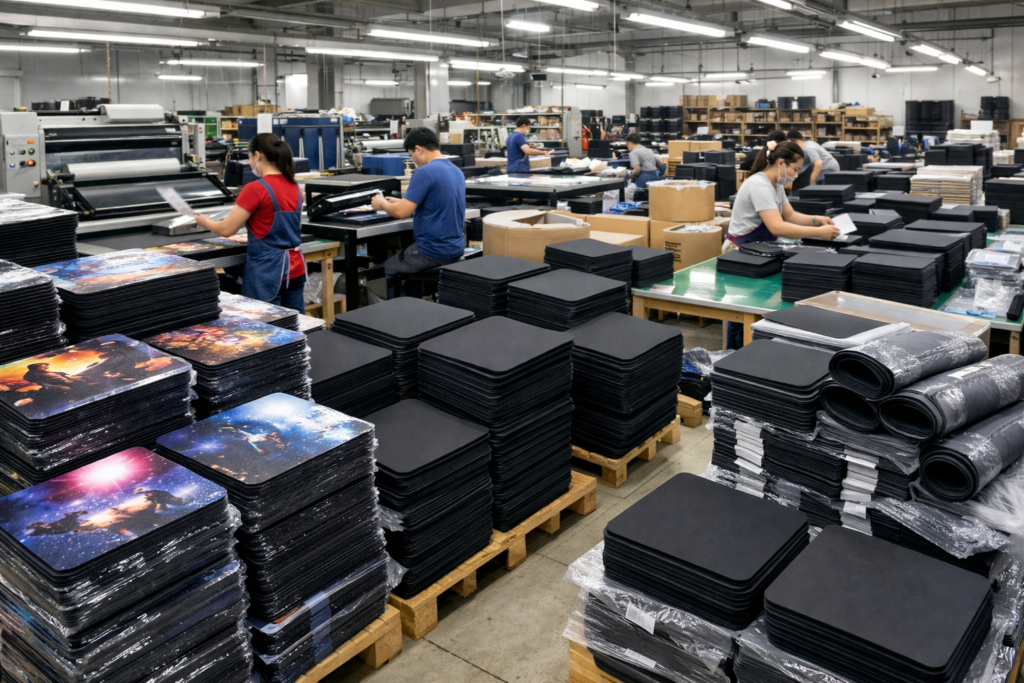
Als je denkt aan een fabrikant muismatten, ziet u misschien een eenvoudige stoffen mat, maar achter de schermen schuilt een geavanceerd technisch en productieproces. Vanuit het oogpunt van een fabriek houdt het maken van muismatten van hoge kwaliteit veel meer in dan het snijden van rubber en stof. Het vereist expertise op het gebied van materiaalwetenschappen, precisiemachines en een toewijding aan OEM/ODM-aanpassingen om aan de behoeften van verschillende klanten te voldoen. Dit artikel geeft een diepgaand inzicht in hoe een professionele leverancier van custom muismatten te werk gaat, met transparantie over productiestappen, technische termen zoals sublimatiedruk, rubber basis lamineringen gestikte randen, en echte inzichten die merkmanagers en inkoopteams nodig hebben om weloverwogen beslissingen te nemen. Door de productieworkflow en -mogelijkheden te begrijpen, zie je wat een echte fabrikant van gamingmuismatten onderscheidt op het gebied van kwaliteit, innovatie en betrouwbaarheid.
Technische expertise en materiaalselectie
Een geweldige muismat begint met technische expertise in materialen en ontwerp. Fabrikanten kiezen zorgvuldig materialen voor zowel prestaties als duurzaamheid:
- Materiaal basis: De meeste hoogwaardige muismatten hebben een basis van natuurrubber of schuim met een hoge dichtheid voor een slipvaste, zachte ondergrond. Natuurlijk rubber wordt gewaardeerd omdat het milieuvriendelijk en vrijwel geurloos is en een uitstekende grip op het bureau biedt. Sommige onderleggers gebruiken neopreen (een soort synthetisch rubber, ook wel SBR-schuim genoemd) dat kosteneffectief is, terwijl speciale onderleggers zelfs gebruik kunnen maken van harde materialen zoals siliconen of aluminium voor unieke toepassingen. De dikte van de basis wordt gekozen op basis van het beoogde gebruik van de pad - gangbare diktes variëren van 2 mm tot 5 mm, waarbij draagbaarheid wordt afgewogen tegen comfort en duurzaamheid.
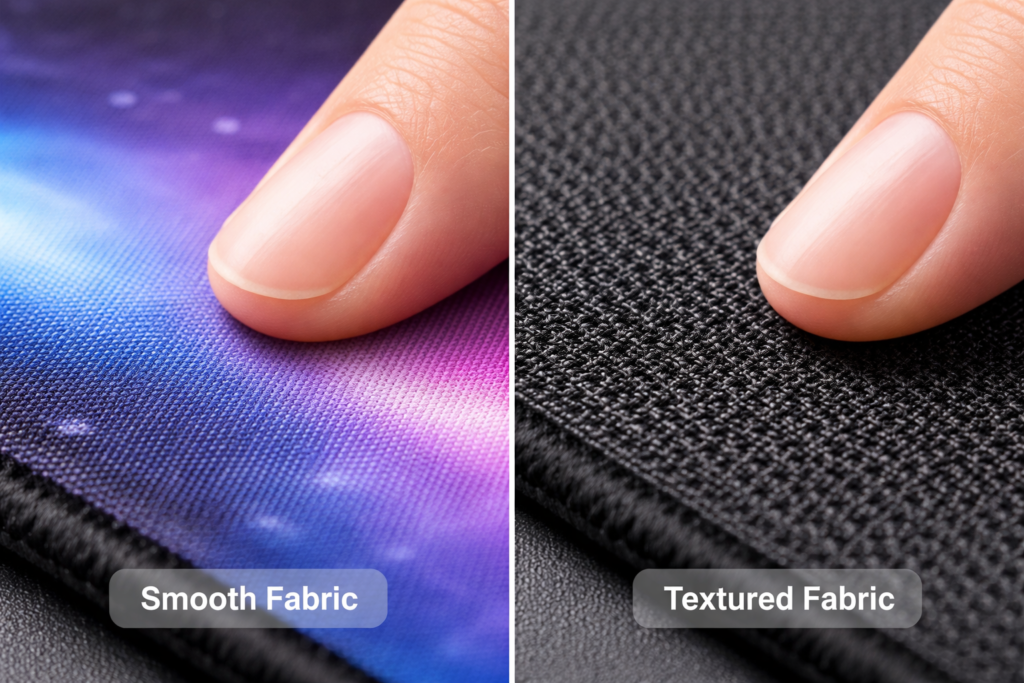
- Oppervlak Stof: De bovenkant is meestal een geweven stof (vaak polyester) die gekozen is vanwege de compatibiliteit met afdrukken in hoge resolutie en de invloed op het glijden van de muis. Weefsel en textuur hebben een directe invloed op snelheid versus controle in muisbewegingen: een gladder, strakker weefsel zorgt voor sneller glijden (door sommige gamers geprefereerd voor “snelheid”), terwijl een licht getextureerd weefsel meer wrijving biedt voor precieze controle. Fabrikanten kunnen verschillende stofopties aanbieden - van standaard polyester tot microvezel of lycra mengsels - elk getest op optimale tracking, inktabsorptie en gevoel. Zo zijn er bijvoorbeeld waterbestendige gecoate stoffen beschikbaar voor morsbestendige pads en kunnen weefsels met een hogere dichtheid zorgen voor scherpere beelddetails tijdens het printen.
- Inkt- en druktechnologie: Net zo belangrijk is de inkt en de drukmethode die worden gebruikt voor aangepaste afbeeldingen. Dye-sublimatie afdrukken is de gouden standaard voor stoffen muismatten omdat de inkt permanent in de stofvezels doordringt. Met behulp van grootformaat sublimatieprinters en hittepersen kunnen fabrieken levendige ontwerpen met een hoge resolutie maken die niet vervagen of afbladderen bij intensief gebruik. Deze techniek maakt gebruik van door warmte geactiveerde kleurstoffen die in de stof dringen en de kleur vastzetten, wat resulteert in een gladde afwerking die de textuur van de mat niet aantast. (In tegenstelling tot goedkopere methoden zoals zeefdrukken wordt de inkt op het oppervlak aangebracht, wat kan slijten of een verhoogde textuur kan creëren). Door kleurbeheer en printerkalibratie te beheersen, zorgt een fabrikant ervoor dat uw logo's en illustraties nauwkeurig worden gereproduceerd op elke onderlegger.
- Speciale kenmerken: Een ervaren fabrikant monteert ook extra functies in het product. Veel gaming muismat modellen worden nu geleverd met gestikte randen - een overlocksteek rond de omtrek die voorkomt dat de stof gaat rafelen en zorgt voor een eersteklas uitstraling. Sommige fabrieken hebben zelfs technieken als waterbestendige coatings op de stof of RGB-verlichtingsintegratie aan de randen voor speciale kussentjes. Vanuit technisch oogpunt wordt elke functie (of het nu een antisliptextuur of een fluorescerende print is) getest op duurzaamheid, zodat het eindproduct zowel aan de normen van de klant als aan de internationale kwaliteitsnormen voldoet (bijv. zorgen dat materialen voldoen aan ROHS en REACH voor veiligheid).
Transparant productieproces: Van stof tot eindproduct
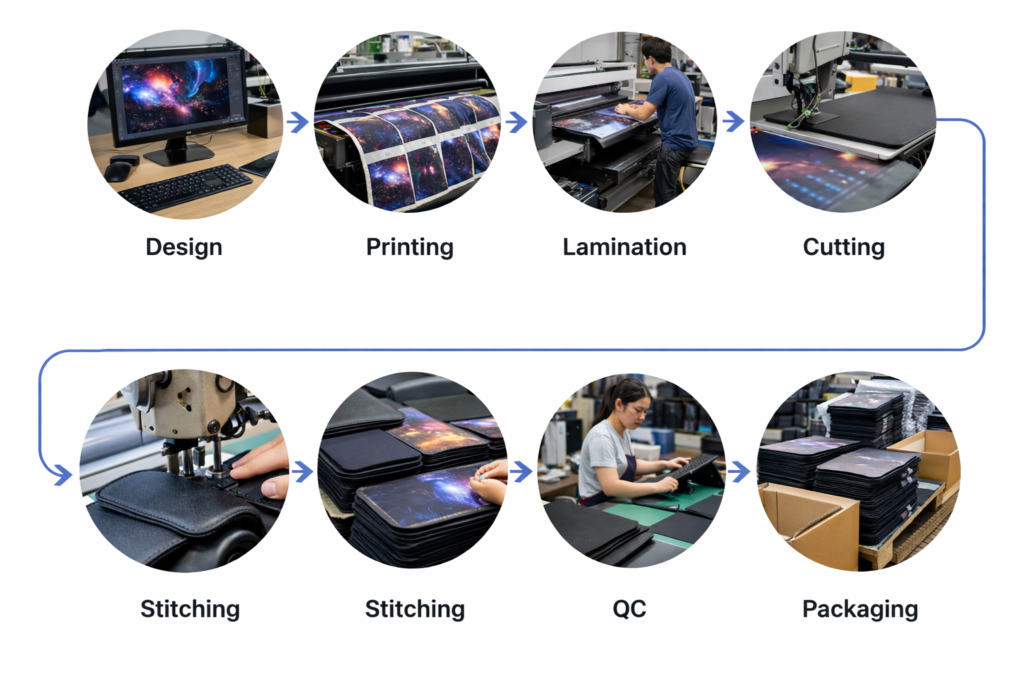
Een kenmerk van een betrouwbare fabriek is transparantie van het productieproces - openlijk uit te leggen hoe een muismat van grondstof tot eindproduct komt. Inzicht in deze stappen laat niet alleen de mogelijkheden van de fabriek zien, maar helpt klanten ook het werk en de kwaliteitscontrole te waarderen. Hieronder vindt u een overzicht van de typische productieworkflow, stap voor stap:
- Sourcing van grondstoffen: Alles begint met het verkrijgen van kwaliteitsmaterialen. De fabriek koopt grote rollen rubber (natuurlijk of synthetisch) voor de basis en rollen stof voor het oppervlak. Topfabrikanten onderhouden vaak relaties met gerenommeerde rubber- en textielleveranciers om een consistente kwaliteit in dikte en weving te krijgen. Naast rubber en stof omvat dit stadium ook de inkoop van speciale toevoegingen (zoals oppervlaktecoatings) en inkt en transferpapier van hoge kwaliteit voor het bedrukken. Transparant punt: Een professionele leverancier zal openhartig zijn over materiaalspecificaties (dichtheid, hardheid, stofsamenstelling) en zal zelfs materiaalgegevensbladen of monsters aan klanten verstrekken. Hoogwaardig natuurrubber biedt bijvoorbeeld een antislipbasis zonder de sterke geuren die rubber of schuim van een lagere kwaliteit kunnen hebben.
- Lamineren (verlijmen) van stof: In deze cruciale stap wordt de stof op de rubberen basis geplakt. De rollen stof en rubber worden in een lamineermachine gevoerd waar warmte en druk (vaak met een laag niet-giftige lijm) ze samenpersen tot één rol muismatmateriaal. Dit zorgt ervoor dat het oppervlak niet gaat bobbelen of afbladderen tijdens het gebruik. Veel fabrikanten besteden het lamineren op grote schaal uit aan gespecialiseerde faciliteiten, hoewel sommige zelf lamineerlijnen hebben voor een betere controle. Het doel is een uniforme, duurzame hechting over het hele vel. Fabrieken letten op factoren zoals temperatuur en drukinstellingen om kromtrekken te voorkomen. Na het lamineren laat men het gecombineerde materiaal meestal uitharden en rolt het op voor de volgende stap. Transparant punt: Klanten vinden het misschien interessant om te weten dat laminering zorgt voor een lange levensduur van de muismat - een goed gelamineerde muismat is bestand tegen jarenlang buigen en hanteren zonder delaminatie. Fabrikanten testen gelamineerde monsters vaak op afpelsterkte en flexibiliteit als onderdeel van de kwaliteitscontrole.
- Afdrukken (ontwerptoepassing): Als de tampon een eigen ontwerp krijgt, wordt het ontwerp in de volgende fase op de stof gedrukt. Dye-sublimatie afdrukken wordt vaak gebruikt voor ontwerpen in full-color. Het artwork (aangeleverd door de klant of ontworpen door het ODM-team van de fabriek) wordt in spiegelbeeld afgedrukt op speciaal transferpapier met sublimatie-inkten. Dit papier wordt vervolgens met hitte op het witte stofoppervlak gedrukt, meestal op ongeveer 200°C (392°F) gedurende ongeveer 30-60 seconden, waardoor de inkt in gas verandert dat in de stof dringt. Als dit correct gebeurt, is het resultaat een levendige afdruk met hoge resolutie die permanent in de stof verankerd is en bestand is tegen krassen of vervagen. Voor eenvoudigere onderleggers (bijv. één logo op een zwarte onderlegger), zeefdruk of warmteoverdracht vinyl De fabriek zal de methode kiezen die de beste balans biedt tussen kosten en kwaliteit voor het ontwerp. Transparant punt: Een kwaliteitsgerichte fabrikant van gamingmuismatten zullen vaak een testafdruk en kleurcontrole uitvoeren voor de volledige productie, om ervoor te zorgen dat de kleuren overeenkomen met de merkvereisten (Pantone- of RGB-referenties) en dat er geen ghosting of kleurverloop optreedt. Als onderdeel van hun proces kunnen ze zelfs een foto of fysiek monster van de eerste afdruk ter goedkeuring naar de klant sturen.
- Snijden en vormen: Zodra het materiaal (dat nu geprint en gelamineerd is) klaar is, wordt het in afzonderlijke muismatten gesneden. Snijden klinkt misschien eenvoudig, maar nauwkeurig snijden is van vitaal belang. Fabrieken gebruiken ofwel grote stalen matrijzen (stanspersen) voor standaardvormen of geautomatiseerde snijmachines (zoals CNC- of lasersnijders) voor aangepaste vormen en te grote matten. Het snijproces moet consistente afmetingen en schone randen garanderen. Interessant is dat de snij lay-out een invloed kan hebben op de materiaalefficiëntie - het rangschikken van rechthoekige pads in rijen versus kolommen op een rol kan veranderen hoeveel afval er achterblijft rond de randen. Fabrikanten plannen de lay-out zorgvuldig om afval tot een minimum te beperken, maar meestal is 8-15% materiaal wordt verspild tijdens het snijden, hoger voor ongebruikelijke vormen. (Als je bijvoorbeeld veel ronde matten uit een rechthoekig vel snijdt, blijven er meer openingen over dan wanneer je vierkanten snijdt). De transparantie Als u bijvoorbeeld 1000 pads bestelt, moet de fabriek mogelijk materiaal budgetteren voor ~1100 eenheden om rekening te houden met snijafval en afgekeurde kwaliteit. Na het snijden wordt elk stuk geïnspecteerd op randconsistentie en eventuele defecten in de printuitlijning.
- Randafwerking (stikken): De meeste premium en gaming muismatten hebben tegenwoordig gestikte randen (ook wel overlocken genoemd). In dit deelproces wordt de omtrek van elk kompres genaaid met een speciale inrijgmachine die draad rond de rand van het kompres wikkelt en de bovenstof en het onderste rubber stevig aan elkaar bindt. Gestikte randen verbeteren de duurzaamheid aanzienlijk door te voorkomen dat de lagen loslaten en dat de stof na verloop van tijd gaat rafelen. Fabrieken bieden hier meestal een paar opties aan: witte of gekleurde stiksels vs. zwarte stiksels, en de timing van het stikken ten opzichte van het afdrukken. Als er bijvoorbeeld een full-bleed afbeelding nodig is, zullen sommige fabrikanten Naai de tampon met wit garen voor het afdrukken, Vervolgens sublimeert u de hele tampon zodat het garen zelf de kleur van de inkt opneemt voor een naadloos ontwerp van de randen. Als alternatief, als een klant zwarte of aangepaste gekleurde randen wil, kan de tampon eerst worden bedrukt en daarna met het gekleurde garen worden gestikt (omdat dye-sub inkten niet zichtbaar zijn op donker garen). Beide methodes vereisen vaardigheid - drukken na het stikken vereist een zorgvuldige hitteperstechniek om te vermijden dat de genaaide tampon vervormd wordt, terwijl stikken na het drukken een precieze uitlijning vereist om geen belangrijk artwork in de buurt van de rand te bedekken. De technici van de fabriek bepalen de beste aanpak op basis van het kunstwerk en het gewenste uiterlijk. Transparant punt: Deze mate van detail wordt meestal met de klant besproken als het uiterlijk van de randen belangrijk is voor hun ontwerp. Een fabriek kan zelfs een monster van elke methode produceren (drukken-dan-naaien vs. steken-dan-bedrukken) om te vergelijken als de order groot is en extra monsters rechtvaardigt, zodat het merk tevreden is met de uiteindelijke look en feel van de randen.
- Kwaliteitscontrole: Na productie, strenge kwaliteitscontrole (QC) wordt uitgevoerd. Elke batch muismatten wordt gecontroleerd op een checklist met criteria: correcte afmetingen (lengte, breedte, dikte), afdrukkwaliteit (kleuren kloppen en er zijn geen misdrukken), gladheid van het oppervlak (geen rimpels of bellen in de laminering), kwaliteit van het stikwerk aan de randen (geen losse draden of gemiste delen) en algemene afwerking. QC-technici leggen willekeurige monsters van de partij neer om te controleren of ze plat op tafel liggen (om te controleren op kromtrekken). Ze doen ook een wrijftest op de afdruk om zeker te zijn dat deze goed gesublimeerd is en niet afgeeft. Alle pads die gebreken vertonen, zoals kleine oneffenheden in de afdruk of scheve stiksels, worden afgekeurd of gemarkeerd als fabriekssecondair. Topfabrikanten implementeren strenge inspecties in meerdere stadiaDit zijn: het inspecteren van grondstoffen, het bewaken van de kwaliteit tijdens het proces en de eindinspectie voor het verpakken. Dit zorgt ervoor dat wanneer de klant zijn zending ontvangt, elke muismat in de doos voldoet aan de beloofde specificaties. Veel fabrieken houden zich aan de ISO 9001-normen voor kwaliteitsbeheer en zelfs aan specifieke veiligheidscertificaten (zoals CE/RoHS voor chemische stoffen) om B2B-klanten gemoedsrust te geven.
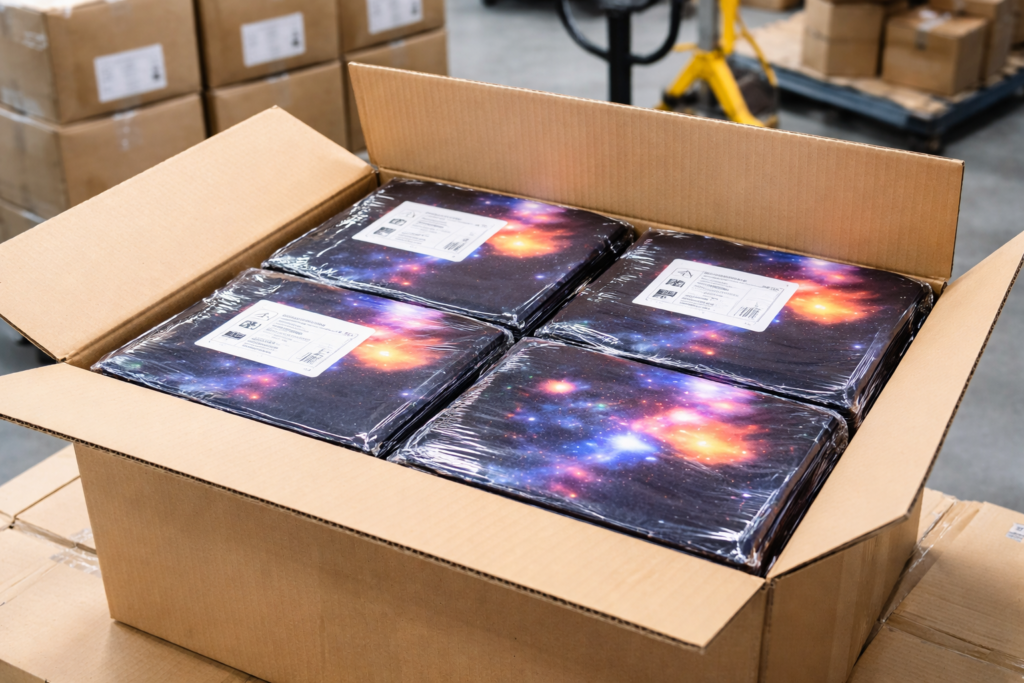
- Verpakking en verzending: De laatste stap is het verpakken van de muismatten voor levering. Fabrieken kunnen verschillende verpakkingsopties aanbieden, afhankelijk van de behoeften van de klant - van eenvoudige bulkverpakking (pads gestapeld en verpakt in plastic) tot individuele retailverpakking (zoals kartonnen dozen of tubes met branding). OEM-projecten Vaak is er een aangepaste verpakking nodig met het logo of marketingbijlagen van de klant, en een bekwame fabrikant zal helpen bij het ontwerpen en vinden hiervan. Het is de moeite waard om op te merken dat de verpakkingskosten (dozen, hoezen, etc.) en de minimale bestelhoeveelheden worden meegenomen in het project - iets wat een eerlijke fabrikant vooraf zal communiceren. Op maat bedrukte dozen kunnen bijvoorbeeld een hogere eenheidsprijs hebben, tenzij je er een paar honderd of meer tegelijk bestelt. Eenmaal ingepakt worden de producten verzonden via de voorkeursmethode van de klant (lucht, zee of koerier). Een fabriek met een goed georganiseerde toeleveringsketen kan gemakkelijk duizenden muismatten in een week produceren, maar de totale doorlooptijd omvat ook de inkoop van grondstoffen en eventuele goedkeuringsfasen voor monsters. Insiders uit de industrie merken op dat productie is vaak sneller dan de voorbereidende stappen - Vertragingen bij bulkorders zijn meestal te wijten aan de goedkeuring van het ontwerp en de doorlooptijd van het materiaal en niet zozeer aan de daadwerkelijke productie. Daarom moedigt een transparante fabrikant klanten aan om artwork en monsters tijdig goed te keuren, zodat de productie soepel en snel verloopt.
Het proces visualiseren: Om de transparantie te vergroten, bieden veel fabrieken visuele documentatie. Klanten kunnen foto's of zelfs live videobeelden van de productielijn ontvangen - bijvoorbeeld beelden van de drukmachines in actie of een procesdiagram die elke productiestap samenvatten. Dergelijke afbeeldingen (zoals een stroomdiagram van Ontwerp → Afdrukken → Lamineren → Snijden → Stikken → QC → Verpakking) in een presentatie of blogartikel kan helpen om de complexiteit en zorgvuldigheid ervan over te brengen.
OEM & ODM Aanpassingsmogelijkheden
Een groot voordeel van rechtstreeks met een fabriek werken is de breedte van OEM- en ODM-mogelijkheden beschikbaar. In de context van muismatten:
- OEM (Original Equipment Manufacturer) services betekent dat de fabriek muismatten kan produceren volgens de specificaties van uw merk - in wezen jouw logo, jouw ontwerp, onze productie. De fabrikant heeft misschien al standaardmodellen (qua materialen en afmetingen) en past het artwork van het oppervlak, de kleur van de randen en de verpakking aan zodat ze bij je branding passen. OEM is ideaal als je een duidelijk idee hebt van wat je wil, of als je een bestaande stijl van muismatten wil rebranden met je eigen ontwerp.
- ODM (Original Design Manufacturer) diensten gaan een stap verder, waarbij het interne engineering- en ontwerpteam van de fabriek een nieuw product vanaf de grond helpt creëren. Van het kiezen van unieke materialen tot het maken van prototypes van nieuwe vormen of functies, een ODM-partner draagt niet alleen bij aan de productie, maar ook aan de innovatie van het ontwerp. Dit is waardevol als je bijvoorbeeld een nieuw type gaming muismat met een speciaal oppervlak of een onconventionele vorm die niet kant-en-klaar is. De fabrikant kan materiaalstalen, ontwerptekeningen en zelfs marktinzichten leveren tijdens de ontwikkelingsfase.
OEM of ODM, een bekwame fabrikant muismatten biedt een one-stop-oplossing, waarbij alles van het eerste concept tot aan de massaproductie wordt ondersteund. Hier zijn enkele van de belangrijkste aanpassingsopties en diensten die dergelijke fabrieken gewoonlijk aanbieden:
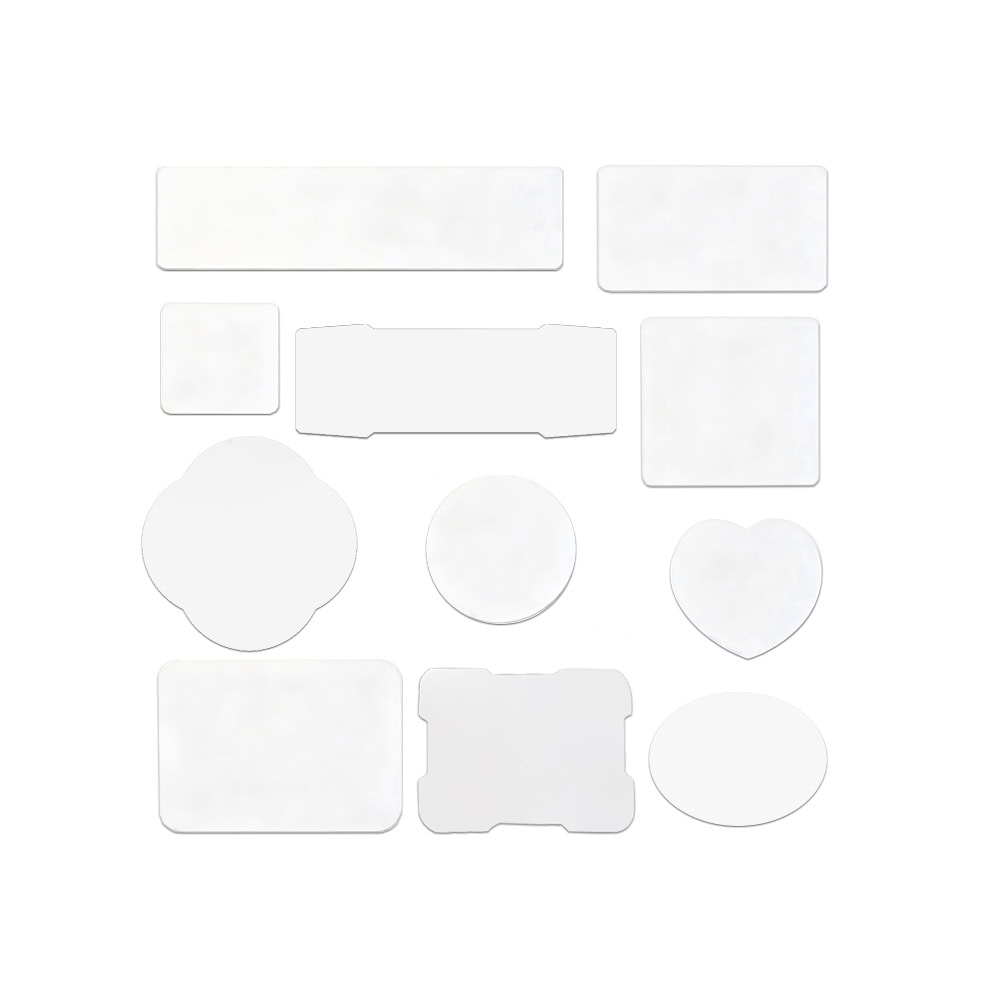
- Aangepaste maten en vormen: Niet alle muismatten zijn standaard rechthoeken. Fabrieken kunnen pads snijden in elke gewenste afmeting - van kleine ronde onderzetters tot enorme XXL bureaumatten die een hele tafel bedekken. Uniek gevormde matten (bv. met een silhouet van het bedrijfslogo of een omtrek van een personage) worden verkregen via op maat gemaakte matrijzen of lasersnijden. Een esports-evenement wil bijvoorbeeld een muismat in de vorm van hun mascotte - een ODM-fabrikant kan daarvoor zorgen. Afbeelding: Een verscheidenheid aan aangepaste muismatvormen kan worden geproduceerd door middel van stansen - waaronder cirkels, afgeronde rechthoeken en zelfs speciale vormen - wat de flexibiliteit van OEM-productie laat zien. Klanten moeten de vorm bespreken tijdens de ontwerpfase; de fabriek zal advies geven over eventuele beperkingen (zoals het vermijden van extreem ingewikkelde randen die kunnen rafelen). Ongeacht de vorm zorgt moderne snijapparatuur voor strakke lijnen en een consistente maatvoering in de hele partij.
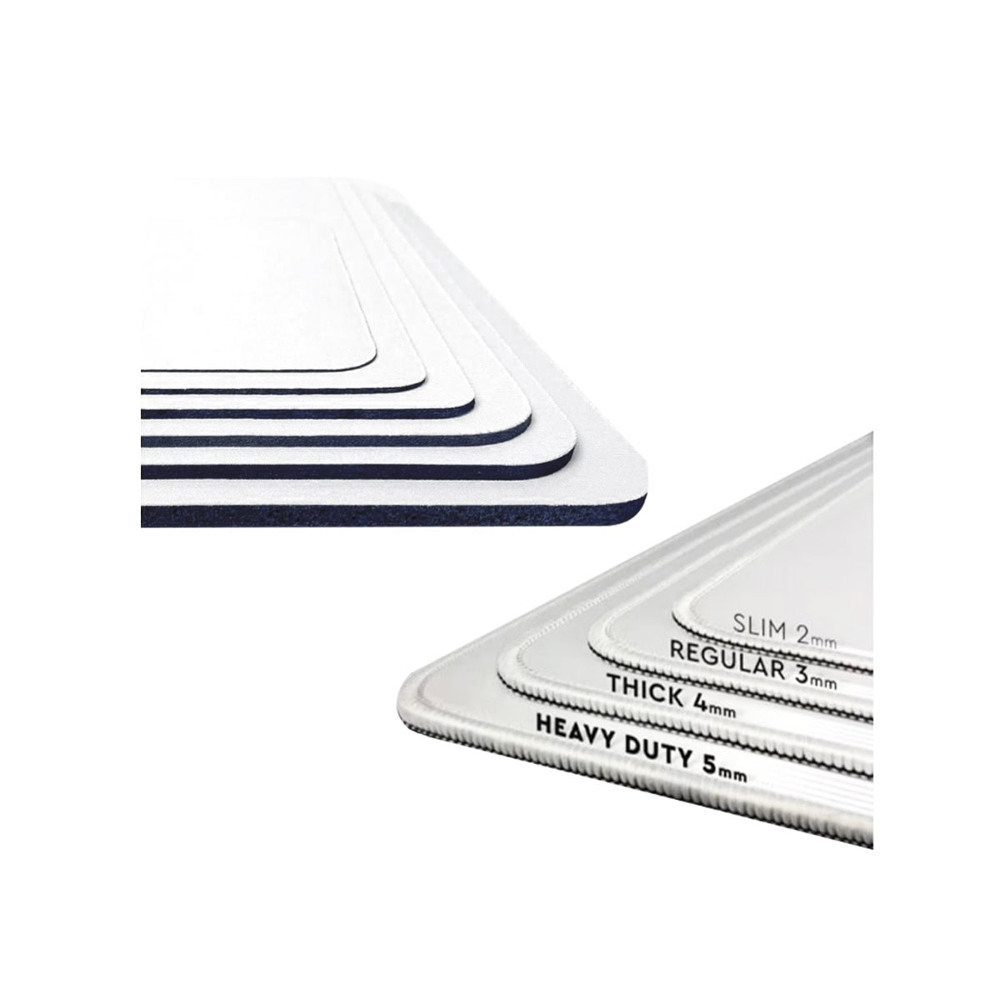
- Dikte en materiaalopties: Afhankelijk van het eindgebruik wil je misschien een dunnere mat (voor draagbaarheid of kostenbesparing) of een extra dikke mat (voor maximaal comfort of een eersteklas gevoel). Fabrikanten bieden meestal een reeks diktes aan (bv. 2 mm, 3 mm, 4 mm, tot 5 mm of meer) en kunnen indien nodig zelfs een exacte dikte op maat maken. Dikkere pads gebruiken meer materiaal en het duurt iets langer om uit te harden wanneer ze gelamineerd zijn, maar ze kunnen aantrekkelijk zijn voor gebruikers die de voorkeur geven aan een zachter, meer dempend oppervlak. Qua materiaal natuurrubber met stoffen bovenkant is de meest voorkomende combinatie, maar sommige leveranciers bieden ook alternatieven zoals PU-leder oppervlakken (voor een gladde, veegschone afwerking) of hard PVC/kunststof bovenkanten voor snelheidspads. Als milieuvriendelijkheid belangrijk is, vraag dan naar natuurlijk rubber (dat biologisch afbreekbaar is) versus synthetisch schuim. Fabrieken kunnen ook verschillende kleuren rubber bijvoorbeeld een witte of gekleurde rubberen basis voor een opvallende look (denk er wel aan dat lichter rubber zichtbaar vuil kan worden tijdens het gebruik). In alle gevallen zal een goede fabrikant uniforme dikte en materiaalkwaliteit voor je hele bestelling, dus elke pad presteert hetzelfde.
- Oppervlaktestructuren en prestatie-aanpassingen: Voor gespecialiseerde markten (zoals pro gaming of grafisch ontwerp) kunnen subtiele veranderingen in de oppervlaktestof een spelbreker zijn. OEM-muismatfabrikanten kunnen oppervlaktetextiel aanbieden met verschillende wrijvingscoëfficiënten. Een snelheidsmat oppervlak kan een microweefselpolyester zijn dat extreem glad is, terwijl een bedieningspaneel oppervlak kan een iets ruwer weefsel of een behandelde doek gebruiken om extra weerstand te bieden voor precisie. Fabrieken kunnen eigen stofmengsels of coatings hebben (sommige adverteren met nano-coating voor waterbestendigheid of stofafstoting). Als je merk zich richt op een niche (bijvoorbeeld ultrasnel glijden of een zeer tactiel gevoel), kan een ODM project het testen van meerdere stoffen inhouden. De technici van de fabriek voeren vaak interne tests uit, zoals het meten van de glijkracht met verzwaarde sleden of het controleren van de trackingkwaliteit met sensoren met hoge DPI, om het beste materiaal aan te bevelen. Het kunnen afstemmen van deze aspecten is een kenmerk van een ervaren fabrikant. fabrikant van gamingmuismatten die de verwachtingen van de eindgebruiker begrijpt.
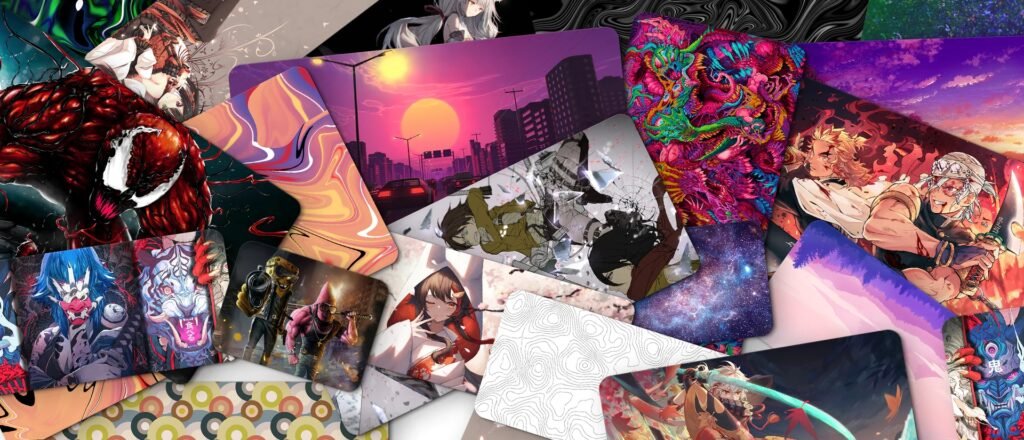
- Ondersteuning voor afdrukken en grafisch ontwerp: Aangepast artwork is meestal een belangrijk onderdeel van een OEM-bestelling voor muismatten - of het nu gaat om een bedrijfslogo, artwork voor games of een uitgebreide promotionele afbeelding. Fabrikanten leveren meestal sjablonen voor ontwerpers (met de veilige zones, afloopmarges en steekmarge gemarkeerd). Sommige bieden gratis ontwerphulp of pre-press diensten: bijvoorbeeld kleuren aanpassen om ze nauwkeuriger af te drukken in sublimatie, of helpen bij het omzetten van een lage-resolutie logo in een drukklaar vectorformaat. Omdat sublimatie fotografische beelden kan reproduceren, zijn de mogelijkheden enorm - en het is de taak van de fabriek om ervoor te zorgen dat het afdrukproces recht doet aan het ontwerp. Qua aanpassingen kun je van rand tot rand en volledig aflopend printen, of specifieke gebieden kiezen (sommige merken gebruiken een klein logo op een blanco vlak voor een minimalistische look). Indien nodig, Pantone-kleurmatching kan worden gedaan door de inktprofielen aan te passen. De fabrikant levert meestal een digitale proefdruk en vervolgens een fysiek monster ter bevestiging voordat er in massa wordt gedrukt. De nadruk ligt altijd op het helder en levendig overbrengen van de visuele identiteit van het merk op de tampon.
- Randkleuren en -stijlen: Zoals eerder besproken kan het stikken van randen worden aangepast. U kunt een kleur garen kiezen die uw ontwerp of merkkleuren aanvult - zwart is het meest voorkomend voor gaming pads (voor een nette rand), maar sommige klanten kiezen voor rode, blauwe of zelfs meerkleurig gestikte randen voor een unieke flair. Er is ook een optie om geen gestikte rand op sommige onderleggers, wat een vlakke rand oplevert (sommige minimalistische of wegwerp promotionele onderleggers gebruiken een eenvoudig afgesneden rand om kosten te besparen). De fabrikant zal de afweging uitleggen: ongestikte randen zijn goedkoper maar kunnen na verloop van tijd rafelen, terwijl gestikte randen steviger zijn maar de kosten en productietijd iets verhogen. Voor geavanceerde ODM-projecten kunnen fabrikanten zelfs het volgende toevoegen extra randfuncties - Bijvoorbeeld het innaaien van een LED-lichtstrip voor een RGB-gloeiende muismat of het toevoegen van een stoffen bies. Het vermogen om aan deze verzoeken te voldoen, komt van de gespecialiseerde apparatuur en het bekwame naaipersoneel van de fabriek.
- Verpakking & Branding Extra's: Niet alleen de muismat zelf kan worden aangepast. OEM-diensten breiden zich meestal uit tot verpakking en accessoires. U kunt elke muismat in een merkdoos of -koker laten rollen, compleet met uw ontwerp en productinformatie. Sommige fabrikanten kunnen het volgende toevoegen aangepaste tags, labels of inzetstukken (zoals een bedankkaartje, instructiefolder of garantiekaart). Als uw pads in de detailhandel verkocht gaan worden, zijn deze accenten belangrijk voor een professionele presentatie. Vanuit het oogpunt van de fabriek maakt het ontwerpen van een gestanste doos of het vinden van een duurzame koker deel uit van de kant-en-klare oplossing. Vaak doen ze dit intern of via partnerleveranciers en coördineren ze de afdrukkwaliteit van de verpakking zodat deze voldoet aan uw merkstandaard. Voor B2B-klanten, zoals promotionele productbedrijven, kan de fabriek muismatten ook bundelen met andere artikelen (zoals toetsenbordmatten, polssteunen) als onderdeel van een kit - om de flexibiliteit van OEM-productie te laten zien om een complete merkset te leveren.
Afbeelding: Vergelijking van de diktemogelijkheden van muismatten die fabrikanten aanbieden - van ultraslanke matten van ~2 mm tot matten van ~5 mm voor zwaar gebruik. Dikkere pads bieden meer demping en een eersteklas gevoel, terwijl dunnere pads lichter en draagbaarder zijn. Alle diktes kunnen gestikte randen hebben (zoals afgebeeld) en de keuze hangt af van de voorkeur van de eindgebruiker en de positionering van het merk.
Over het geheel genomen is de OEM/ODM benadering Dit betekent dat u als klant niet uit een schap met identieke producten kiest, maar dat u samen met hen een muismat creëert die precies aan uw eisen voldoet. Een competente fabriek begeleidt u bij deze aanpassingsopties, levert materiaalmonsters of printtests en maakt gebruik van hun technische knowhow om ervoor te zorgen dat het eindproduct er niet alleen uitziet zoals u wilt, maar ook voldoet aan de prestatieverwachtingen (bv. ligt plat, werkt goed met optische muizen, is bestand tegen dagelijks gebruik). Het proces is zeer samenwerkingsgericht en vaak iteratief, vooral bij ODM-projecten. Door duidelijke communicatie te bevorderen en hun technische inzichten aan te bieden (zoals het aanbevelen van een iets andere stof voor betere resultaten), wordt de fabrikant een waardevolle partner in uw productontwikkeling.
Kwaliteitsborging en certificeringen
In een B2B-context is kwaliteitsgarantie van het grootste belang. Gerenommeerde fabrikanten van muismatten investeren veel in kwaliteitscontrolesystemen en certificeringen om ervoor te zorgen dat elke batch aan hoge normen voldoet. Dit is wat dat inhoudt vanuit het perspectief van een fabriek:
- Kwaliteitsbeheersystemen: De meeste serieuze fabrikanten werken volgens ISO 9001 of een vergelijkbaar kader voor kwaliteitsbeheer. Dit betekent dat ze gedocumenteerde processen hebben voor elke productiefase en kwaliteitscontroles, zoals eerder beschreven. Voor de klant betekent dit consistentie - je 1000e muismat zal van dezelfde kwaliteit zijn als je eerste. Fabrieken hebben vaak speciaal QA-personeel en laboratoria voor het testen van productparameters (bijvoorbeeld het testen van de slijtvastheid van het oppervlak door er een bepaald aantal keer over te wrijven of het controleren van de treksterkte van de gelijmde lagen). Door strikt implementeren van certificeringssystemen en controleprocessen, Fabrikanten streven ernaar te voldoen aan internationale normen en gebreken te voorkomen.
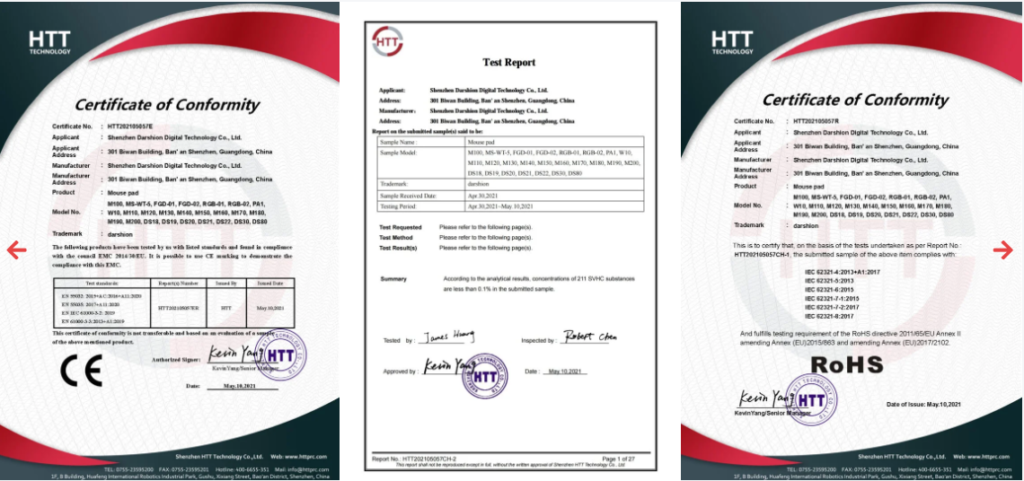
- Materiaalcertificeringen: Aangezien muismatten op bureaus worden gebruikt (en soms langdurig huidcontact hebben met de pols/arm), zijn er overwegingen met betrekking tot materiaalveiligheid. Topfabrikanten zorgen ervoor dat hun grondstoffen voldoen aan voorschriften zoals RoHS (Beperking van gevaarlijke stoffen) en REACH (EU-verordening voor chemische veiligheid). Dit garandeert bijvoorbeeld dat het rubber geen schadelijke hoeveelheden zware metalen bevat of dat de kleurstoffen die worden gebruikt bij het drukken geen giftige stoffen afgeven. Sommige voldoen ook aan PAK's limieten (voor polycyclische aromatische koolwaterstoffen in rubber) en vermijden stoffen zoals ftalaten in schuim. Klanten, vooral grote merken of bedrijven in gereguleerde markten, kunnen om bewijs van deze certificeringen vragen. Een fabriek die bekend is met deze vereisten heeft testrapporten of certificaten klaarliggen. Bedrijven als Darshion adverteren met CE-, FCC- en RoHS-certificeringen als bewijs van productveiligheid en betrouwbaarheid. Werken met een gecertificeerde leverancier betekent minder zorgen over naleving wanneer de producten wereldwijd worden verscheept.
- Milieu- en ethische normen: Veel merkklanten geven niet alleen om de productkwaliteit, maar ook om hoe en waar hun producten worden gemaakt. Fabrieken kunnen certificeringen hebben of standaarden volgen voor milieubeheer (ISO 14001) en veiligheid van werknemers (ISO 45001), of audits hebben doorstaan voor sociale naleving (zoals BSCI of Sedex). Van het gebruik van milieuvriendelijke materialen (zoals natuurrubber en lijm op waterbasis) tot het voorkomen van oneerlijke arbeidspraktijken, een transparante fabrikant zal deze aspecten delen. Het gebruik van natuurlijk rubber verbetert bijvoorbeeld niet alleen de productkwaliteit, maar is ook een duurzamere keuze. Sommige fabrikanten van muismatten recyclen ook afvalmateriaal (afgesneden rubber kan worden hergebruikt of gerecycled) en behandelen de uitstoot van drukprocessen op de juiste manier, in overeenstemming met de milieunormen.
- Prestatietests: Kwaliteitsborging omvat ook prestatiebenchmarks. A gaming muismat moeten er niet alleen goed uitzien, maar ook consistent presteren voor de eindgebruiker. Fabrikanten kunnen langdurig gebruik simuleren door een muismat onder een verzwaard voorwerp te leggen om de antislipgrip te testen, of door hem bloot te stellen aan zonlicht en vocht om ervoor te zorgen dat de prints niet vervagen of schimmelen. Bij grote bestellingen vragen sommige klanten zelfs om een bemonsteringsplan (bijv. ANSI/ASQ Z1.4) waarbij een bepaald aantal eenheden willekeurig uit de batch wordt getest. Een meewerkende fabrikant zal aan deze verzoeken voldoen en gedetailleerde QC-rapporten leveren. Bovendien bewaren fabrieken vaak monsters van elke productierun, zodat ze de bewaarde pads kunnen gebruiken als er later problemen optreden. Dit niveau van zorgvuldigheid is wat een topleverancier onderscheidt van een doorsnee leverancier.
- Continue verbetering: De beste fabrikanten behandelen kwaliteitsborging als een continu proces. Ze verzamelen feedback van klanten en eindgebruikers om hun processen en producten te verfijnen. Als een batch bijvoorbeeld een klein probleem had (misschien hadden een paar pads onvolmaakte stiksels in een hoek), zal de fabriek dit onderzoeken en corrigerende maatregelen nemen, zoals het omscholen van een werknemer, het onderhouden van een machine of het verbeteren van een inspectiecontrolepunt. Ze blijven ook op de hoogte van de nieuwste materialen en technologieën (zoals nieuwe sublimatie-inktformules of geautomatiseerde snijgereedschappen) om de kwaliteit te verbeteren. Deze cultuur van voortdurende verbetering betekent dat de output van de fabriek na verloop van tijd nog beter wordt, wat alle klanten ten goede komt.
Kortom, wanneer u samenwerkt met een fabriek voor OEM-muismatten, boort u ook hun toewijding aan kwaliteit. De meerdere controlelagen, de certificeringen en de bereidheid om achter hun product te staan, geven B2B-kopers vertrouwen. Voel je altijd vrij om een potentiële fabrikant te vragen naar zijn kwaliteitsprocessen - een ervaren leverancier zal transparant en trots zijn om te bespreken hoe hij zijn hoge standaarden handhaaft, van de inkoop van materialen tot de uiteindelijke verpakking.
De juiste muismatfabrikant kiezen (B2B-tips)
Niet alle muismatfabrikanten zijn gelijk - dus waar moet je als merkmanager of inkoper op letten bij het selecteren van een muismat? aangepaste muismat leverancier? Hier volgen enkele belangrijke overwegingen die uit de bovenstaande inzichten naar voren komen:
- Engineering en ontwerpondersteuning: Als u meer nodig hebt dan een algemene pad, zoek dan een fabrikant met een sterk engineering/ontwerpteam. Hun expertise zal helpen bij het kiezen van materialen, het verfijnen van uw ontwerp voor maakbaarheid en het voorstellen van verbeteringen. Een deskundige leverancier kan bijvoorbeeld advies geven over de beste stof voor een spelonderlegger versus een promotionele onderlegger voor op kantoor, of kan helpen bij het aanpassen van uw ontwerp voor een optimale helderheid van de afdruk. Dit soort begeleiding is van onschatbare waarde, vooral als dit de eerste keer is dat je een OEM-project uitvoert.
- Productiemogelijkheden en -capaciteit: Evalueer of de fabriek je bestelvolume en eventuele speciale vereisten aankan. Productiecapaciteit is belangrijk - een goed uitgeruste fabriek kan op schaal produceren zonder vertragingen. Toonaangevende leveranciers benadrukken vaak hun grote faciliteiten, geavanceerde apparatuur (zoals high-end digitale printers, lasersnijders, enz.) en hoge outputcijfers (bv. de mogelijkheid om 100.000+ pads per maand te maken). Als u een krappe deadline hebt of uw orders kunt opschalen, kies dan een partner met wat capaciteitsruimte. Bovendien, als u iets speciaals nodig hebt (zoals een extra grote mat of een ongewone vorm), zorg er dan voor dat de fabrikant de apparatuur heeft om dit te doen. Sommige fabrieken nodigen klanten zelfs uit voor een bezoek op locatie of een virtuele rondleiding om uit de eerste hand te zien hoe ze te werk gaan - een geweldige manier om de capaciteiten te controleren en vertrouwen op te bouwen.
- OEM/ODM Flexibiliteit: Controleer, afhankelijk van je behoeften, of de leverancier echte OEM/ODM-services biedt. Kunnen ze elk aspect dat je nodig hebt aanpassen (grootte, dikte, bedrukking, verpakking, enz.)? Staan ze open voor het ontwikkelen van nieuwe producten (ODM) als je wilt innoveren? Flexibiliteit omvat ook zaken als redelijke MOQ (minimale bestelhoeveelheden) en de bereidheid om proefritten of monsters te maken. Een fabriek die ervaring heeft met het werken met internationale merken is meestal flexibel en begrijpt het iteratieproces. Ze moeten zowel kleine proefseries (bijvoorbeeld 100-200 proefseries) als grote bulkorders aankunnen en hun workflow hierop aanpassen. Denk ook aan het communicatieaspect - een goede OEM-partner zal duidelijk en snel communiceren, vaak met een speciale accountmanager of engineer die technische details met je kan bespreken.
- Kwaliteitsgarantie en reputatie: Zoals in de vorige paragraaf is uitgelegd, moet je de kwaliteitscontrolemaatregelen van de fabrikant bekijken. Hebben ze relevante certificeringen (ISO, ROHS, enz.)? Hebben ze gewerkt met bekende klanten of merken (dit kan een indicatie zijn van hun betrouwbaarheid)? Soms kunt u recensies of casestudies vinden - een leverancier die bijvoorbeeld muismatten heeft geproduceerd voor grote gamingmerken of bedrijfspromoties zal daar waarschijnlijk mee adverteren. U wilt een partner die achter zijn product staat en de kwaliteit handhaaft, zelfs als de volumes toenemen. Aarzel niet om monsters aan te vragen om de kwaliteit uit de eerste hand te inspecteren. Bovendien is een vertrouwde muismat fabrikant transparant zijn over kosten en mogelijke uitdagingen (zoals langere levertijden voor exotische materialen), in plaats van te veel beloven. Deze eerlijkheid vooraf is een teken van een betrouwbare B2B-relatie.
- Innovatie en toekomstgerichtheid: De technologie en trends in de wereld van muismatten evolueren, bijvoorbeeld de opkomst van RGB-verlichte muismatten of de interesse in duurzame materialen zoals kurk of gerecycled rubber. Een vooruitdenkende fabrikant investeert in R&D en kan u als klant nieuwe ideeën aanreiken. Kijk tijdens gesprekken of ze ongevraagd met innovatieve opties of verbeteringen komen. Een OEM-partner die continu verbetert (machines, materialen, processen) zorgt ervoor dat uw producten concurrerend blijven. Zoals opgemerkt in een update van de industrie, leggen topleveranciers de nadruk op voortdurende innovatie in materialen en processen naast een hoge volumecapaciteit en een rigoureuze kwaliteitsgarantie. Deze balans van betrouwbaarheid en innovatie is wat u zou moeten nastreven in een productiepartner voor de lange termijn.
In wezen komt het kiezen van de juiste fabriek neer op het vinden van een partner in plaats van alleen maar een leverancier. De ideale fabrikant van muismatten behandelt het project van je merk als zijn eigen project, biedt technische expertise, garandeert kwaliteit en levert op tijd. De inzichten in dit artikel - van technische details tot transparantie van processen - kunnen dienen als checklist bij het evalueren van leveranciers. Als een fabrikant open is over zijn manier van werken, de mogelijkheden heeft om aan jouw behoeften te voldoen en kwaliteit en innovatie laat zien, dan zal de samenwerking waarschijnlijk soepel en succesvol verlopen.
Conclusie: Samenwerken met een professionele muismattenfabrikant
Het maken van een muismat op maat - voor een gamingmerk, een bedrijfspromotie of een eSports-team - is een complexe maar zeer haalbare onderneming met de juiste productiepartner. Vanuit dit fabrieksperspectief hebben we gezien dat uitmuntendheid in de productie van muismatten voortkomt uit materiaalexpertise, verfijnde processen en robuuste OEM/ODM-mogelijkheden. Een professionele, fabrieksgerichte aanpak zorgt ervoor dat je transparant inzicht in elk stadium: je weet welke materialen worden gebruikt, hoe je ontwerp wordt gedrukt en uitgehard en hoe de kwaliteit wordt gecontroleerd. Dit schept niet alleen vertrouwen, maar leidt vaak ook tot een beter product omdat samenwerking en transparantie het mogelijk maken om fijnafstellingen uit te voeren en eventuele problemen in een vroeg stadium op te sporen.
Voor bedrijven die hun eigen muismatten of gaming bureaumatten, Werken met een gespecialiseerde fabrikant biedt aanzienlijke voordelen: je kunt precies het uiterlijk en de prestaties bereiken die je voor ogen hebt, gebruikmaken van de technische knowhow van de fabriek en vaak kosten besparen door tussenpersonen uit te schakelen. De sleutel is het selecteren van een fabrikant die voldoet aan uw kwaliteitsnormen en die uw marktbehoeften begrijpt. Als u die juiste persoon vindt, is het resultaat een soepel proces - van de eerste ontwerpconcepten tot het moment dat u het eindproduct uit de doos haalt - en muismatten die de identiteit van uw merk en uw streven naar kwaliteit echt weerspiegelen.
Als toonaangevende fabrikant van gamingmuismatten, Darshion biedt OEM-services van begin tot eind met een focus op technische precisie en klanttevredenheid. Je kunt ons assortiment producten en aanpassingsopties verkennen op onze productcategorie pagina voor gaming muismatten om voorbeelden te zien van wat we aanbieden. Van standaardmatten tot oversized RGB-bureaumatten, we produceren oplossingen op maat van de specificaties van elke klant.
Concluderend is de wereld van de muismattenproductie zowel een kunst als een wetenschap - het mengen van creatief ontwerp met technische procesbeheersing. Door in de details te duiken vanuit het perspectief van een fabriek, hopen we dat dit artikel u een duidelijker beeld heeft gegeven van hoe uw muismatten tot leven komen en wat u moet zoeken in een productiepartner. Of u nu een inkoopmanager bent die promotieartikelen in bulk inkoopt of een gaming brand manager die de volgende top muismat ontwikkelt, samenwerken met een ervaren, transparante en innovatieve fabriek zorgt ervoor dat uw project een doorslaand succes wordt.