Our factory sees growing demand for custom and soft mouse pads made with advanced foams. Polyurethane (PU) and PORON® are high-performance urethane foams used in premium pads, offering a softer feel and better rebound than traditional rubber bases. OEM suppliers and bulk order customers choose these materials to differentiate their products. In this guide, we break down the material science and production process behind PU and PORON mouse pads, comparing them to standard rubber pads and generic foam. We share factory-side insights on formulation, feel, longevity, and real-world use. Major brands (e.g. SteelSeries, Razer, Logitech) incorporate PORON in their high-end pads, and even specialized rubber pads (like Zowie’s GTR series) seek to match PORON’s softness.
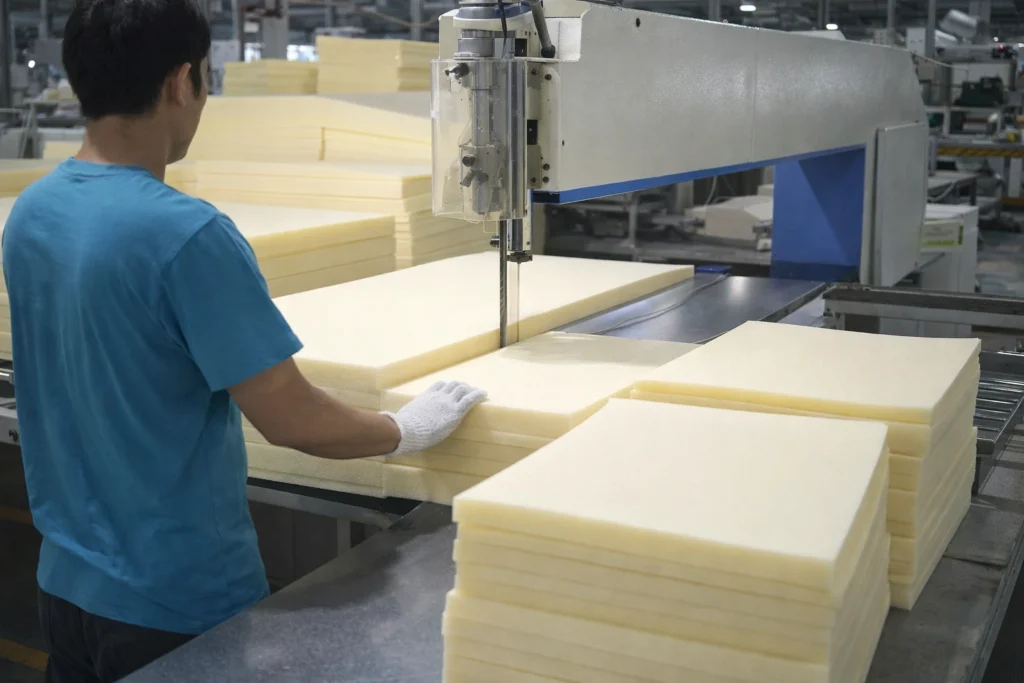
From a factory perspective, the process starts with choosing the right foam. Polyurethane foam is a versatile material produced by mixing polyols and diisocyanates with catalysts and blowing agents. By adjusting formulations and densities, manufacturers can tailor the foam’s hardness, thickness, and cell structure. PU foams used in mouse pads are typically open-cell or semi-open-cell, giving a cushioning, sponge-like feel. High-density PU allows a thin pad (2–5 mm) that still offers rebound and support. In many cases, the foam arrives as large sheets or rolls (see image above) and is heat-bonded to a fabric or printed surface. Compared to natural rubber bases (like nitrile rubber or neoprene), PU foam tends to be lighter and softer. Rubber is dense and slip-resistant by nature, but standard formulations can feel firm or rigid.
What Is PORON® Foam?
PORON is a branded microcellular urethane foam (by Rogers Corporation) known for exceptional softness, elasticity, and rebound. Its open-cell, “smart air cushion” structure makes it stand out. Unlike closed-cell rubber or gel, PORON’s many interconnected pores allow air to flow and dissipate pressure. This microporous network means the foam dynamically adapts under pressure: it cushions the wrist or mouse feet without trapping air. In practical terms, PORON adds controlled resistance when you press down, improving fine control for low-sensitivity mousing. When pressure is released, PORON quickly returns to shape – manufacturers tout nearly 99.9% tracking accuracy on its surface. In other words, the mouse sensor sees a very stable medium because the foam surface stays even and flat. PORON foam also absorbs impact energy (over 90% absorption is claimed), reducing hand and wrist fatigue. This makes PORON-based mouse pads unusually comfortable for long use. For OEM suppliers and brands, PORON’s premium properties translate into long-lasting pads: they resist permanent compression and maintain precision over many thousands of mouse movements. In fact, major gaming companies feature PORON in their flagship pads, building on its reputation for plush feel and durability.
PU Foam vs. Rubber Base
Manufacturers often compare PU foam bases with traditional rubber (NBR/neoprene) bases. The table below highlights key differences:
| Feature | PU Foam Base (e.g. open-cell PU, PORON) | Rubber Base (e.g. Nitrile, Neoprene) |
|---|---|---|
| Softness & Feel | Very soft and cushiony (tunable via density); often feels “plush” under hand. | Moderate firmness; solid feel unless specially formulated. |
| Rebound/Elasticity | Good energy return; foam compresses and recovers. PORON-type PU returns controlled rebound for precision. | Rubber is highly elastic; new rubber pads (e.g. Zowie GTR) snap back faster than PORON. |
| Durability | Excellent abrasion and tear resistance (PU often outlasts rubber by 5–10× in wear tests). | Rubber is durable but can break down under ozone/UV and heavy loads. |
| Compression Set | Low compression set (especially closed-cell PU like PORON) – foam bounces back for many cycles. | Rubber can deform under constant pressure; special packaging (flat) may be needed to retain shape. |
| Grip/Slip | Good grip; PU foam can grip well but may slide on very smooth desks. Specialized PU (PORON) is anti-slip. | Excellent non-slip by nature; heavy rubber pads anchor firmly. |
| Odor | Odorless (“no chemical smell” when cured). | Often has rubbery smell, especially fresh off the roll. |
| Weight & Bulk | Lighter and less bulky than equivalent-thickness rubber. | Heavier (denser); adds heft to pad (which can aid stability). |
| Cost | Usually higher cost (especially branded foams like PORON). | Generally cheaper raw material, lower cost base. |
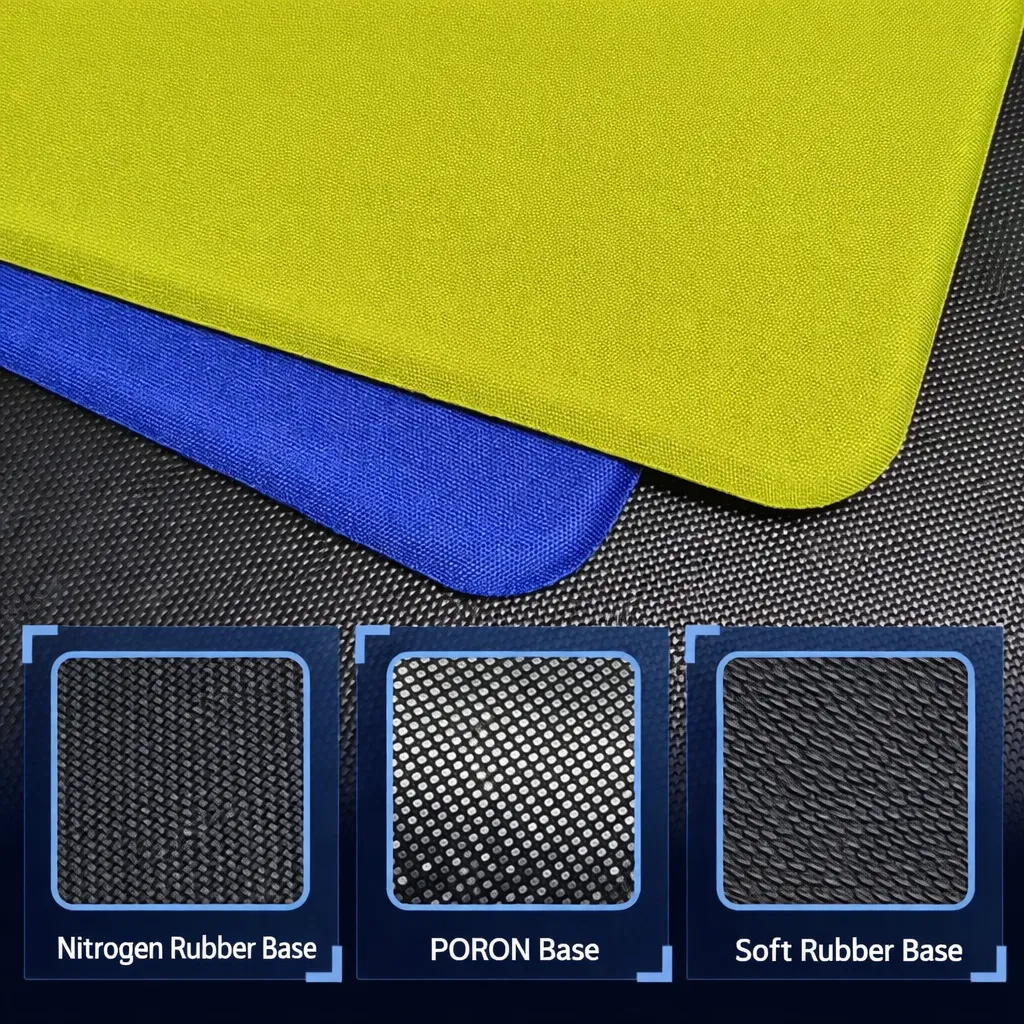
The softness and rebound profile differs: PORON foam is known for a “plush” resistance that adds control under the hand, whereas rubber-based pads (unless specially engineered) tend to feel harder. In one study of high-end pads, engineers found that PORON bases provide high damping (more resistance to initial motion) while a novel rubber formulation achieved a snappier return. Our factory experience echoes this: a PU/Poron pad will feel like it slows the mouse slightly for precision, whereas a rubber pad feels firmer and returns position quickly.
Durability is another strength of PU: its molecular structure resists abrasion and tears much better than typical rubber. For bulk OEM customers, this means PU-foam pads can be thinner yet last longer. However, note that very soft open-cell foams (low-density PU) can develop “dead zones” where the surface stays crushed under repeated pressure. High-quality PU (like PORON or high-density formulations) avoids this by retaining shape over years. In contrast, a firm rubber base keeps the pad perfectly flat and stable even after heavy use, though it may not cushion impact as gently.
Finally, anti-slip and comfort: PU foam pads often have integrated micro-grip, and many are flame-retardant and odorless, improving the user experience. Rubber pads naturally grip any surface and are also flame-resistant by nature, but they can carry unpleasantries like latex smell.
PORON vs Standard Foam
Not all PU foams are equal. “Standard” foam (cheap open-cell PU or memory foam layers) behaves differently from high-grade PORON. The table below compares PORON foam to a generic foam base:
| Feature | PORON® (High-Performance PU) | Standard PU/EVA Foam or Memory Foam |
|---|---|---|
| Resilience/Rebound | High rebound and “spring” feel; returns quickly to shape. | Low rebound (especially memory foam): slowly recovers shape. |
| Compression Set | Very low; retains thickness under load. | Tends to compress over time (“flat spots”); dead zones form. |
| Cushioning/Feel | Soft but supportive (“smart” air cushion). | Very soft (memory foam) but can feel “mushy”; less consistent support. |
| Durability | Ultra-durable PU with microcell structure; resists aging. | Less durable; foam may break down, tear, or lose elasticity. |
| Anti-Slip Grip | Excellent grip: manufacturer claims Poron has stronger anti-skid than rubber. | Moderate grip; depends on backing (often uses rubber base anyway). |
| Odor & Safety | Odorless, no harmful additives (flame-retardant by design). | May off-gas or have odor; sometimes not flame-retardant. |
| Price & Availability | Expensive specialty material; MOQ (minimum orders) often high. | Cheaper commodity foam; widely available in rolls. |
PORON foam’s microporous structure (see above) is engineered to give consistent cushion and quick recovery. In contrast, cheaper open-cell PU foam or memory layers lack structural memory. In fact, industry analysis warns that open-cell foams lose shape in just months, whereas closed-cell/high-density foam (like PORON) stays “true”. For a supplier, choosing PORON means the pad stays springy and flat longer. Generic foam will eventually sag; users may notice uneven friction points as the pad “dents” under repeated mouse clicks. In terms of comfort and control, most B2B buyers find that PORON delivers more consistent, high-end feel versus the “one-time comfort” of standard foam.
Manufacturing Process of PU/PORON Mouse Pads
From an OEM factory standpoint, the manufacturing flow for a PU- or PORON-based mouse pad typically includes:
- Foam Production/Selection: We start with raw materials. For PU pads, the foam is often produced in-house or sourced as bulk sheets. (PORON is typically purchased in sheet form from its maker, Rogers Corp.) The foam density and hardness are specified in the formula. For example, adding blowing agent creates an open-cell structure; using water or CO₂ creates closed cells. (Custom compounds can adjust rebound, color, flame rating, etc.)
- Surface Preparation: The decorative top surface (woven cloth, Lycra, PU leather, etc.) is printed or coated. For full-color graphics, silk-screen or dye-sublimation printing is done on the fabric layer.
- Lamination/Assembly: The printed fabric is heat-pressed onto the foam base. We often use heat-activated adhesive or glue lamination. Careful tension control prevents wrinkles. The bonded sheet is cured under heat/pressure, ensuring a tight bond without bubbles.
- Cutting: The laminated stack is cut to shape. For shaped mouse pads, we use CNC die-cutters or ultrasonic cutters.
- Edge Finishing: Edges may be heat-sealed or stitched. Premium pads often have stitched borders for durability. We trim any excess material and ensure smooth edges.
- Quality Control: Each pad is inspected for surface defects, thickness tolerance, and rebound. We may perform spot compression tests (or even a drop/rebound test) to verify consistency.
- Packaging: Finally, pads are flattened and packed. Note: ultra-soft rubber pads (like some GTR models) must be packed flat to prevent deformation; PU foam pads are less sensitive and can sometimes be rolled.
Throughout production, our factory follows strict quality standards to ensure performance. This expertise – 12+ years of mouse pad manufacturing – builds trust with bulk order clients. We leverage metrics (Shore hardness, rebound percentage, abrasion cycles) to give customers confidence in the end product’s durability and feel.
Conclusion
In summary, polyurethane (PU) foam bases and PORON® offer significant advantages for high-end mouse pads. From an OEM viewpoint, these materials allow softer, smarter pad designs that improve precision and comfort. Compared to generic rubber or foam bases, PU/PORON pads can provide superior rebound, longevity, and consistency. They are ideal for custom gaming pads, corporate gifts, or any private label pads where user experience and longevity matter. Top brands and suppliers choose PORON and advanced PU precisely because these foams combine the cushioning of gel with the resilience of elastomer.
When selecting a mouse pad base as an importer or supplier, consider both the material properties and your OEM/MOQ requirements. We encourage buyers to request samples and testing data (abrasion, compression, odor) to see the difference firsthand. For example, try flexing a PORON pad and a rubber pad side-by-side: you’ll feel the PU foam’s controlled bounce and cushioned support. Proper formulation and factory process (as outlined above) ensure the final pad delivers consistent performance over its lifetime.
By leveraging materials science and manufacturing expertise, B2B purchasers can offer next-gen mouse pads in their product line – pads that feel softer and smarter, yet stand up to daily use. With the right supplier partnership (like working directly with our factory), you gain not only high-quality PU/PORON pads, but also support in design and production to fit your brand’s needs.