Quando um comprador pesquisa esse assunto, a intenção geralmente não é apenas curiosidade. Na maioria dos casos, ele está tentando responder a uma questão comercial: por que cada vez mais empresas estão abandonando os teclados genéricos prontos para uso, e será que uma estratégia de teclados personalizados vale o investimento atualmente? Para gerentes de compras, proprietários de marcas e equipes de produto, a verdadeira preocupação é prática: a personalização melhorará a margem de lucro, a experiência do usuário ou a eficiência do fluxo de trabalho o suficiente para justificar a complexidade do desenvolvimento de ferramentas, do design e da aquisição?
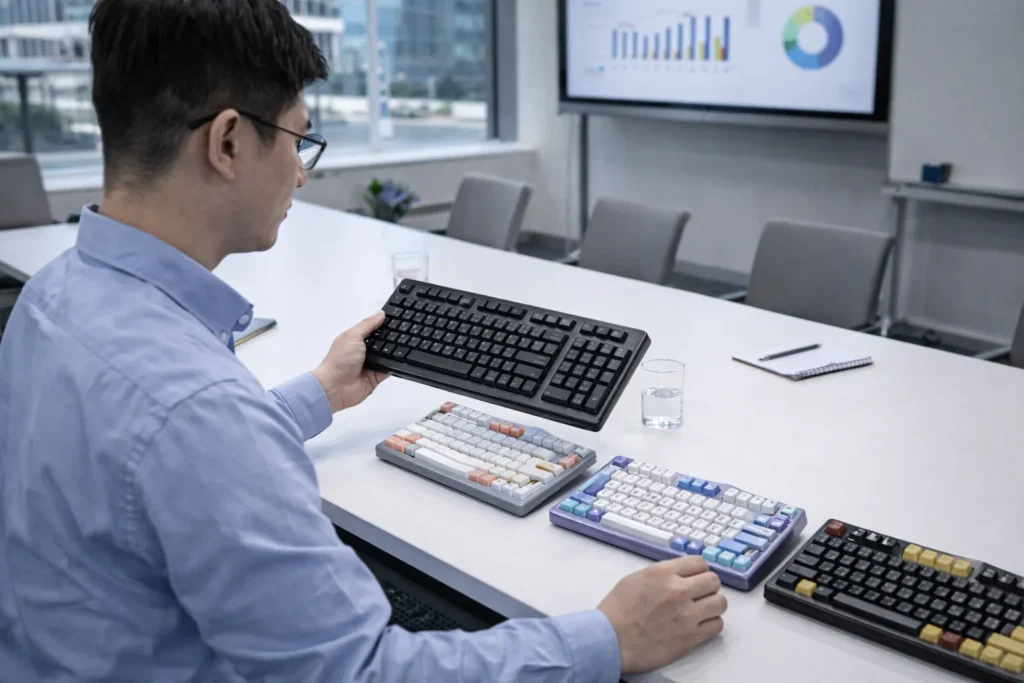
Do ponto de vista das fabricantes, a resposta é, cada vez mais, sim. A categoria de teclados não é mais impulsionada apenas pelo varejo de consumo. O mercado de teclados em geral continua crescendo, com a Technavio estimando uma taxa composta de crescimento anual (CAGR) de 5,79% entre 2023 e 2028, e observando que o segmento corporativo detinha a maior participação na receita em 2022. Ao mesmo tempo, a Grand View Research estimou o mercado de teclados para jogos em US$ 1,105 bilhão em 2024, com crescimento contínuo até 2030, enquanto o segmento de teclados mecânicos para jogos, por si só, gerou US$ 740,5 milhões em 2024. Isso é importante para os compradores B2B porque recursos mecânicos, programáveis e de layout específico não são mais “extras para entusiastas”; eles estão se tornando requisitos comerciais padrão em diversos setores.
O que está impulsionando essa mudança do ponto de vista da fábrica?
As fábricas percebem a mudança antes mesmo que os relatórios de mercado a expliquem. Há cinco anos, a maioria das consultas sobre teclados personalizados ainda era de pequeno porte, voltada para o design ou fortemente orientada para jogos. Em 2026, as consultas são mais abrangentes e estruturadas. Os compradores estão solicitando layouts personalizados, caixas com a marca do cliente, legendas multilíngues, módulos integrados e macros específicas para fluxos de trabalho. Eles também estão solicitando quantidades mínimas de pedido (MOQs) menores, amostragem mais rápida e abordagens modulares de ferramentas que reduzam o risco em projetos de primeiro pedido.
Essa mudança não é aleatória. Ela está sendo impulsionada por casos de uso reais no mundo dos negócios. Os compradores corporativos buscam teclados ergonômicos e voltados para o bem-estar, tanto para o ambiente de escritório quanto para equipes de trabalho híbridas. Os compradores do setor de PDV e industrial buscam layouts programáveis, leitores integrados e carcaças duráveis. Os proprietários de marcas desejam produtos de marca própria que não sejam idênticos aos que todos os concorrentes estão adquirindo do mesmo catálogo. Compradores promocionais e de canais de distribuição buscam periféricos de marcas premium com maior durabilidade do que brindes de baixo valor. A análise de aquisição de produtos promocionais da Grand View Research também aponta para um crescimento contínuo em produtos personalizáveis de marca, prevendo uma CAGR de 3,75% de 2024 a 2030.
1. A diferenciação das marcas próprias está se tornando cada vez mais importante
Uma das principais razões pelas quais os teclados personalizados estão ganhando espaço nos mercados B2B é simples: os teclados genéricos já não são suficientes para marcas que buscam um posicionamento diferenciado. Em canais altamente competitivos, especialmente online, a homogeneidade dos produtos destrói a margem de lucro. Se dez vendedores oferecem teclados quase idênticos, com o mesmo molde, tipo de tecla e layout padrão, o preço passa a ser o único diferencial. Essa não é uma situação sustentável.
Do ponto de vista da fábrica, é nesse aspecto que a demanda por OEM e ODM se tornou mais estratégica. Os compradores não estão mais solicitando apenas a impressão de logotipos. Eles estão pedindo combinação de cores da caixa, legendas regionais, ajuste dos switches, materiais das placas, design da embalagem e diferenciação no nível do software. Na prática, mesmo uma personalização moderada pode criar uma separação mais forte entre os canais. Um teclado 75% de marca, com acústica ajustada, legendas personalizadas e atalhos específicos para negócios, é muito mais difícil de comparar diretamente com um modelo genérico de catálogo. É por isso que muitos compradores B2B agora veem os teclados personalizados não como um projeto de acessório, mas como uma ferramenta de proteção de margem.
2. Os compradores B2B precisam de dispositivos de entrada específicos para seus fluxos de trabalho
Um segundo fator de crescimento é a funcionalidade, e não a marca. Em muitos ambientes B2B, o layout padrão do teclado não é o mais eficiente. Os setores de varejo, logística, saúde, manufatura, salas de controle, aplicações KVM e instalações seguras frequentemente precisam de mapeamentos de teclas personalizados, teclas de macro dedicadas, leitores integrados ou formatos incomuns. É nessa área que os teclados programáveis e modulares estão se expandindo mais rapidamente.
Isso não é apenas teoria. A PrehKeyTec comercializa publicamente teclados programáveis totalmente configuráveis, nos quais os clientes podem definir o tamanho das teclas, o layout, a inscrição, a cor e integrar módulos como leitores de RFID ou de impressão digital. A linha de teclados programáveis da IHSE, da mesma forma, oferece suporte à impressão de teclas personalizada, teclados adicionais e implantações críticas para a segurança, além de anunciar durabilidade de até 50 milhões de pressionamentos de tecla. Esses são sinais claros de que o mercado não está buscando apenas variações estéticas. Ele está buscando hardware desenvolvido especificamente para o fim a que se destina, que melhore a velocidade, reduza erros de entrada e se adapte ao software operacional.
Do ponto de vista da fabricação, esse tipo de demanda é especialmente atraente porque desvia a discussão da mera comparação de preços. Quando um teclado se torna específico para um fluxo de trabalho, os compradores o avaliam com base na produtividade, na adequação ao processo e na redução de erros. Isso muda a dinâmica econômica. Um teclado personalizado que ajude uma recepcionista de clínica médica, um selecionador de estoque ou um caixa a economizar segundos em tarefas repetitivas pode gerar mais valor do que um teclado genérico mais barato jamais poderia.
3. A ergonomia agora é uma rubrica orçamentária, e não mais um item opcional
A ergonomia é outro motivo importante para o crescimento dos teclados personalizados nos mercados B2B. Durante anos, os teclados ergonômicos foram considerados produtos especializados, destinados a uma pequena porcentagem de usuários. Em 2026, mais empregadores passam a vê-los como parte da estratégia de saúde, retenção e produtividade no local de trabalho. Do ponto de vista da fábrica, observamos agora mais solicitações de cotação que pedem especificamente layouts divididos, teclas de baixa resistência, formatos compactos, compatibilidade com inclinação negativa ou melhorias na posição dos pulsos.
A lógica comercial é forte. O relatório técnico sobre ergonomia da Logitech cita que 15% dos usuários de computador nos EUA sentem dores diárias na mão, no pulso, no antebraço ou no ombro, e afirma que os funcionários de escritório que sofrem apenas de dores no pulso costumam ter uma perda de produtividade de 15%. O mesmo documento também observa que os custos diretos das lesões ocupacionais causadas por movimentos repetitivos nos EUA chegam a US$ 1,5 bilhão, enquanto aproximadamente quatro em cada dez americanos afirmam que a dor interfere no trabalho ou na vida cotidiana. Para empregadores que adquirem equipamentos em grande escala, isso torna a escolha de teclados ergonômicos uma questão financeira, e não apenas uma questão de conforto.
É exatamente por isso que as fábricas estão recebendo mais pedidos de produtos ergonômicos personalizados, em vez de produtos totalmente genéricos. Diferentes grupos de funcionários nem sempre querem a mesma coisa. Alguns precisam de teclados divididos. Outros precisam de layouts mais compactos para fluxos de trabalho que exigem muito uso de laptop. Outros ainda precisam de teclados numéricos para canhotos ou camadas programáveis para reduzir movimentos repetitivos. Uma fábrica capaz de produzir a partir de uma plataforma modular agora pode atender a essas necessidades com menor risco de ferramentas do que no passado.
4. Os segmentos mecânico e premium estão impulsionando o crescimento do B2B
Outra razão para o crescimento dos teclados personalizados é que as expectativas em relação aos teclados premium estão aumentando em todos os setores, não apenas no de jogos. O segmento de teclados mecânicos está crescendo porque os usuários esperam, cada vez mais, um melhor toque, maior vida útil, facilidade de manutenção e mais controle sobre o desempenho da digitação. A Grand View Research informou que o segmento de teclados mecânicos para jogos gerou US$ 740,5 milhões em 2024 e deve ultrapassar US$ 1,25 bilhão até 2030. Mesmo para compradores que não são gamers, essa tendência é importante, pois normaliza a presença de hardware com especificações mais avançadas no mercado.
Do ponto de vista da produção, as plataformas mecânicas são mais fáceis de personalizar do que muitos compradores imaginam. Uma vez que a arquitetura da placa de circuito impresso (PCB) e o sistema de placas estejam estabilizados, as fábricas podem alterar o tipo de switch, o material das placas, o perfil das teclas, a lógica de iluminação e os detalhes do invólucro externo sem precisar reprojetar o produto inteiro. Isso torna os teclados mecânicos personalizados especialmente atraentes para marcas B2B que buscam diferenciação sem precisar partir do zero. Em muitos casos, a fábrica não está criando um produto totalmente novo. Ela está configurando uma plataforma comprovada para se tornar um SKU comercialmente diferenciado.
Essa mudança é especialmente visível nas marcas de canal e nos revendedores especializados. Um teclado personalizado agora pode combinar recursos voltados para entusiastas com requisitos empresariais: legendas multilíngues, firmware regional, macros personalizadas ou embalagem exclusiva. Essa é uma das razões pelas quais os teclados personalizados estão deixando de ser considerados uma “categoria de hobby” para se tornarem itens de aquisição B2B de verdade.
5. A redução do MOQ e a agilização dos ciclos de ODM mudaram a dinâmica econômica
No passado, muitos compradores B2B evitavam teclados personalizados porque os requisitos de ferramentas, amostragem e quantidade mínima de pedido (MOQ) eram muito elevados. Do lado das fábricas, essa barreira foi superada. Ferramentas modulares mais avançadas, plataformas de PCB mais flexíveis, prototipagem digital aprimorada e cadeias de suprimentos mais maduras encurtaram o caminho do conceito até o pedido piloto. Isso mudou drasticamente o comportamento dos compradores.
Essa é uma das mudanças menos comentadas, mas mais importantes da categoria. Os teclados personalizados estão em ascensão porque não estão mais restritos apenas a grandes marcas com enormes volumes anuais. Marcas de médio porte, distribuidores regionais, empresas de software, equipes de merchandising de eventos e compradores de nichos verticais agora podem criar produtos personalizados usando plataformas de fabricação já existentes. Uma fábrica pode precisar apenas modificar as teclas, o firmware, as inscrições, os detalhes da parte superior do teclado, a embalagem ou os pacotes de acessórios para criar um produto diferenciado. Isso reduz o tempo de lançamento no mercado e diminui o risco de capital.
Do ponto de vista das fábricas, isso também tornou o segmento de produtos personalizados mais escalável. Em vez de se dedicarem exclusivamente a megaprojetos, os fabricantes podem dar suporte a vários programas personalizados de pequeno a médio porte ao mesmo tempo. Essa é uma das razões pelas quais o segmento parece mais ativo em 2026 do que há alguns anos: a capacidade do lado da oferta melhorou, e não apenas a demanda.
Onde o crescimento no setor B2B está mais forte no momento
A demanda B2B que mais cresce não provém de um único segmento. Ela provém de vários casos de uso que se sobrepõem, cada um com requisitos específicos diferentes.
Um segmento é o de marcas próprias orientadas pela marca. Esses compradores buscam diferenciação visual, controle da embalagem e margens brutas mais elevadas. Outro é o de ergonomia empresarial, onde o argumento de negócios gira em torno da produtividade, do bem-estar e da padronização das estações de trabalho. A Technavio também identifica o segmento corporativo como o maior segmento de aplicação no mercado de teclados. Um terceiro segmento é o de hardware operacional especializado, no qual teclados programáveis ou resistentes dão suporte a fluxos de trabalho no varejo, na indústria, em ambientes seguros ou na área da saúde. As páginas oficiais de produtos da PrehKeyTec e da IHSE mostram claramente que layouts personalizados, integração de módulos e teclados duráveis específicos para aplicações são agora ofertas comerciais maduras, e não mais experimentos de nicho.
Um quarto segmento é o de promoção e desenvolvimento de canais. Os teclados personalizados estão se tornando cada vez mais relevantes como produtos de marca duradouros no setor de brindes corporativos e no marketing de canais. A perspectiva da Grand View Research sobre a aquisição de produtos promocionais reforça que os produtos personalizáveis continuam atraentes, pois geram visibilidade da marca a um custo de aquisição relativamente eficiente. Do ponto de vista da fábrica, isso significa que os teclados personalizados estão cada vez mais na interseção entre a aquisição de hardware e a estratégia de marca.
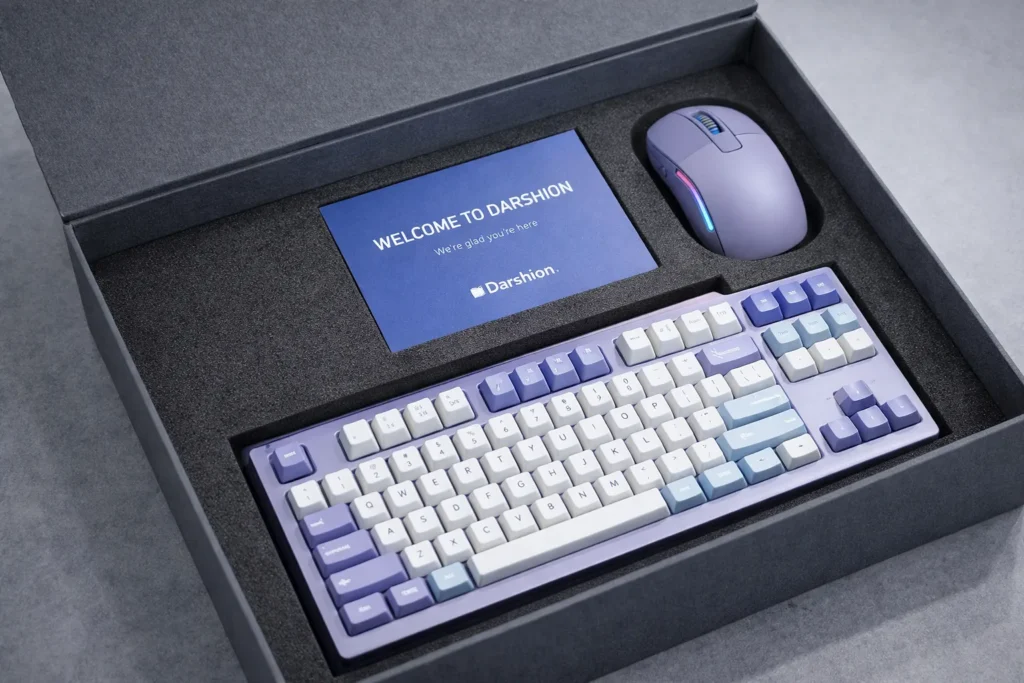
Comparação no nível da fábrica: por que os compradores optam por produtos personalizados em vez dos padronizados
| Motorista de compras | Teclado padrão de catálogo | Projeto de teclado personalizado |
|---|---|---|
| Diferenciação da marca | Baixa | Alta |
| Adequação ao fluxo de trabalho | Normalmente genérico | Pode ser específico para cada função |
| Flexibilidade de idioma/layout | Limitada | Totalmente configurável |
| Otimização ergonômica | Sujeito à disponibilidade dos SKUs | Pode ser adaptado às necessidades da força de trabalho |
| Controle de margem para revendedores | Baixa em canais congestionados | Melhor com o posicionamento da marca própria |
| Barreira de quantidade mínima de pedido (MOQ) | Mais baixo | Moderado, mas em queda com o ODM modular |
| Hora de lançar | Mais rápido para itens em estoque | Um pouco mais longo, mas cada vez mais gerenciável |
| Valor estratégico de longo prazo | Baixo a médio | Médio a alto |
O que os compradores devem perguntar antes de iniciar um projeto de teclado personalizado
O crescimento dos teclados personalizados não significa que todo projeto personalizado seja bom. Do ponto de vista da fábrica, os melhores compradores são aqueles que definem seu objetivo comercial com antecedência. Eles estão tentando melhorar o fluxo de trabalho, aumentar o valor percebido do produto, reduzir reclamações ergonômicas, localizar para uma região ou criar uma SKU de varejo com melhor separação de margens? A resposta afeta todo o resto: layout, design da placa, seleção do switch, caminho da certificação, MOQ, embalagem e escopo do firmware.
Uma lista de verificação inicial útil inclui: grupo de usuários-alvo, layout necessário, preferência de switch, suporte a idiomas, certificações, expectativas de firmware, acessórios, embalagem e previsão anual. Se esses aspectos estiverem claros, a fábrica poderá orientar o comprador para a plataforma certa, em vez de fazer uma engenharia excessiva do projeto. É daí que vem o verdadeiro valor do OEM/ODM: não apenas fabricar, mas ajudar o cliente a evitar erros desnecessários de ferramentas ou de projeto.
Conclusão
Do ponto de vista da fábrica, os teclados personalizados estão crescendo nos mercados B2B porque a economia mudou e os casos de uso se ampliaram. Os compradores não estão mais personalizando apenas pela aparência. Eles estão personalizando para diferenciação, eficiência do fluxo de trabalho, ergonomia, adaptação regional e melhor margem do canal. Ao mesmo tempo, as fábricas se tornaram mais capazes de fornecer projetos personalizados com menor risco por meio de plataformas modulares, prototipagem mais rápida e modelos OEM/ODM mais flexíveis.
Os dados de mercado apóiam essa direção. A demanda por teclados ainda está crescendo, a aplicação corporativa continua significativa, os segmentos de jogos e mecânicos estão se expandindo e a dor ergonômica tem um custo mensurável na produtividade do local de trabalho. Para muitos compradores B2B, isso cria uma conclusão clara: um projeto de teclado personalizado bem planejado não é mais um luxo. Ele é cada vez mais uma decisão racional de produto e aquisição.
Se estiver avaliando um projeto de teclado personalizado, a primeira conversa não deve ser sobre cores ou logotipos. Ela deve ser sobre o caso de uso, o posicionamento no mercado e o problema que o teclado precisa resolver. Quando essas respostas estiverem claras, um profissional capacitado fábrica de teclados geralmente podem traduzi-las em um produto que faça sentido comercialmente.