Toplu mouse pad üretiminde (OEM fare altlıkları, toplu fare altlıkları), maliyetleri kontrol etmek hayati önem taşır. Düşük üretim maliyetleri tedarikçilerin rekabetçi fiyatlar sunmasını ve hem fabrika hem de alıcı için marjları korumasını sağlar. Maliyet disiplini olmadığında, fazladan harcanan her dakika işgücü veya boşa harcanan her gram kauçuk kârlılığı azaltır. B2B alıcıları ve satın alma yöneticileri için maliyetlerin nereden kaynaklandığını anlamak, tedarikçileri kıyaslamaya ve gizli risklerden kaçınmaya yardımcı olur. Fabrikalar maliyet ile kaliteyi dengelemeye çalışır: agresif maliyet düşürme (örneğin kalite kontrolün atlanması) ilk etapta para tasarrufu sağlayabilir ancak genellikle pahalı iadelere ve marka güveninin zedelenmesine yol açar.

Hammadde Seçenekleri
Bir mouse pad'deki iki ana malzeme maliyeti kauçuk taban ve yüzey kumaşıdır. Fabrikalar belirli fiyat/dayanıklılık hedeflerine ulaşmak için malzeme seçerler. Kauçuk Taban: Yaygın seçenekler arasında sentetik SBR kauçuk ve neopren (kloropren kauçuk) bulunur. SBR bir emtia kauçuğu olup yaprak başına önemli ölçüde daha ucuz, Bu da onu yüksek hacimli promosyon pedleri için tercih edilir kılmaktadır (“Yüksek Hacimli Promosyon Ürünleri: ... fare altlıkları. Burada maliyet birincil etkendir”). Neopren (CR) önemli ölçüde daha pahalıdır ancak daha yüksek esneklik ve uzun ömür sunar (premium pedler için daha iyidir). Birçok OEM fabrikası, uygun fiyatlı pedler için SBR ve üst düzey oyun veya markalı matlar için neopren kullanacaktır.
Kumaş Yüzey: Standart polyester örme kumaş en ucuzudur ve canlı boya süblimasyon baskısını destekler; daha yüksek kaliteli dokumalar veya karışımlar (örneğin mikro doku, mikrofiber) daha pahalıdır ve premium hatlar için ayrılabilir. Kalınlık: Her ilave milimetre kalınlık kauçuk ve kürleme süresi ekleyerek maliyeti artırır. Tipik kalınlıklar 2 mm-4 mm'dir; bir fabrika denge için 3 mm'yi standartlaştırabilir. Renk/Boyalar: Kirli beyaz kumaşlar baskı öncesi adımlardan tasarruf sağlar. Boya süblimasyon mürekkebi, spot ekran mürekkeplerinden daha pahalıdır, ancak canlı tam renkli baskılar sunar (fabrikalar parti boyutuna göre baskı yöntemini seçebilir).
Önemli çıkarımlar: Daha ucuz kauçuk (SBR) ve standart polyester temel maliyeti en aza indirir, ancak alıcılar daha düşük maliyetin genellikle daha düşük dayanıklılık anlamına geldiğini unutmamalıdır. Daha yüksek yoğunluklu bir kumaş veya daha kalın bir ped sipariş etmek birim maliyeti yükseltir ancak performansı artırabilir. (İç bağlantı önerisi: özel ürünlerimizi görün fare altlığı fabrikası malzeme özellikleri kılavuzu).
Üretim Süreci Optimizasyonu
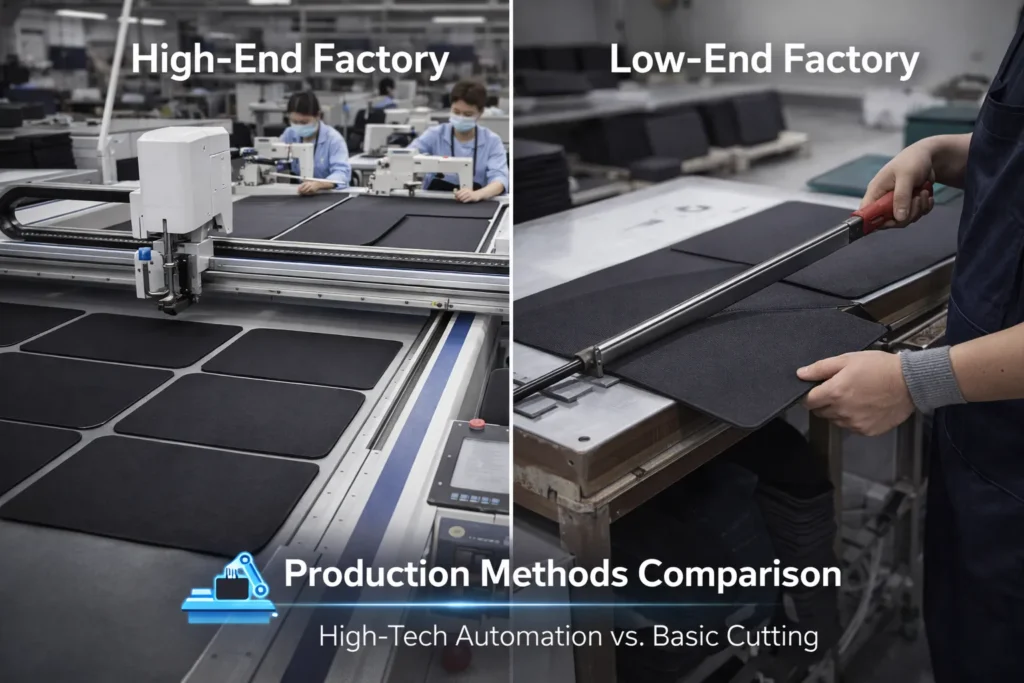
Verimli süreçler doğrudan daha düşük birim maliyetlere dönüşür. Fabrikalar her aşamayı optimize eder: laminasyon, kürleme, baskı, kesim ve son işlem. Birçok kullanım toplu i̇şleme (büyük tabakaların veya ruloların taşınması) ve hatta sürekli laminasyon hatları. Örneğin, bir rulo laminasyon hattı, her seferinde bir ped basmak yerine, uzun yapıştırılmış tabakalar üretmek için kauçuk bileşiği ve kumaşı ısıtılmış silindirlerden besler. Aynı şekilde, yüksek hızlı kalıp kesim veya CNC kesim saatte yüzlerce ped çıkarır. Yerine getirmeyi hızlandırmak için fabrikalar adımları üst üste bindirir: bir parti baskı yaparken, önceki partiler kesim veya kalite kontrol aşamasında olabilir.
Etkili kesim düzenleri çok önemlidir: Büyük tabakalarda ped ana hatlarının planlı bir şekilde yerleştirilmesi israfı azaltabilir. (Kötü yerleşim seçimleri hurdayı 10-20% artırabilir.) Sektör verileri, üretimin düzene sokulmasının (tam zamanında iş akışları, otomasyon) toplam maliyetleri 30%'ye kadar düşürür. Örneğin, tek bir baskı makinesinde büyük bir çalışma yapmak veya malzeme değişimlerini en aza indirmek için kesimleri gruplamak, ped başına zamandan ve işçilikten tasarruf sağlar.
Madde Listesi - Süreç Verimliliği Teknikleri:
- Toplu Kürleme/Laminasyon: Kesikli veya sürekli vulkanizasyon, kauçuk ve kumaşı yapıştırıcı olmadan bağlayarak malzeme ve işçilikten tasarruf sağlar.
- Verimli Kesim: Optimize edilmiş düzenlere sahip çelik kalıpların veya CNC kesicilerin kullanılması hurdayı en aza indirir.
- Çakışma Operasyonları: Baskı, kesim ve kalite kontrol aşamalarının paralel olarak yürütülmesi (mümkün olduğunda) boşta kalma süresini azaltır.
- Otomasyon: Yüksek hızlı yazıcılar ve lazer kesiciler, işçilik maliyetlerini kontrol ederken çıktıyı ölçeklendirir.
İşgücü ve Otomasyon
Manuel üretimde işçilik önemli bir maliyettir. Modern mouse pad fabrikaları bu masrafı azaltmak için otomasyon kullanmaktadır. Örneğin, kenar dikişi (pedlerin etrafındaki ipliği bağlama) aşağıdaki yöntemlerle yapılabilir otomati̇k di̇ki̇ş maki̇neleri̇ el dikişi yerine. Kesim, elle düzeltmeyi önlemek için CNC veya lazer kesiciler kullanabilir. Paketleme bile konveyör bantlar veya basit düzeneklerle yarı otomatik hale getirilebilir. Bu teknolojiler ön sermaye maliyetini artırır ancak büyük işlerde birim başına işçilik maliyetini düşürür. İyi donanımlı bir tesis, minimum manuel işlemle haftada binlerce ped üretebilir.
Anahtar otomasyon faktörleri:
- CNC ve Lazer Kesim: Küçük çalışmalarda özel kalıp maliyetlerini önler, tutarlı kesimler sağlar ve hacimli üretimi hızlandırır.
- Otomatik Dikiş Makineleri: Hızlı, düzgün kenar ciltleme sağlar; daha büyük siparişlerde karşılığını veren bir yatırım.
- Paketleme Otomasyonu: Fare altlıkları için tam robotik paketleme nadir olsa da, konveyörler ve organize iş istasyonları bir çalışanın çok sayıda altlığı verimli bir şekilde işlemesine olanak tanır (örn. montaj hattı ile çoklu torba yerleştirme).
Uygulamada, fabrikalar otomasyon ile esnek işgücü arasında denge kurmaktadır. Basit pedler çoğunlukla sadece birkaç operatörle makine yapımı olabilir. Birinci sınıf pedler (benzersiz şekillere veya işlemeli kenarlara sahip) hala vasıflı işgücüne ihtiyaç duyar, bu nedenle kenar dikişli pedler daha pahalıdır.
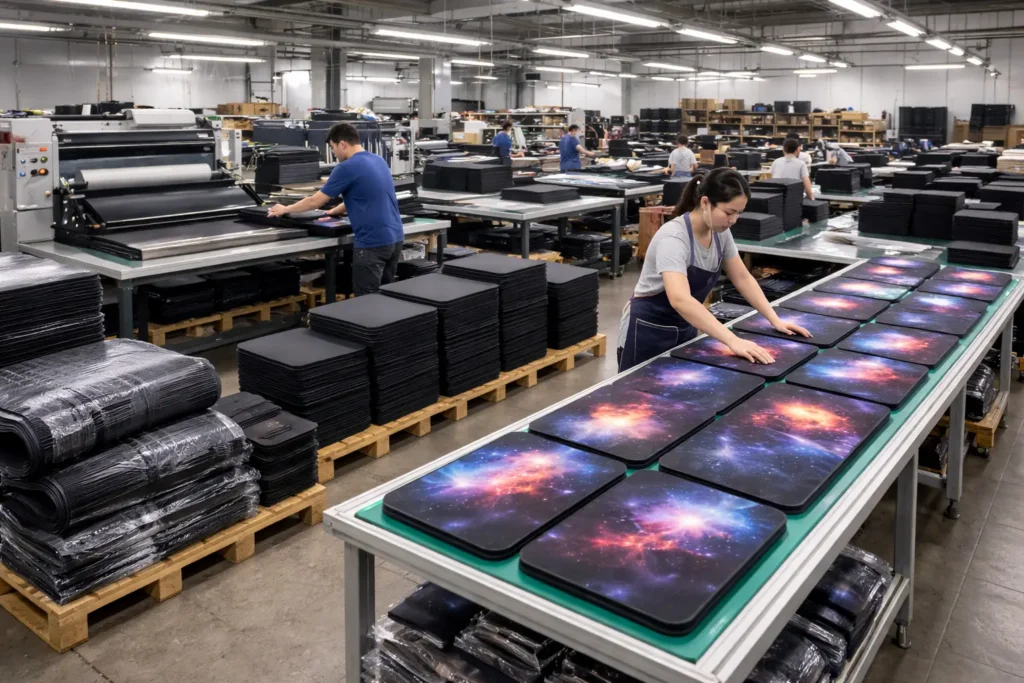
Atık Kontrolü ve Verim Optimizasyonu
Malzeme israfı boşa giden paradır. Akıllı fabrikalar kesim düzenlerini dikkatlice planlar: parçaları döndürmek ve ortak boyutları geniş rulolara uyacak şekilde gruplamak, israfı 10-20% azaltabilir. Uygulamada, atık (kırpıntılar, yanlış baskılar, hurda) tipik olarak 8-15% civarındadır. Akıllıca yeniden kullanım maliyeti daha da düşürür: atılan pedlerin kumaşları soyulabilir, böylece kauçuk yeni tabakalara geri dönüştürülebilir. Tutarlılığı sağlamak için kürlenmiş levhaların düz olmayan kenarlarının kesilmesi yaygındır. Zaman içinde, hurdadaki küçük azalmalar bile (örneğin 15%'den 8%'ye) büyük sipariş başına binlerce malzeme tasarrufu sağlayabilir.
Atıkları en aza indirmek için ipuçları:
- Optimize Edilmiş Yerleştirme: Boşlukları en aza indirecek şekilde her bir sayfada ped ana hatlarını düzenlemek için yazılım veya şablonlar kullanın.
- Tutarlı Yönlendirme: Kumaş greni uyumsuzluklarından kaynaklanan kullanılamaz kenar alanlarını önlemek için bir partideki tüm pedleri aynı şekilde hizalayın.
- Geri Kazanım Malzemesi: Hurda kauçuğu öğütüp dolgu maddesi haline getirerek veya yeni tabakalara yeniden karıştırarak geri dönüştürün.
- Toplu Prova: Düzen hatalarını erken yakalamak için prototip olarak bir ped yazdırın ve üretin (daha büyük işleri toplu hurdadan kurtarın).
Akarşılaştırma tablosu Aşağıda, daha yüksek hurdanın (daha küçük optimum parti düzeni) belirli bir sipariş için gerekli hammaddeyi (ve maliyeti) doğrudan nasıl artırdığı gösterilmektedir. Örneğin, 10% hurda, 1,11 × malzeme satın almak anlamına gelir.
| Kesim Stratejisi | Malzeme Verimliliği | Notlar |
|---|---|---|
| Optimum yuvalama | ~92% | Şekilleri sıkıca paketler, düşük atık |
| Basit ızgara düzeni | ~85-90% | Kenarlar boyunca bazı boşluklar |
| Tek sütunlu kesimler | ~80-85% | Geniş rulolarda daha fazla kenar hurdası |
Ambalaj Seçenekleri
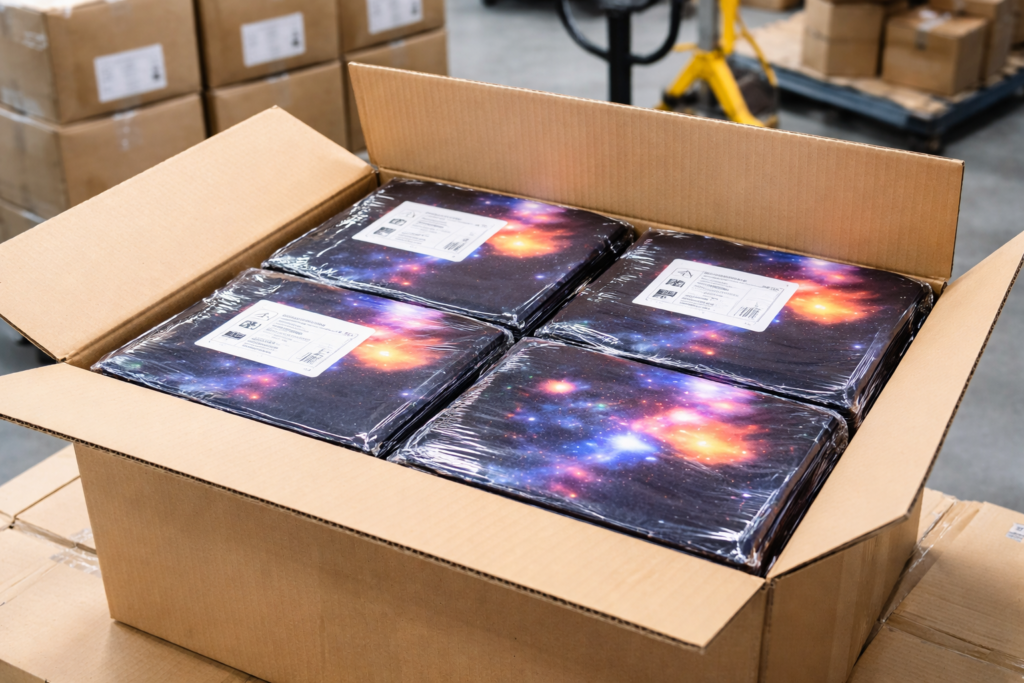
Mouse pad'lerin paketlenme şeklinin maliyet ve lojistik üzerinde ince bir etkisi vardır. Standart fabrika uygulaması, her bir pedi basit bir plastik çoklu torbaya koymak ve ardından oluklu kartonlara toplu olarak paketlemektir. Bu düz/palet sevkiyatı birim başına ucuzdur ancak hacimlidir. Alternatif olarak, tüp ambalaj (pedlerin karton/plastik tüplere sarılması) perakende için üstün bir görünüm sunar ancak birim başına daha fazla malzeme maliyeti vardır ve fazladan yer kaplar (tüplerin paletlenmesi daha az verimlidir). Düz kutular (her bir ped düz baskılı bir kutuda) lüks görünür, ancak kutu yapım masrafı ekler ve özel baskı için daha yüksek MOQ'lar gerektirebilir.
Önemli maliyet noktaları: şeffaf OPP çoklu torbaların her biri yalnızca birkaç sente mal olurken, özel baskılı tüpler veya kutuların her biri $0,5-$1+ tutabilir. Baskılı paketler için tasarımcıların çizimleri ve kalıpları genellikle yüzlerce MOQ'a sahiptir. Toplu alıcılar genellikle bireysel perakende paketlemeyi atlar: pedleri köpük veya balonlu naylon içinde gevşek olarak koliler içinde gönderirler. İyi bir ambalaj dengesi, pedleri aşırı maliyet olmadan korur (kırışıklıkları önler).
Ambalaj seçenekleri:
- Polybag + Karton (düz): Minimum maliyet (ped başına ~$0.3-$0.5). Pedler istiflenebilir kartonlar içinde düz olarak gelir. Alan açısından verimsiz ama ucuz.
- Özel Tüp (haddelenmiş): Daha fazla malzeme maliyeti; tüp başına bir ped. Paketlemesi daha yavaştır, ancak tüpler katlanmaya karşı koruma sağlar. Pazarlama değeri maliyetten daha ağır bastığında uygundur.
- Özel Perakende Kutusu: En yüksek maliyet (tasarım, baskı, montaj). Sadece yüksek marjlı ürünler için haklı görülebilir.
Minimum Sipariş Miktarları ve Parti Büyüklüğü Stratejileri
Daha büyük sipariş boyutları daha düşük birim maliyetleri sağlar. Sabit maliyetler (takım kalıpları, elek kurulumları, numune ücretleri) daha fazla birime yayılır. Örneğin, herhangi bir çalışma için kullanılan bir kalıp veya ekran yapılmalıdır (örneğin, $50-$100 maliyeti), ancak bununla 500 veya 5000 ped yapmanız, hacim yüksek olduğunda ped başına maliyeti yalnızca birkaç sent değiştirir. Birçok fabrika, hammadde toplu indirimlerinin devreye girdiği MOQ'larda (örneğin 100, 300, 500) fiyat kırılmalarını listeler. Ham kauçuk ve kumaşın genellikle kendi MOQ'ları vardır. Daha fazla sipariş vermek navlun pazarlığı yapmaya da olanak sağlar (FCL gönderileri ped başına LCL veya havayolundan daha ucuzdur).
Bununla birlikte, aşırı stok bir risktir: satılmayan envanter sermayeyi bağlar. Bilinçli markalar, fazla stoktan kaçınmak için daha küçük üretimler için biraz daha yüksek bir maliyeti kabul edebilir. Fabrikalar aşağıdakiler için daha ucuz fiyatlandırma sunabilir OEM mouse pad Yıllık hacim taahhüdünde bulunmaya istekli müşteriler. Kısacası, parti büyüklüğü hem talep tahminlerine hem de maliyet stratejisine uygun olmalıdır: çalışma başına daha fazla ped = depo limitlerine kadar ped başına daha düşük fiyat.
Kalite Kontrol Maliyet Ödünleşimleri
Her kalite kontrolü zamana mal olur, ancak maliyetli arızaları önler. Fabrikalar genellikle 100% pedleri inceler (baskı doğruluğu, boyutlar, düzlük, yapışma kontrolü). QC'yi atlamak şunları yapabilir denetim işçiliğini azaltın, ancak risk boşa gider. Gönderilen tek bir kusurlu mouse pad, B2B'de çok daha büyük bir kayıptır: iadeler ve itibar kaybı. Bir maliyet analizinde, $10“luk bir ped hatası (hasarlı olarak iade edilen) $30”un üzerinde ekstra maliyeti tetiklemiştir. Bu nedenle, özenli kalite kontrol "maliyetin" bir parçasıdır - yeniden çalışmaya karşı bir sigortadır.
B2B alıcıları şunu bilmelidir: Çok düşük teklifler kalite kontrolden kaçınılmasına neden olabilir. Dahili testler (aşınma, katlanma ve ısı direnci testleri gibi) maliyeti artırır ancak tutarlılığı sağlar. Burada cimrilik yapmak klasik bir yanlış ekonomidir.
Kalite Kontrol ve Maliyet:
- Daha fazla kalite kontrol: Daha yüksek kısa vadeli işçilik maliyeti ancak sıfıra yakın kusurlu oranı.
- Daha az kalite kontrol: Şimdi işçilikten/dakikadan tasarruf sağlar, ancak kusur oranları artar - iadeler ve yeniden harmanlama toplam maliyeti katlar.
Fiyat ve Dayanıklılık Arasındaki Farklar
Düşük maliyetli pedlerde genellikle daha ucuz malzemeler veya daha basit bir yapı kullanılır, bu da kullanım ömrünü kısaltır. Örneğin, kenar dikişi olmayan ince SBR pedler ucuzdur ancak daha hızlı yıpranır (yıpranmış kenarlar, yastık kaybı). Premium pedler (daha kalın, neopren tabanlı, kenar dikişli) malzeme ve zaman açısından daha maliyetlidir ancak çok daha uzun ömürlüdür. Aşağıdaki tablo tipik değiş tokuşları göstermektedir:
| Ped Seçeneği | Kauçuk Tip | Kalınlık | Kenar Kaplama | Yaklaşık Göreceli Maliyet | Tahmini Dayanıklılık (1-10) |
|---|---|---|---|---|---|
| Temel SBR, 2mm, Dikişsiz | SBR | 2mm | Hayır | 1.0 (başlangıç düzeyi) | 3 |
| Standart SBR, 3mm, Dikişsiz | SBR | 3mm | Hayır | 1.2 | 4 |
| Yükseltilmiş SBR, 3mm, Dikişli | SBR | 3mm | Evet | 1.5 | 6 |
| Premium Neopren, 3mm, Dikişli | CR neopren | 3mm | Evet | 3.0 | 9 |
Alıcılar Üzerindeki Etkisi: Tüm Tasarruflar Eşit Değildir
Toplu alıcılar ve markalar tedarikçi seçimi için bu bilgileri kullanmalıdır. Birim maliyetini en düşük seviyeye çeken bir üretici ince malzemeler kullanıyor veya adımları aceleye getiriyor olabilir (ve ince kusurları fark etmeyebilir). Tersine, kaliteli paspaslara yatırım yapan bir fabrika, tutarlılık için biraz daha fazla ödemeniz anlamına gelir. Birim başına düşük fiyat marjlara fayda sağlar ancak gizli dezavantajlara (iadeler, yeniden işleme, performans sorunları) dikkat edin. Her zaman benzerini karşılaştırın: kalınlığı, malzeme özelliklerini, dikiş kalitesini kontrol edin ve tedarikçilere israfı ve kalite kontrolünü nasıl yönettiklerini sorun. Ürününüz uzun ömürlülük gerektiriyorsa, bazen daha yüksek dayanıklılık için ped başına 10-20% daha fazla ödemek daha akıllıca bir harcamadır.