Intención de búsqueda: Lo que los compradores realmente quieren saber
Cuando alguien busca “alfombrillas de ratón personalizadas para ordenador”, normalmente no está buscando una alfombrilla de ratón de venta al por menor.
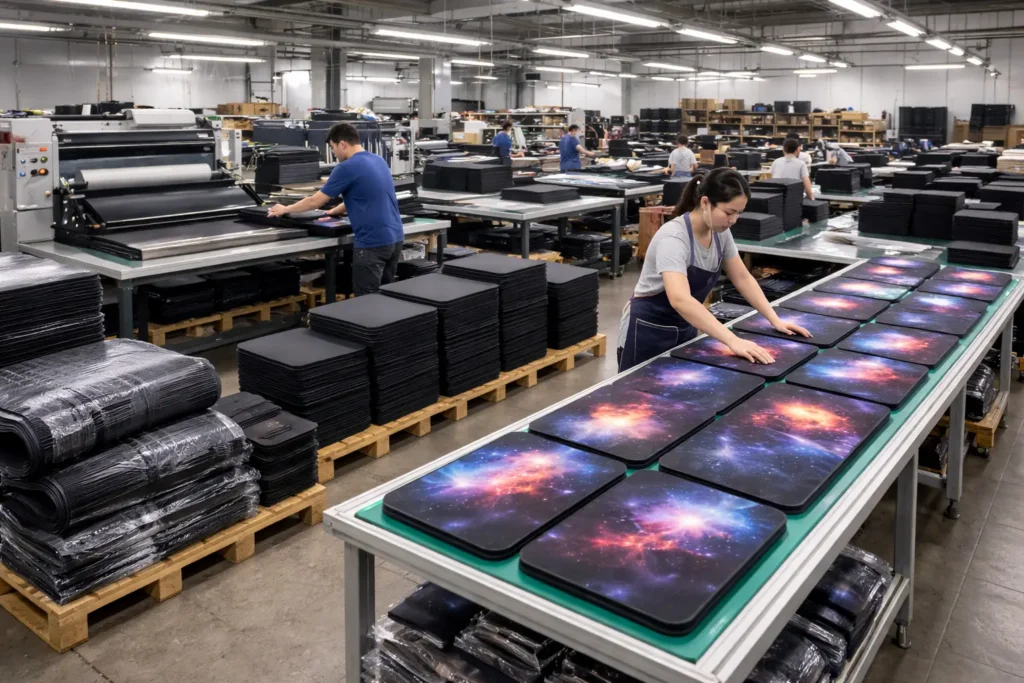
A menudo buscan una fábrica, un proveedor o un socio OEM que pueda producir productos a medida. alfombrillas de ratón al por mayor con calidad fiable, precios estables y envases de marca.
Entre los buscadores habituales figuran:
| Tipo de buscador | Necesidad real |
|---|---|
| Propietario de la marca | Lanzamiento de alfombrillas de ratón de marca blanca |
| Empresa de promoción | Pida alfombrillas de ratón con logotipo para campañas |
| Vendedor de comercio electrónico | Crear listados de productos personalizados |
| Marca de juegos | Crear alfombras de escritorio de alto rendimiento |
| Comprador corporativo | Fuente de regalos de oficina o kits para empleados |
| Distribuidor | Comprar alfombrillas de ratón al por mayor para reventa |
Desde la perspectiva de una fábrica, la verdadera pregunta no es sólo “¿Pueden imprimir mi logotipo?”.”
La mejor pregunta es: “¿Puede controlar el material, el tacto de la superficie, la calidad de impresión, el acabado de los bordes, el embalaje y la entrega en cada lote?”
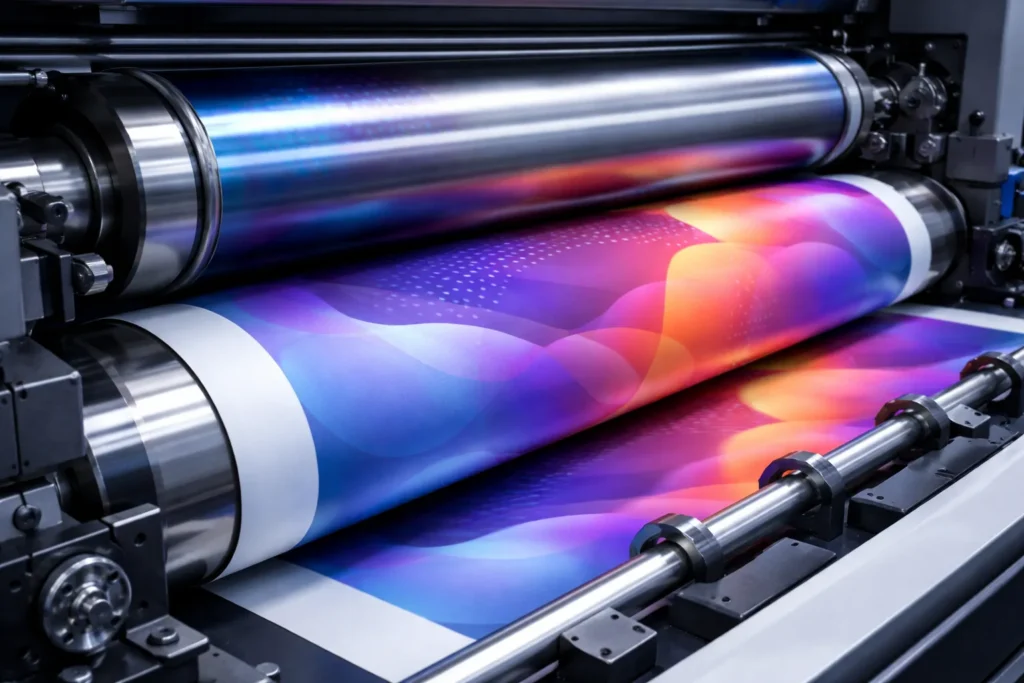
¿Qué son las alfombrillas de ratón personalizadas?
Las alfombrillas de ratón personalizadas son alfombrillas de ratón fabricadas según las necesidades del comprador.
La personalización puede incluir el tamaño, la forma, el tejido de la superficie, el material de base, el grosor, el diseño de impresión, el borde cosido, la posición del logotipo, el embalaje, la etiqueta de código de barras y el método de envío.
Una alfombrilla de ratón estándar está pensada para usuarios generales.
Una costumbre alfombrilla de ratón de fábrica se hace para una marca, una campaña, un mercado o un objetivo de rendimiento específicos.
Las opciones personalizadas más comunes son:
| Artículo personalizado | Opciones disponibles |
|---|---|
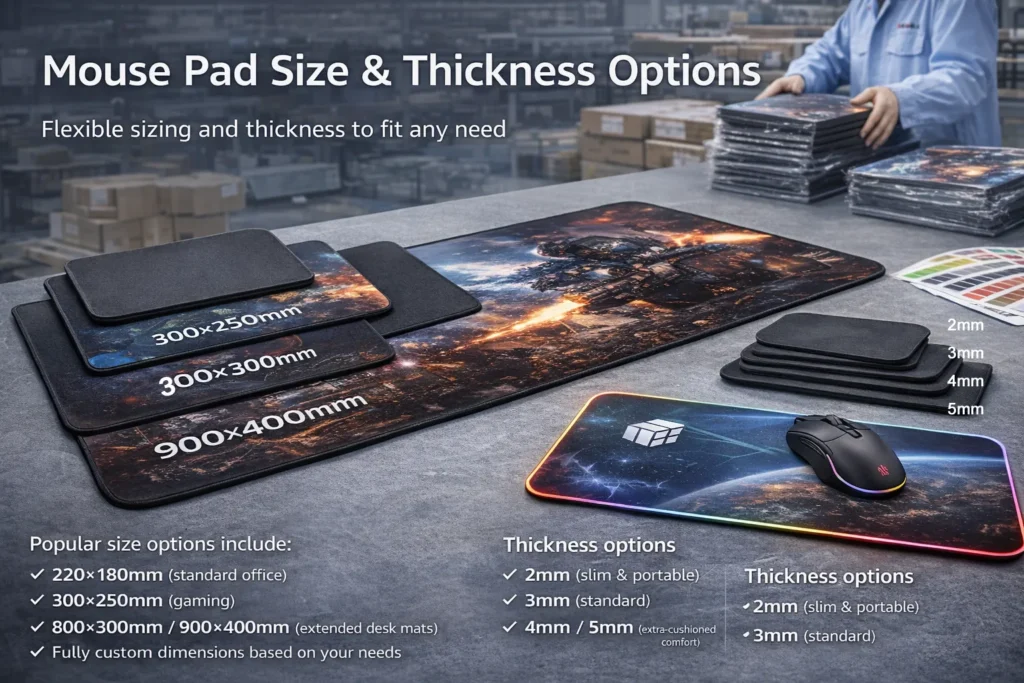
| Talla | Pequeña, mediana, XL, XXL, alfombrilla de escritorio |
| Forma | Rectángulo, redondo, troquelado, contorno personalizado |
| Superficie | Tejido de poliéster, microfibra, lycra, cuero PU |
| Base | Caucho natural, caucho SBR, espuma PU, espuma tipo Poron |
| Espesor | 2 mm, 3 mm, 4 mm, 5 mm |
| Impresión | Sublimación, serigrafía, impresión UV |
| Borde | Corte crudo, borde cosido, costura de bajo perfil |
| Embalaje | Bolsa OPP, funda de papel, caja de color, caja de tubo |
Por qué las fábricas tratan de forma diferente las alfombrillas de ratón personalizadas
Las alfombrillas de ratón personalizadas parecen sencillas, pero la producción en serie requiere un control del proceso.
Un pequeño error en el tamaño de la ilustración, la temperatura de laminación, la tolerancia de corte o la tensión de cosido puede afectar al producto final.
Por ejemplo, una alfombrilla de escritorio de 900 × 400 mm necesita un mejor control de la planitud que un cojín promocional de 220 × 180 mm.
Las almohadillas grandes exponen más defectos superficiales, riesgo de rizado y problemas de alineación de la impresión.
Por eso, las fábricas profesionales suelen confirmar estos detalles antes de la producción:
| Punto de control de fábrica | Por qué es importante |
|---|---|
| Resolución de la obra | Evita la impresión borrosa |
| Zona de sangrado | Evita los bordes blancos tras el corte |
| Encogimiento del tejido | Mantiene el tamaño final exacto |
| Dureza del caucho | Afecta al agarre y a la estabilidad del escritorio |
| Altura del pespunte | Afecta a la comodidad y al movimiento del ratón |
| Método de envasado | Evita rizos y daños |
Materiales comunes para alfombrillas de ratón personalizadas
La selección del material decide el nivel del producto.
Una alfombrilla de regalo promocional, una alfombrilla de ratón de oficina y una alfombrilla de ratón para juegos de alta calidad no deberían utilizar la misma pila de materiales.
Materiales de superficie
| Superficie Material | Siéntase | Mejor uso |
|---|---|---|
| Tela estándar de poliéster | Suave, económico | Alfombrillas de ratón promocionales |
| Tejido fino | Planeo y control equilibrados | Alfombrillas de oficina y para juegos |
| Paño de microfibra | Estampado suave y detallado | Almohadillas de marca premium |
| Superficie de lycra | Deslizamiento rápido | Almohadillas de juego orientadas a la velocidad |
| Cuero PU | Aspecto ejecutivo | Regalos de oficina y lotes corporativos |
| Tejido rugoso | Más control | Paneles de control para deportes |
Para la mayoría de las alfombrillas de ratón impresas a medida, el tejido de poliéster sigue siendo la opción más común porque funciona bien con la impresión por sublimación.
Para alfombrillas de juego premium, Los compradores suelen solicitar un tejido más fino, un tejido de control más áspero o un tejido resistente a la humedad.
Materiales de base
| Material de base | Ventaja principal | Espesor común |
|---|---|---|
| Caucho natural | Agarre fuerte, buena elasticidad | 2-5 mm |
| Caucho SBR | Rentable, estable | 2-4 mm |
| Espuma PU | Tacto más suave, ligero | 3-5 mm |
| Espuma tipo porón | Excelente rebote y succión en el escritorio | 3,5-4,5 mm |
| Base de silicona | Gran agarre, flexible | 1,5-3 mm |
Para las alfombrillas de ratón promocionales a granel, el caucho SBR es habitual.
Para las alfombrillas de ratón personalizadas para juegos de alta calidad, el caucho natural o la espuma de PU estilo Poron son más adecuados.
Métodos de impresión de alfombrillas de ratón personalizadas
En la impresión es donde fallan muchos proveedores de bajo coste.
Una buena impresión debe ser nítida, de color estable y adherirse a la superficie sin afectar al deslizamiento del ratón.
| Método de impresión | Lo mejor para | Nota de fábrica |
|---|---|---|
| Impresión por sublimación | Material gráfico a todo color | Lo más habitual en las alfombrillas de ratón de tela |
| Serigrafía | Logotipos sencillos | Adecuado para grandes pedidos monocolor |
| Impresión UV | Superficies duras o similares al cuero | Mejor para cuero PU o almohadillas rígidas |
| Transferencia de calor | Diseños de lotes pequeños | Flexible pero menos caro |
| Impresión digital textil | Obras de arte complejas | Útil para patrones detallados de alfombrillas de escritorio |
Para la impresión por sublimación, las ilustraciones deben prepararse normalmente a 300 DPI.
Se recomienda una zona de sangrado de 3-5 mm alrededor de todos los bordes para evitar bordes blancos después del corte.
Tamaños recomendados de alfombrillas de ratón personalizadas
El tamaño adecuado depende de la situación del usuario.
Un comprador corporativo puede querer alfombrillas compactas para escritorios de oficina, mientras que una marca de juegos puede preferir alfombrillas de escritorio de gran tamaño.
| Talla | Caso práctico |
|---|---|
| 220 × 180 mm | Alfombrilla de ratón promocional básica |
| 250 × 200 mm | Alfombrilla de ratón de oficina estándar |
| 300 × 250 mm | Gran bloc de oficina o para juegos |
| 450 × 400 mm | Alfombrilla de ratón Esports |
| 800 × 300 mm | Alfombrilla para teclado y ratón |
| 900 × 400 mm | Alfombrilla de escritorio para juegos ampliada |
| 1200 × 600 mm | Alfombrilla sobredimensionada de escritorio completo |
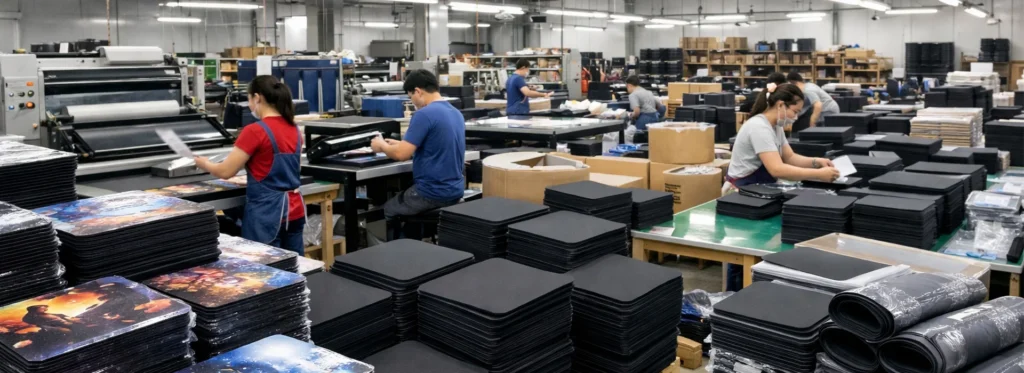
La tolerancia de fábrica suele ser de ±1-3 mm en función del material y el método de corte.
En el caso de los productos minoristas de primera calidad, los compradores deben definir claramente la tolerancia antes de proceder al muestreo.
Grosor: Pequeño detalle, gran diferencia
El grosor cambia la sensación que transmite una alfombrilla de ratón.
Una almohadilla de 2 mm se siente portátil y firme.
Una almohadilla de 4 mm da una sensación de mayor amortiguación y calidad.
| Espesor | Siéntase | Lo mejor para |
|---|---|---|
| 2 mm | Fino, ligero, económico | Pedidos promocionales |
| 3 mm | Equilibrado y común | Oficinas y locales comerciales |
| 4 mm | Premium y estable | Alfombrillas de ratón para juegos |
| 5 mm | Suave y acolchado | Alfombrillas de escritorio cómodas |
Para las alfombrillas de ratón de ordenador personalizadas, 3 mm es la opción más común.
Para los proyectos de juegos y tiendas de marca, a menudo se prefieren los 4 mm porque proporcionan una mejor presencia en el escritorio y una mejor estructura de los bordes.
Opciones de borde: Corte en bruto o cosido
El acabado del canto afecta tanto a la durabilidad como al valor percibido.
Las alfombrillas de ratón baratas suelen tener los bordes sin cortar.
Almohadillas de juego premium suelen utilizar bordes cosidos.
| Tipo de borde | Ventaja | Limitación |
|---|---|---|
| Corte en bruto | Menor coste, aspecto limpio | Puede deshilacharse con el tiempo |
| Borde cosido estándar | Mayor durabilidad | Puede sentirse levantado si está mal hecho |
| Costuras de perfil bajo | Más cómodo | Mayor coste de producción |
| Costura subsuperficial | Tacto premium | Requiere un control preciso de la costura |
Para las alfombrillas de ratón de juego de venta al por menor, el borde cosido es muy recomendable.
Para las almohadillas promocionales con límites presupuestarios estrictos, el corte en bruto puede seguir siendo aceptable.
Proceso de producción en fábrica
Una fábrica profesional de alfombrillas de ratón personalizadas suele seguir este flujo de trabajo:
| Paso | Proceso | Punto clave de control |
|---|---|---|
| 1 | Inspección del material | Comprobar tejido, goma, espuma, tinta |
| 2 | Pruebas de imprenta | Confirmar tamaño, sangrado, modo de color |
| 3 | Impresión | Controla el color y la nitidez |
| 4 | Laminación | Adherir uniformemente la superficie y la base |
| 5 | Corte | Mantener la tolerancia de tamaño y forma |
| 6 | Costura | Controla la altura del borde y la tensión del hilo |
| 7 | Inspección de control de calidad | Comprobar impresión, tamaño, planitud, olor |
| 8 | Embalaje | Evita el polvo, los rizos y los daños en el cartón |
En el caso de las alfombrillas de ratón impresas a medida, el muestreo es fundamental.
Una prueba fotográfica no es suficiente para los proyectos de primera calidad, porque los compradores deben sentir la superficie, el agarre de la base, el grosor y la comodidad de los bordes.
MOQ y plazo de entrega
La cantidad mínima depende del material, el método de impresión, el tamaño y el embalaje.
Por lo general, las fábricas pueden admitir MOQ más bajos para materiales estándar y MOQ más altos para embalajes personalizados o espumas especiales.
| Tipo de proyecto | MOQ típico | Tiempo de muestreo | Producción a granel |
|---|---|---|---|
| Alfombrilla de ratón con logotipo estándar | 300-500 unidades | 3-5 días | 7-15 días |
| Alfombrilla de escritorio impresa personalizada | 500-1000 unidades | 5-7 días | 10-20 días |
| Alfombrilla de ratón gaming premium | 1000 unidades+ | 7-10 días | 15-25 días |
| Forma personalizada o nuevo material | 1000-3000 unidades | 10-15 días | 20-35 días |
Estos intervalos son estimaciones prácticas.
El plazo de entrega real depende de la cantidad del pedido, la aprobación del material gráfico, las existencias de material y la complejidad del embalaje.
Opciones de embalaje para alfombrillas de ratón personalizadas
El embalaje influye en el valor de venta al público, los gastos de envío y la experiencia del usuario.
Para los compradores mayoristas, el envase debe corresponder al canal de venta.
| Tipo de envase | Lo mejor para |
|---|---|
| Bolsa OPP | Pedidos al por mayor a bajo coste |
| Funda de papel | Estilo de venta ecológico |
| Caja de color | Productos minoristas de primera calidad |
| Caja de tubos | Alfombrillas de escritorio grandes |
| Caja kraft | Embalaje de marca minimalista |
| Caja de regalo personalizada | Kits para empresas y personas influyentes |
En el caso de los vendedores de comercio electrónico, el embalaje debe proteger la almohadilla para que no se doble ni sufra daños en los bordes.
Para las estanterías de los comercios, las cajas de colores y los diseños con etiquetas colgantes son más atractivos.
Normas de control de calidad que deben solicitar los compradores
Una fábrica fiable debe ofrecer una lista de control de calidad clara.
Esto es especialmente importante en el caso de las alfombrillas de ratón personalizadas, porque el logotipo y las ilustraciones del comprador forman parte del valor final.
Los elementos clave del control de calidad son:
| Artículo de control de calidad | Norma recomendada |
|---|---|
| Tolerancia de tamaño | ±1-3 mm |
| Tolerancia de espesor | ±0,2-0,5 mm |
| Claridad de impresión | Sin desenfoque, imágenes fantasma ni bandas |
| Consistencia del color | Controlado contra muestra aprobada |
| Costuras en los bordes | Sin hilos sueltos ni costuras altas |
| Planitud | No se encrespa al desembalar |
| Control de olores | Sin olor químico fuerte |
| Deslizamiento en superficie | Movimiento X/Y coherente |
| Agarre base | No se desliza sobre superficies de escritorio comunes |
Para los proyectos premium, los compradores deben conservar una muestra dorada aprobada.
La fábrica debe comparar la producción en serie con esa muestra antes del envío.
Factores de coste: Por qué varían los precios de las alfombrillas de ratón personalizadas
Los compradores preguntan a menudo por qué dos proveedores ofrecen precios muy diferentes por la misma talla.
La respuesta suele estar oculta en los detalles del material y el proceso.
| Factor de coste | Impacto del precio |
|---|---|
| Calidad del tejido | Medio |
| Goma o espuma de grado | Alta |
| Espesor | Media a alta |
| Método de impresión | Medio |
| Costuras en los bordes | Medio |
| Tamaño y forma | Alta |
| Embalaje | Medio |
| Requisitos de control de calidad | Medio |
| Pruebas de certificación | Media a alta |
| Volumen de envíos | Alta |
Una oferta barata puede utilizar un caucho de menor densidad, un tejido más fino, un laminado débil o un embalaje suelto.
Para construir una marca a largo plazo, el precio más bajo no suele ser la opción más segura.
Cómo elegir un proveedor de alfombrillas de ratón personalizadas
El mejor proveedor no siempre es el que tiene el precio unitario más bajo.
Para Compradores B2B, la mejor opción es una fábrica que pueda explicar los materiales, controlar las muestras y repetir la calidad.
Haga estas preguntas antes de hacer el pedido:
- ¿Pueden facilitar muestras de material antes de la impresión?
- ¿Qué tejido y base se incluyen en el presupuesto?
- ¿Cuál es la tolerancia exacta de grosor?
- ¿Puede igualar los estándares de color Pantone o CMYK?
- ¿Admiten envases personalizados?
- ¿Cómo se inspecciona la calidad del cosido?
- ¿Puede proporcionar una muestra de preproducción?
- ¿Cuál es su política de gestión de defectos?
- ¿Puede repetir pedidos con el mismo material?
- ¿Proporcionan documentos de exportación y etiquetas de cartón?
Un buen proveedor debe responder a estas preguntas con claridad.
Si el proveedor solo dice “sí, podemos personalizar”, no es suficiente.
Alfombrillas de ratón personalizadas FAQ
¿Cuál es el mejor material para las alfombrillas de ratón personalizadas?
Para las alfombrillas de ratón de ordenador personalizadas estándar, la combinación más habitual es tela de poliéster con caucho natural o caucho SBR. Para las alfombrillas de juego premium, es mejor elegir tela de tejido fino con caucho natural o espuma de PU estilo Poron.
¿Cuál es el MOQ habitual para las alfombrillas de ratón personalizadas?
El MOQ típico es de 300 a 500 unidades para alfombrillas de ratón con logotipo sencillas. Para alfombrillas de escritorio personalizadas, embalajes o material de juego de alta calidad, la cantidad mínima de piezas suele ser de 500 a 1000 o más.
¿Qué método de impresión es mejor para las alfombrillas de ratón personalizadas?
La impresión por sublimación suele ser mejor para alfombrillas de ratón de tela a todo color. La serigrafía es mejor para logotipos sencillos y pedidos grandes de un solo color.
¿Qué tamaño es mejor para las alfombrillas de ratón personalizadas para juegos?
Para juegos, los tamaños más habituales son 450 × 400 mm, 800 × 300 mm y 900 × 400 mm. El tamaño adecuado depende de si el comprador desea una alfombrilla solo para ratón o una alfombrilla de escritorio completa.
¿Necesitan bordes cosidos las alfombrillas de ratón personalizadas?
Los bordes cosidos se recomiendan para alfombrillas de ratón de juegos y de venta al por menor porque mejoran la durabilidad. Para las alfombrillas promocionales de bajo coste, los bordes cortados pueden ser aceptables.