Arama Niyeti: Alıcılar Gerçekten Ne Bilmek İstiyor?
Birisi “özel bilgisayar mouse pad'leri” araması yaptığında, genellikle tek bir perakende mouse pad aramaz.
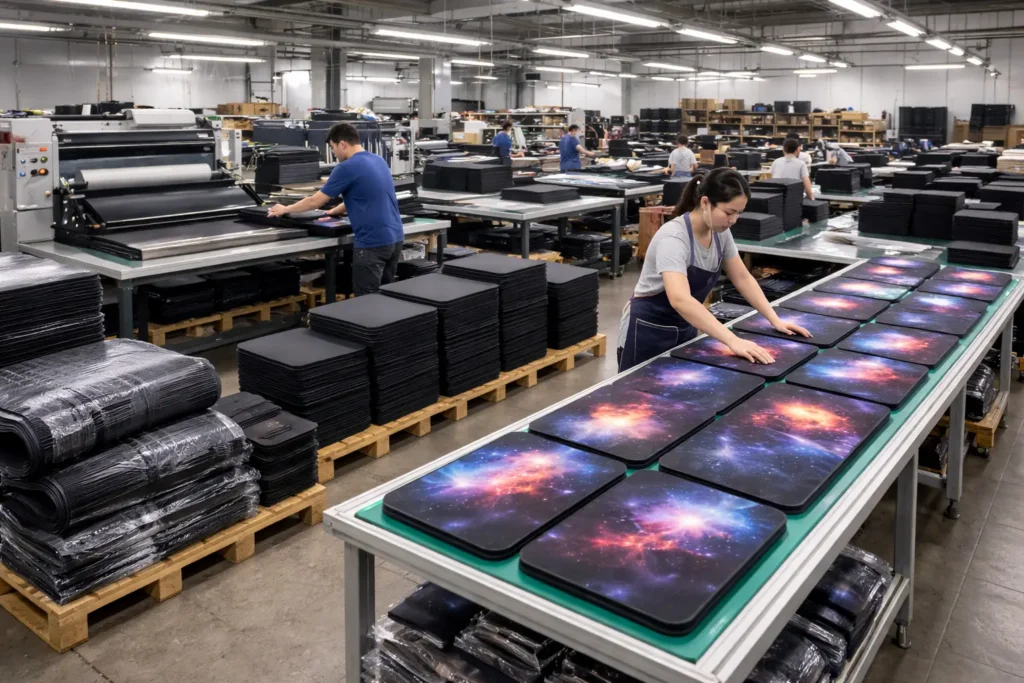
Genellikle özel üretim yapabilecek bir fabrika, tedarikçi veya OEM ortağı ararlar. toplu mouse pad'ler Güvenilir kalite, istikrarlı fiyatlandırma ve markalı ambalaj ile.
Tipik arama yapanlar şunlardır:
| Arayıcı Tipi | Gerçek İhtiyaç |
|---|---|
| Marka sahibi | Özel etiketli mouse pad'leri piyasaya sürün |
| Promosyon şirketi | Kampanyalar için logolu mouse pad sipariş edin |
| e-Ticaret satıcısı | Özel ürün listeleri oluşturun |
| Oyun markası | Performans masa paspasları oluşturun |
| Kurumsal alıcı | Kaynak ofis hediyeleri veya çalışan kitleri |
| Distribütör | Yeniden satış için toptan mouse pad satın alın |
Fabrika açısından bakıldığında, asıl soru sadece “Logomu basabilir misiniz?” değildir.”
Daha iyi soru şudur: “Malzemeyi, yüzey hissini, baskı kalitesini, kenar kaplamasını, ambalajı ve teslimatı her partide kontrol edebiliyor musunuz?”
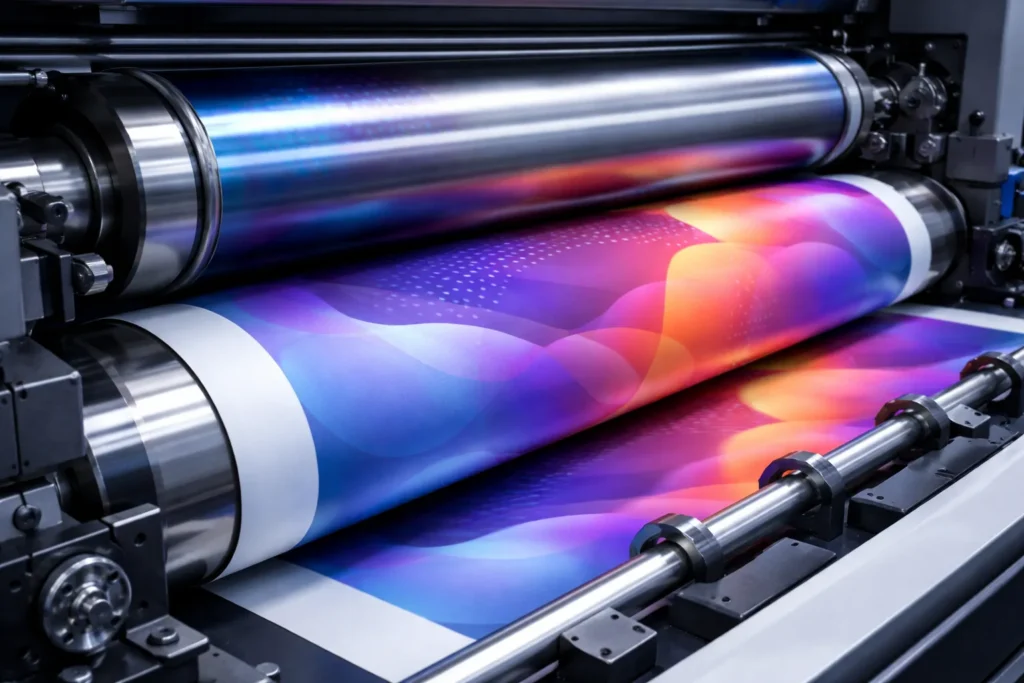
Özel Bilgisayar Fare Altlıkları Nedir?
Özel bilgisayar fare altlıkları üretilen fare altlıkları bir alıcının gereksinimlerine göre.
Özelleştirme boyut, şekil, yüzey kumaşı, taban malzemesi, kalınlık, baskı tasarımı, dikişli kenar, logo konumu, ambalaj, barkod etiketi ve nakliye yöntemini içerebilir.
Genel kullanıcılar için standart bir perakende mouse pad üretilmiştir.
Özel bir fabrika yapımı mouse pad belirli bir marka, kampanya, pazar veya performans amacı için yapılır.
Yaygın özel seçenekler şunları içerir:
| Özel Ürün | Mevcut Seçenekler |
|---|---|
| Boyut | Küçük, orta, XL, XXL, masa matı |
| Şekil | Dikdörtgen, yuvarlak, kalıp kesim, özel kontur |
| Yüzey | Polyester kumaş, mikrofiber, Lycra, PU deri |
| Üs | Doğal kauçuk, SBR kauçuk, PU köpük, Poron tarzı köpük |
| Kalınlık | 2 mm, 3 mm, 4 mm, 5 mm |
| Baskı | Süblimasyon, serigrafi, UV baskı |
| Kenar | Ham kesim, dikişli kenar, düşük profilli dikiş |
| Paketleme | OPP torba, kağıt kılıf, renkli kutu, tüp kutu |
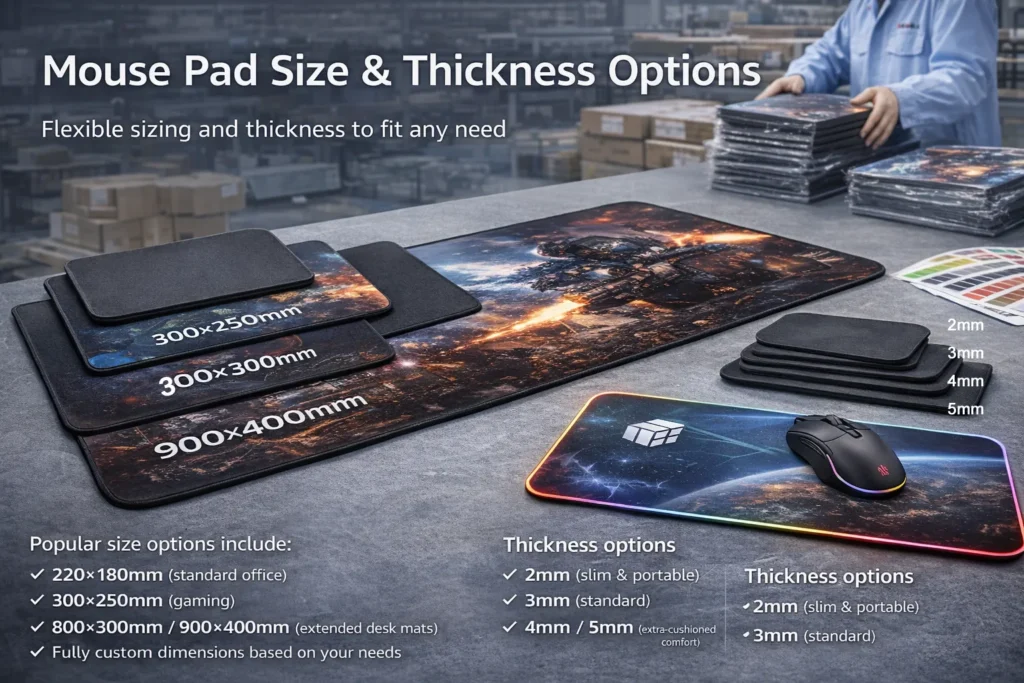
Fabrikalar Özel Mouse Pad'lere Neden Farklı Davranıyor?
Özel mouse pad'ler basit görünür, ancak seri üretim süreç kontrolü gerektirir.
Resim boyutu, laminasyon sıcaklığı, kesim toleransı veya dikiş gerginliğindeki küçük bir hata nihai ürünü etkileyebilir.
Örneğin, 900 × 400 mm'lik bir masa matı, 220 × 180 mm'lik bir promosyon pedinden daha iyi düzlük kontrolüne ihtiyaç duyar.
Büyük pedler daha fazla yüzey kusuruna, kıvrılma riskine ve baskı hizalama sorunlarına yol açar.
Bu nedenle profesyonel fabrikalar genellikle üretimden önce bu ayrıntıları onaylar:
| Fabrika Kontrol Noktası | Neden Önemli? |
|---|---|
| Sanat eseri çözünürlüğü | Bulanık baskıyı önler |
| Kanama alanı | Kesim sonrası beyaz kenarları önler |
| Kumaş çekmesi | Nihai boyutu doğru tutar |
| Kauçuk sertliği | Kavrama ve masa dengesini etkiler |
| Kenar dikiş yüksekliği | Konforu ve fare hareketini etkiler |
| Paketleme yöntemi | Kıvrılmayı ve hasarı önler |
Özel Bilgisayar Fare Altlıkları için Ortak Malzemeler
Malzeme seçimi ürün seviyesini belirler.
Promosyon amaçlı bir eşantiyon mouse pad, bir ofis mouse pad'i ve birinci sınıf bir oyun mouse pad'i aynı malzeme yığınını kullanmamalıdır.
Yüzey Malzemeleri
| Yüzey Malzemesi | Hisset | En İyi Kullanım |
|---|---|---|
| Standart polyester kumaş | Pürüzsüz, ekonomik | Promosyon mouse padler |
| İnce dokuma kumaş | Dengeli süzülme ve kontrol | Ofis ve oyun pedleri |
| Mikrofiber bez | Yumuşak, detaylı baskı | Premium markalı pedler |
| Likralı yüzey | Hızlı kayma | Hız odaklı oyun pedleri |
| PU deri | Yönetici görünümü | Ofis hediyeleri ve kurumsal setler |
| Kaba dokuma kumaş | Daha fazla kontrol | Espor kontrol pedleri |
Çoğu özel baskılı mouse pad için polyester kumaş hala en yaygın seçimdir çünkü süblimasyon baskı ile iyi çalışır.
İçin premium oyun pedleri, alıcılar genellikle daha ince dokuma, daha pürüzlü kontrol kumaşı veya neme dayanıklı kumaş talep ederler.
Temel Malzemeler
| Temel Malzeme | Ana Avantaj | Ortak Kalınlık |
|---|---|---|
| Doğal kauçuk | Güçlü kavrama, iyi esneklik | 2-5 mm |
| SBR kauçuk | Uygun maliyetli, istikrarlı | 2-4 mm |
| PU köpük | Daha yumuşak hisli, hafif | 3-5 mm |
| Poron tarzı köpük | Üstün geri tepme ve masa emişi | 3,5-4,5 mm |
| Silikon taban | Yüksek kavrama, esnek | 1,5-3 mm |
Toplu promosyon mouse pad'ler için SBR kauçuk yaygındır.
Birinci sınıf özel oyun mouse pad'leri için doğal kauçuk veya Poron tarzı PU köpük daha uygundur.
Özel Mouse Pad'ler için Baskı Yöntemleri
Baskı, birçok düşük maliyetli tedarikçinin başarısız olduğu noktadır.
İyi bir baskı keskin, renkleri sabit ve fare kaymasını etkilemeden yüzeye yapışmış olmalıdır.
| Baskı Yöntemi | İçin En İyisi | Fabrika Notu |
|---|---|---|
| Süblimasyon baskı | Tam renkli çizimler | Kumaş mouse pad'ler için en yaygın olanı |
| Serigrafi baskı | Basit logolar | Büyük tek renkli siparişler için iyi |
| UV baskı | Sert veya deri benzeri yüzeyler | PU deri veya sert pedler için daha iyi |
| Isı transferi | Küçük parti tasarımları | Esnek ama daha az premium |
| Dijital tekstil baskısı | Karmaşık sanat eserleri | Detaylı masa matı desenleri için kullanışlıdır |
Süblimasyon baskı için resimler genellikle 300 DPI'da hazırlanmalıdır.
Kesimden sonra beyaz kenarlıkları önlemek için tüm kenarların etrafında 3-5 mm'lik bir taşma alanı önerilir.
Önerilen Özel Mouse Pad Boyutları
Doğru boyut kullanıcı senaryosuna bağlıdır.
Kurumsal bir alıcı ofis masaları için kompakt pedler isterken, bir oyun markası büyük boy masa matlarını tercih edebilir.
| Boyut | Kullanım Örneği |
|---|---|
| 220 × 180 mm | Temel promosyon mouse pad |
| 250 × 200 mm | Standart ofis mouse pad'i |
| 300 × 250 mm | Büyük ofis veya oyun pedi |
| 450 × 400 mm | Espor mouse pad |
| 800 × 300 mm | Klavye ve fare masa matı |
| 900 × 400 mm | Genişletilmiş oyun masası matı |
| 1200 × 600 mm | Büyük boy tam masa paspası |
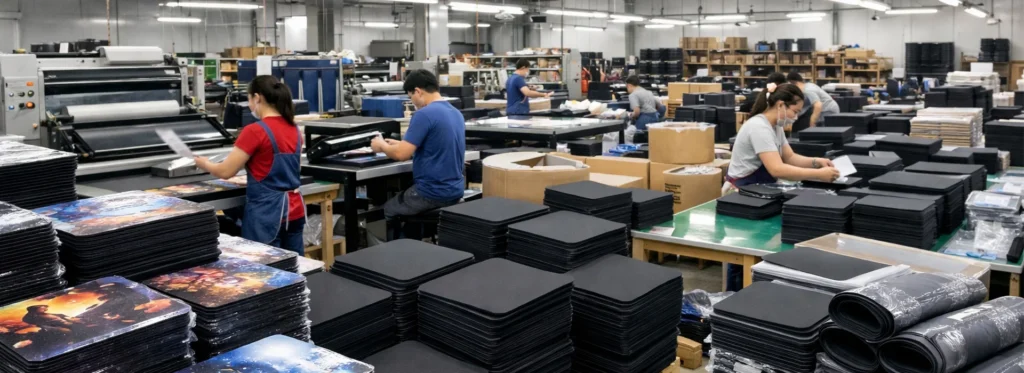
Fabrika toleransı, malzemeye ve kesme yöntemine bağlı olarak genellikle ±1-3 mm civarındadır.
Premium perakende ürünler için, alıcılar numune almadan önce toleransı net bir şekilde tanımlamalıdır.
Kalınlık: Küçük Detay, Büyük Fark
Kalınlık, bir mouse pad'in verdiği hissi değiştirir.
2 mm'lik bir ped taşınabilir ve sağlam bir his verir.
4 mm'lik bir ped daha yastıklı ve kaliteli bir his verir.
| Kalınlık | Hisset | İçin En İyisi |
|---|---|---|
| 2 mm | İnce, hafif, ekonomik | Promosyon siparişleri |
| 3 mm | Dengeli ve yaygın | Ofis ve perakende satış alanları |
| 4 mm | Premium ve sağlam | Oyun mouse padleri |
| 5 mm | Yumuşak ve yastıklı | Konfor odaklı masa paspasları |
Özel bilgisayar mouse pad'leri için 3 mm en yaygın seçimdir.
Oyun ve marka perakende projeleri için, daha iyi masa varlığı ve kenar yapısı sağladığı için genellikle 4 mm tercih edilir.
Kenar Seçenekleri: Ham Kesim vs Dikişli Kenar
Kenar kaplaması hem dayanıklılığı hem de algılanan değeri etkiler.
Düşük maliyetli mouse pad'lerde genellikle ham kesilmiş kenarlar kullanılır.
Premium oyun pedleri genellikle dikişli kenarlar kullanır.
| Kenar Tipi | Avantaj | Sınırlama |
|---|---|---|
| Ham kesim | Daha düşük maliyet, temiz görünüm | Zaman içinde yıpranabilir |
| Standart dikişli kenar | Daha iyi dayanıklılık | Kötü yapılmışsa yükselmiş hissedilebilir |
| Düşük profilli dikiş | Daha konforlu | Daha yüksek üretim maliyeti |
| Alt yüzey dikişi | Premium his | Hassas dikiş kontrolü gerektirir |
Perakende oyun mouse pad'leri için dikişli kenar şiddetle tavsiye edilir.
Sıkı bütçe sınırları olan promosyon pedleri için ham kesim yine de kabul edilebilir olabilir.
Fabrika Üretim Süreci
Profesyonel bir özel mouse pad fabrikası genellikle bu iş akışını takip eder:
| Adım | Süreç | Anahtar Kontrol Noktası |
|---|---|---|
| 1 | Malzeme kontrolü | Kumaşı, kauçuğu, köpüğü, mürekkebi kontrol edin |
| 2 | Sanat eseri provası | Boyut, taşma payı ve renk modunu onaylayın |
| 3 | Baskı | Renk ve keskinliği kontrol edin |
| 4 | Laminasyon | Yüzey ve tabanı eşit şekilde yapıştırın |
| 5 | Kesme | Boyut ve şekil toleransını koruyun |
| 6 | Dikiş | Kenar yüksekliğini ve iplik gerginliğini kontrol edin |
| 7 | Kalite kontrol denetimi | Baskıyı, boyutu, düzlüğü, kokuyu kontrol edin |
| 8 | Paketleme | Toz, kıvrılma ve karton hasarını önleyin |
Özel baskılı mouse pad'ler için örnekleme kritik önem taşır.
Premium projeler için fotoğraflı prova yeterli değildir çünkü alıcılar yüzeyi, taban tutuşunu, kalınlığı ve kenar konforunu hissetmelidir.
Adedi ve Teslim Süresi
Adedi malzemeye, baskı yöntemine, boyuta ve ambalaja bağlıdır.
Fabrikalar genellikle standart malzemeler için daha düşük MOQ'u ve özel ambalaj veya özel köpük için daha yüksek MOQ'u destekleyebilir.
| Proje Türü | Tipik MOQ | Örnek Zaman | Toplu Üretim |
|---|---|---|---|
| Standart logolu mouse pad | 300-500 adet | 3-5 gün | 7-15 gün |
| Özel baskılı masa paspası | 500-1000 adet | 5-7 gün | 10-20 gün |
| Premium oyun mouse pad'i | 1000 adet+ | 7-10 gün | 15-25 gün |
| Özel şekil veya yeni malzeme | 1000-3000 adet | 10-15 gün | 20-35 gün |
Bu aralıklar pratik tahminlerdir.
Gerçek teslim süresi sipariş miktarına, resim onayına, malzeme stoğuna ve ambalaj karmaşıklığına bağlıdır.
Özel Mouse Pad'ler için Ambalaj Seçenekleri
Ambalaj, perakende değerini, nakliye maliyetini ve kullanıcı deneyimini etkiler.
Toptan alıcılar için ambalaj, satış kanalına uygun olmalıdır.
| Ambalaj Türü | İçin En İyisi |
|---|---|
| OPP çanta | Düşük maliyetli toplu siparişler |
| Kağıt kılıf | Çevre dostu perakende tarzı |
| Renk kutusu | Premium perakende ürünler |
| Tüp kutusu | Büyük masa paspasları |
| Kraft kutu | Minimalist marka ambalajı |
| Özel hediye kutusu | Kurumsal ve influencer kitleri |
E-ticaret satıcıları için ambalaj, pedi kıvrılma ve kenar hasarlarından korumalıdır.
Perakende rafları için renkli kutular ve askılı etiket tasarımları daha caziptir.
Alıcıların Talep Etmesi Gereken Kalite Kontrol Standartları
Güvenilir bir fabrika net bir kalite kontrol listesi sunmalıdır.
Bu özellikle özel mouse pad'ler için önemlidir çünkü alıcının logosu ve resmi nihai değerin bir parçasıdır.
Temel kalite kontrol öğeleri şunlardır:
| QC Öğesi | Önerilen Standart |
|---|---|
| Boyut toleransı | ±1-3 mm |
| Kalınlık toleransı | ±0,2-0,5 mm |
| Baskı netliği | Bulanıklık, gölgelenme veya bantlanma yok |
| Renk tutarlılığı | Onaylı numuneye göre kontrol edildi |
| Kenar dikişi | Gevşek iplik veya yüksek dikiş yok |
| Düzlük | Ambalajı açtıktan sonra kıvrılma yok |
| Koku kontrolü | Güçlü kimyasal koku yok |
| Yüzey kayması | Tutarlı X/Y hareketi |
| Taban kavrama | Ortak masa yüzeylerinde kayma yok |
Premium projeler için alıcılar bir adet onaylı altın numune bulundurmalıdır.
Fabrika, sevkiyattan önce seri üretimi bu numune ile karşılaştırmalıdır.
Maliyet Faktörleri: Özel Mouse Pad Fiyatları Neden Değişir?
Alıcılar genellikle iki tedarikçinin aynı ebat için neden çok farklı fiyatlar verdiğini sorarlar.
Cevap genellikle malzeme ve süreç detaylarında gizlidir.
| Maliyet Faktörü | Fiyat Etkisi |
|---|---|
| Kumaş kalitesi | Orta |
| Kauçuk veya köpük sınıfı | Yüksek |
| Kalınlık | Orta ila yüksek |
| Baskı yöntemi | Orta |
| Kenar dikişi | Orta |
| Boyut ve şekil | Yüksek |
| Paketleme | Orta |
| Kalite kontrol gereksinimi | Orta |
| Sertifikasyon testi | Orta ila yüksek |
| Nakliye hacmi | Yüksek |
Ucuz bir teklif daha düşük yoğunluklu kauçuk, daha ince kumaş, zayıf laminasyon veya gevşek ambalaj kullanabilir.
Uzun vadeli marka inşası için en düşük fiyat nadiren en güvenli seçimdir.
Özel Mouse Pad Tedarikçisi Nasıl Seçilir?
En iyi tedarikçi her zaman en düşük birim fiyata sahip olan değildir.
İçin B2B alıcıları, malzemeleri açıklayabilen, numuneleri kontrol edebilen ve kaliteyi tekrarlayabilen bir fabrika daha iyi bir seçimdir.
Sipariş vermeden önce bu soruları sorun:
- Baskıdan önce malzeme örnekleri sağlayabilir misiniz?
- Teklife hangi kumaş ve taban dahildir?
- Tam kalınlık toleransı nedir?
- Pantone veya CMYK renk standartlarına uyabilir misiniz?
- Özel paketlemeyi destekliyor musunuz?
- Dikiş kalitesini nasıl denetliyorsunuz?
- Üretim öncesi bir örnek sağlayabilir misiniz?
- Kusurları ele alma politikanız nedir?
- Aynı malzeme ile tekrarlanan siparişleri destekleyebilir misiniz?
- İhracat belgeleri ve karton etiketleri sağlıyor musunuz?
İyi bir tedarikçi bunlara net bir şekilde cevap vermelidir.
Tedarikçi sadece “evet, özelleştirebiliriz” diyorsa, bu yeterli değildir.
Özel Bilgisayar Mouse Pad'leri SSS
Özel bilgisayar mouse pad'leri için en iyi malzeme hangisidir?
Standart özel bilgisayar mouse pad'leri için doğal kauçuk veya SBR kauçuk ile polyester kumaş en yaygın kombinasyondur. Birinci sınıf oyun pedleri için, doğal kauçuk veya Poron tarzı PU köpük ile ince dokunmuş kumaş daha iyi bir seçimdir.
Özel mouse pad'ler için normal MOQ nedir?
Tipik MOQ, basit logolu mouse pad'ler için 300 ila 500 adettir. Özel masa paspasları, ambalajlar veya birinci sınıf oyun malzemeleri için MOQ genellikle 500 ila 1000 parça veya daha yüksektir.
Özel mouse pad'ler için en iyi baskı yöntemi hangisidir?
Süblimasyon baskı genellikle tam renkli kumaş mouse pad'ler için en iyisidir. Serigrafi baskı, basit logolar ve büyük tek renkli siparişler için daha iyidir.
Özel oyun mouse pad'leri için en iyi boyut hangisidir?
Oyun için yaygın boyutlar arasında 450 × 400 mm, 800 × 300 mm ve 900 × 400 mm bulunur. Doğru boyut, alıcının yalnızca mouse pad mi yoksa tam bir masa matı mı istediğine bağlıdır.
Özel mouse pad'lerin kenarlarının dikişli olması gerekir mi?
Dikişli kenarlar, dayanıklılığı artırdığı için oyun ve perakende mouse pad'leri için önerilir. Düşük maliyetli promosyon pedleri için ham kesilmiş kenarlar kabul edilebilir.