Sen ne zaman toplu fare altlıkları, şu üç soruyu hiç düşündünüz mü? ① ürün gümrükten geçebilir mi? ② yasal olarak satılabilir mi? ③ toplu sipariş vermeden önce bir tedarikçiden hangi evraklara ihtiyaç duyarlar? Fabrika perspektifinden bakıldığında, sorulması gereken soru tam olarak budur, çünkü mouse pad'ler basit ürünlerdir, ta ki öyle olmayana kadar. Düz bir kumaş mouse pad, bir çocuk promosyon pedi ve RGB kablosuz şarjlı bir mouse pad aynı uyumluluk yolunu takip etmez.
Elektronik olmayan standart mouse pad'ler için en büyük uyumluluk riskleri genellikle gösterişli sertifika logoları değil, kimyasal güvenlik, etiketleme doğruluğu ve perakendeci kabulüdür. AB'de temel çerçeve ürün güvenliği artı kimyasal uyumluluktur. ABD'de ise kurallar büyük ölçüde mouse pad'in genel kullanım ürünü mü, çocuk ürünü mü yoksa elektronik aksesuar mı olduğuna bağlıdır. Bu nedenle deneyimli OEM fabrikaları uygunluk dosyasını konteynerler rezerve edildikten sonra değil, seri üretimden önce oluşturur.
Kısa cevap alıcıların aslında şunlara ihtiyacı var
Elektronik olmayan standart bir yetişkin mouse pad'i genellikle ihtiyaç duyar:
- AB: GPSR hazırlığı, REACH kimyasal uyumluluğu ve ilgili durumlarda SVHC/SCIP incelemesi.
- ABD: Genel kullanım amaçlı elektronik olmayan mouse pad'ler için genel bir federal sertifika yoktur, ancak perakendecilerin talep ettiği kimyasal testler yaygındır; Kaliforniya Prop 65 taraması genellikle gereklidir.
- Mouse pad RGB, kablosuz şarj, USB hub veya elektronik içeriyorsa: RoHS gibi AB elektrik kurallarını ve FCC gibi ABD elektronik uyumluluğunu ekleyin.
- Mouse pad çocuklar için pazarlanıyorsa: özellikle CPSIA testi, Çocuk Ürün Sertifikası ve ABD'deki izleme etiketi gereklilikleri gibi çocuk ürün kurallarını ekleyin; oyuncak/çocuk sınıflandırmaları da ekstra AB gerekliliklerini tetikleyebilir.
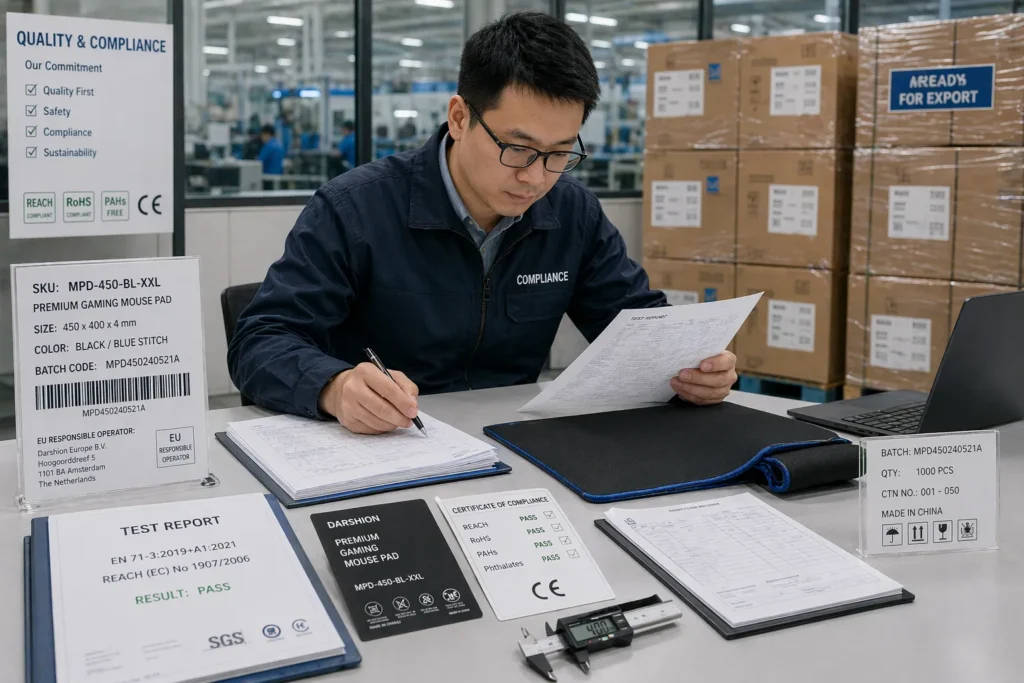
Mouse pad uyumluluğu neden genellikle yanlış anlaşılır?
Birçok alıcı “CE ”nin Avrupa için evrensel bir cevap olduğunu varsaymaktadır. Oysa öyle değildir. Elektronik olmayan sıradan mouse pad'ler için daha uygun olan yol genel ürün güvenliği ve kimyasal uyumluluktur. CE işareti, ürün elektrikli veya elektronik ekipman gibi CE işaretli bir ürün rejimi kapsamına girdiğinde önem kazanır. Bu nedenle, düz dikişli bir masa matı ile RGB mouse pad, fabrika uyum ekibi tarafından aynı şekilde ele alınamaz.
Fabrikalar da ABD gereklilikleri konusunda kafa karışıklığı yaşıyor. Çocuklara yönelik olmayan genel kullanım ürünleri için CPSC, genel bir kural olarak CPSC tarafından kabul edilen bir laboratuvarda üçüncü taraf testi gerektirmez. Ancak mouse pad bir çocuk ürünüyse, uyumluluk yükü hızla artar: üçüncü taraf testi, Çocuk Ürün Sertifikası ve izleme etiketlerinin tümü uygulanabilir. Bu ayrım fabrikadaki numune alma planlarını, ürün ağacı kontrolünü ve etiketleme iş akışlarını değiştirir.
AB pazarı: bir mouse pad fabrikası ne hazırlamalı
1. GPSR artık tüketici mouse pad'lerinin temelini oluşturuyor
AB Genel Ürün Güvenliği Yönetmeliği 13 Aralık 2024 tarihinden itibaren geçerli olup, internet üzerinden satılan ürünler de dâhil olmak üzere tüketici ürünlerini kapsamaktadır. Ayrıca yönetmelik kapsamındaki ürünler için AB'de sorumlu bir ekonomik operatörün bulunmasını zorunlu kılarak hesap verebilirliği arttırmaktadır. Bir mouse pad fabrikası için bu, teknik dosyanın artık sıradan olamayacağı anlamına geliyor. Ürün tanımlama, güvenlik bilgileri, izlenebilirlik ve risk değerlendirmesinin hepsinin en baştan yapılandırılması gerekiyor.
Fabrika açısından bakıldığında GPSR günlük operasyonları pratik bir şekilde değiştirir. Model düzeyinde net izlenebilirliğe, köpük, kumaş, mürekkep ve yapıştırıcı için istikrarlı tedarikçi kayıtlarına, ayrıca incelemeye dayanabilecek ambalaj ve çevrimiçi listeleme bilgilerine ihtiyacınız var. İçin özel projelerinde, her malzeme değişikliği, özellikle de pedde yeni bir tedarikçiden gelen baskılı resimler, silikon logolar, PU kaplamalar veya kaymayı önleyici bileşikler kullanılıyorsa, bir uygunluk incelemesini tetiklemelidir.
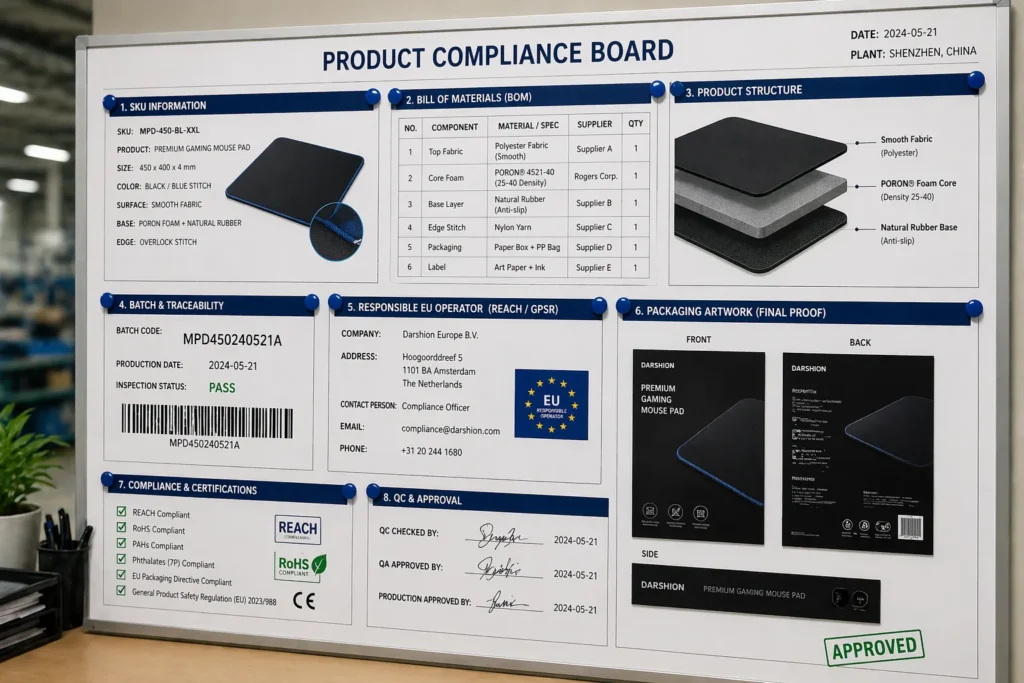
2. REACH, Avrupa'da satılan hemen hemen her mouse pad için önemlidir
Mouse pad'ler “eşyadır”, bu nedenle REACH esas olarak kimyasal kısıtlamalar ve SVHC yönetimi yoluyla önemlidir. Bir eşyada ağırlıkça 0,1%'nin üzerinde bir aday liste SVHC'si mevcutsa, AB tedarik zincirinde iletişim yükümlülükleri ve bazı durumlarda SCIP bildirim yükümlülükleri de dahil olmak üzere yasal yükümlülükler ortaya çıkabilir. Fare altlıkları için ortak risk noktaları plastikleştiriciler, mürekkepler, kaplamalar, kauçuk bileşikleri ve yapıştırıcılardır.
Bu nedenle ciddi fabrikalar tek bir nihai ürün testine güvenmezler. Kumaş, kauçuk, PU köpük, dikişli iplik, kenar boyası, baskı mürekkebi ve ambalaj için yukarı akış beyanları toplarlar. Gerçek üretimde, en yüksek riskli değişiklikler genellikle kumaşın kendisi değil, yumuşak PVC ambalaj, kaymaz kauçuk bileşikleri veya bir alıcı tarafından son dakikada talep edilen yükseltilmiş logo mürekkepleridir.
3. CE işareti genellikle düz mouse pad'ler için değildir
Elektronik olmayan standart bir mouse pad genellikle CE işaretli bir ürün değildir. Ancak içine elektronik parçalar yerleştirildiğinde analiz değişir. RoHS elektrikli ve elektronik ekipmanlar için geçerlidir, bu nedenle RGB pedler, kablosuz şarj pedleri veya elektrikli modüllere sahip mouse padler elektronik uyumluluk yoluna girebilir. İşleve bağlı olarak, ürünün RoHS dışında başka elektrik uygunluk çalışmalarına da ihtiyacı olabilir.
Bu, teklif aşamasında önemlidir. Bir alıcı RGB kenar aydınlatması veya entegre şarj bobinleri isterse, fabrika bunu basit bir tekstil ürünü gibi fiyatlandırmamalıdır. Ürün ağacı, test planı ve beyan paketi önemli ölçüde daha karmaşık hale gelir. İyi bir tedarikçi, takım veya PCB tedariki başladıktan sonra keşfetmek yerine bunu hemen işaretleyecektir.
ABD pazarı: gerçekte ne gerekli
1. Genel kullanım amaçlı yetişkin mouse pad'lerinin evrensel bir federal sertifikası yoktur
ABD'de satılan çocuk olmayan, elektronik olmayan mouse pad'ler için tek bir genel federal “mouse pad sertifikası” bulunmamaktadır. CPSC, genel kullanım amaçlı ürünlerin imalatçılarının veya ithalatçılarının genel kullanım amaçlı ürünleri test etmek için CPSC tarafından kabul edilen bir üçüncü taraf laboratuvarı kullanma zorunluluğu olmadığını belirtmektedir. Bu “uyumluluk yok” anlamına gelmez. Uyumluluk yolunun herkese uyan tek bir boyuttan ziyade ürün ve risk temelli olduğu anlamına gelir.
Uygulamada, büyük perakendeciler ve ithalatçılar hala kimyasal tarama, kısıtlı madde beyanları ve ambalaj kontrolleri istemektedir. Sadece “yasal olarak zorunlu olan nedir?” diye soran fabrika ekipleri genellikle gerçek ticari soruyu gözden kaçırır: “Amazon, Target, Costco veya bir oyun distribütörü işe almadan önce ne talep edecek?” Bu perakendeci standartları genellikle etkili pazar kapısı haline gelir.
2. Mouse pad bir çocuk ürünü ise CPSIA geçerlidir
Mouse pad öncelikle çocuklar için tasarlanmış veya pazarlanmışsa, kurallar keskin bir şekilde değişir. Çocuk ürünleri için üçüncü taraf testleri ve yazılı bir Çocuk Ürünü Sertifikası gerekmektedir. Mümkünse ürün ve ambalaj üzerinde izleme etiketleri de gereklidir. CPSIA ayrıca ilgili bileşenlerde kurşun ve ftalat kontrollerini de zorunlu kılıyor. Örneğin, CPSC çocuk ürünlerinin erişilebilir bileşenlerinde 100 ppm kurşunu geçemeyeceğini ve belirli ftalatların çocuk oyuncakları ve çocuk bakım ürünleri için erişilebilir plastikleştirilmiş bileşenlerde 0.1% ile sınırlı olduğunu belirtmektedir.
Fabrika açısından bakıldığında “çocuk temalı” ifadesi, pazarlamanın özensiz olması halinde tehlikeli bir gri bölgedir. Çizgi film sanatıyla basılmış, okul kırtasiye malzemeleriyle birlikte satılan veya çocuklar için ideal olarak tanımlanan bir mouse pad, ürünü çocuk ürünü incelemesine yaklaştırabilir. Bu nedenle ihracatçılar test planını seçmeden önce hedeflenen kullanıcıyı, ambalaj dilini ve satış kanalını tanımlamalıdır.
3. Maruz kalma riski gerçek ise Kaliforniya Prop 65 isteğe bağlı değildir
Kaliforniya için Proposition 65, işletmelerin insanları bilerek ve kasıtlı olarak listelenen kimyasallara güvenli liman seviyelerinin üzerinde maruz bırakmadan önce açık ve makul bir uyarı sağlamasını gerektirir. Bu nedenle ithalatçılar sıradan mouse pad'ler için bile, özellikle de pad'de kauçuk, PU, baskılı kaplamalar veya ambalaj mürekkepleri kullanılıyorsa, Prop 65 taraması talep etmektedir.
ABD'ye ihracat yapan bir fabrika Prop 65'i bir etiket sorunu olarak değil, bir planlama sorunu olarak ele almalıdır. Listelenen bir maddeyi çok geç keşfederseniz, yeniden etiketleme, yeniden formülasyon veya müşteri reddi ile karşı karşıya kalabilirsiniz. Akıllıca yol, riskli malzemeleri erkenden taramak ve üretim başlamadan önce yeniden formüle edip etmeyeceğinize veya etiketleyip etiketlemeyeceğinize karar vermektir.
4. Elektronik mouse pad'ler için FCC konuları
Mouse pad kablosuz şarj, USB hub veya aktif aydınlatma kontrolü gibi elektronikler içeriyorsa, ABD'de FCC ekipman yetkilendirmesi devreye girebilir. FCC, cihaz kategorisine ve işlevine bağlı olarak Sertifikasyon ve Tedarikçinin Uygunluk Beyanı gibi prosedürleri kullanır.
Fabrikalar için bu, ürün dosyasının malzeme test raporlarından daha fazlasını içermesi gerektiği anlamına gelir. Artık EMC planlamasına, ilgili yerlerde modül onaylarına, etiketleme mantığına ve sevk edilen birimin test edilen yapılandırmayla eşleştiğinden emin olmak için üretim kontrollerine ihtiyacınız var. Onaydan sonra küçük donanım değişiklikleri varsayımları geçersiz kılabilir, bu nedenle mühendislik değişiklik kontrolü kritik hale gelir.
Sertifika matrisi: düz mouse pad vs çocuk pedi vs RGB pad
| Ürün tipi | AB öncelikleri | ABD öncelikleri | Fabrika notu |
|---|---|---|---|
| Düz yetişkin kumaş mouse pad | Uygulanabilirse GPSR, REACH, SVHC/SCIP incelemesi | Genel kullanım güvenlik dosyası, perakendeci RSL, Prop 65 taraması | En yaygın ihracat modeli; kimyasal kontrol ana risktir |
| Çocuk mouse pad'i | GPSR artı konumlandırmaya bağlı olarak olası çocuk odaklı güvenlik incelemesi | CPSIA üçüncü taraf testleri, TBM, izleme etiketi, kurşun/fitalat incelemesi | Pazarlama dili ve sanat eserleri sınıflandırmayı etkileyebilir |
| RGB / kablosuz şarjlı mouse pad | GPSR, REACH, RoHS, olası daha geniş elektrik uygunluk yolu | FCC, genel kullanım güvenliği, kimyasal tarama, Prop 65 | Sadece bir tekstil projesi olarak değil, bir elektronik projesi olarak ele alın |
Fabrika programlarında gördüğümüz en büyük hata, tek bir raporun her üç kategoriyi de kapsayabileceğini varsaymaktır. Genellikle kapsamaz. Uygunluk dosyası, sadece HS kodunu veya müşteri alışkanlığını değil, gerçek ürün mimarisini ve pazar talebini takip etmelidir.
Bir fabrika sevkiyattan önce hangi raporları hazırlamalıdır?
Profesyonel bir fabrika sadece tek bir “geçti” PDF'si değil, bir uyum paketi hazırlamalıdır. AB ve ABD ihracatları için bir alıcının genellikle şunlara ihtiyacı vardır:
- Ürün teknik özellik sayfası
- Malzeme beyanları ile ürün ağacı
- REACH/SVHC incelemesi ve gerektiğinde SCIP iş akışı desteği
- GPSR-ready izlenebilirlik bilgileri
- Çocuk ürünleri için: TBM, üçüncü taraf test raporları, izleme etiketi planı
- Kaliforniya'ya bağlı ürünler için: Prop 65 risk taraması
- Elektronik pedler için: RoHS kanıtı ve FCC yol belgeleri
- Ambalaj ve karton etiketleme onayları
Bu belgeler anlaşmazlıkları azaltır, gümrük görüşmelerini hızlandırır ve perakendecinin işe alımını çok daha kolay hale getirir.
Pratik bir fabrika kuralı çok yardımcı olur: son testten önce malzeme tedarikçilerini dondurun. Kaymaz kauçuk, süblimasyon mürekkebi, PU deri veya karton mürekkep tedarikçiniz testten sonra değişirse, rapor setiniz artık sevk edilen ürünlerle eşleşmeyebilir. Fare altlıkları için bu uyumsuzluk, uyum sorununun en yaygın gizli nedenlerinden biridir. Bu durum özellikle şunlar için geçerlidir özel ve Toptan satış hızlı teslim sürelerine sahip projeler.
Alıcıların toplu sipariş vermeden önce kullanması gereken fabrika kontrol listesi
Onaylamadan önce toplu sipariş, sormak Tedarikçi bu sorular:
- Bu ürün dahili olarak genel kullanım, çocuk veya elektronik olarak sınıflandırılmış mı?
- REACH ve SVHC riski için tam olarak hangi malzemeler tarandı?
- Ürün Kaliforniya içinse, Prop 65 riski değerlendirildi mi?
- Çocuklara pazarlanıyorsa, TBM planı ve izleme etiketi düzeni nerede?
- Elektronik ise, hangi FCC yolu geçerlidir ve onay zaman çizelgesi nedir?
- GPSR kapsamında AB'de sorumlu ekonomik operatör kimdir?
- Üretim sırasında bir malzeme tedarikçisi değişirse ne olur?
Bunlara hızlı cevap veren fabrikalar genellikle gerçek uyum sistemlerine sahiptir. Belirsiz cevaplar veren fabrikaların ise genellikle yoktur.
Blog gövdesine eklemek için önerilen tablo
Bu tabloyu “ABD pazarı” bölümünden sonra yerleştirin, çünkü okuyucuların yasal dili kaynak bulma eylemine dönüştürmelerine yardımcı olur.
| Pazar | Düz yetişkin mouse pad | Çocuk mouse pad'i | RGB / elektronik mouse pad |
|---|---|---|---|
| AB | GPSR + REACH temel çizgisi | GPSR + konumlandırmaya bağlı olarak çocuk odaklı inceleme | GPSR + REACH + RoHS ve daha geniş elektriksel inceleme |
| ABD | Genel kullanım uygunluğu + perakendeci RSL + Prop 65 taraması | CPSIA + TBM + izleme etiketi + kurşun/fitalat incelemesi | FCC + perakendeci güvenlik dosyası + kimyasal tarama |
| Ana fabrika riski | Kimyasal uygunsuzluk | Yanlış yaş derecelendirmesi / etiketleme | Elektronik uyumluluğunun hafife alınması |
YouTube videosu eklemek için en iyi yer
Sertifika matrisinden hemen sonra kısa bir YouTube videosu ekleyin.
Önerilen video açıklaması:
“Mouse pad malzemelerinin kimyasal uyumluluk açısından nasıl test edildiğini, ambalaj etiketlerinin nasıl kontrol edildiğini ve elektronik mouse pad'lerin FCC ve RoHS hazırlık aşamalarından nasıl geçtiğini gösteren bir fabrika gezisi.”
Bu yerleştirme işe yarıyor çünkü okuyucular teoriyi yeni öğrendiler ve gerçek üretimde uyumun nasıl gerçekleştiğini görmeye hazırlar.
Sonuç
Fabrika perspektifinden bakıldığında, doğru cevap “fare altlıkları CE'ye ihtiyaç duyar” veya “fare altlıkları CPSIA'ya ihtiyaç duyar” değildir. Asıl cevap şudur: ürün türüne, hedef kullanıcıya ve işin içinde elektronik olup olmamasına göre değişir. AB ihracatları için GPSR ve REACH konuşmanın merkezine yakın bir yerde dururken, elektronik pedler RoHS ve ilgili elektrik yükümlülüklerini devreye sokar. ABD ihracatları için, genel kullanım pedleri daha hafif bir federal yola sahiptir, ancak çocuk ürünleri ve Kaliforniya satışları çok daha katı yükümlülükler yaratır.
Uzun vadede kazanan fabrikalar, tek cümleyle “tüm sertifikalar mevcut” sözü verenler değildir. Ürünü doğru sınıflandıran, ürün reçetesini kontrol eden, doğru rapor setini hazırlayan ve sevkiyattan önce riskli malzeme değişikliklerini durduranlardır. Ciddi alıcıların bir OEM iş ortağında araması gereken şey budur.
Mouse pad'lerimiz için tam sertifika detaylarına ihtiyacınız varsa, lütfen iletişime geçin Darshion. Mouse pad'lerimiz AB ve ABD gibi bölgeler için sertifika standartlarını karşılamaktadır.